Travel Journal

  • Hong Kong & Macau Travel Guide: Top Attractions & Hidden Gems

    Hong Kong & Macau Travel Guide: Top Attractions & Hidden Gems

    I’ve visited Hong Kong about five times now. It’s a city with a curious magnetism that never gets old, no matter how many times I go.

    World-class night views, authentic Cantonese cuisine, the deep and chaotic Chungking Mansions, and the casino city of Macau just a ferry ride away. This time I want to write honestly about the Hong Kong I keep returning to, and the Macau you’ll want to pair it with.
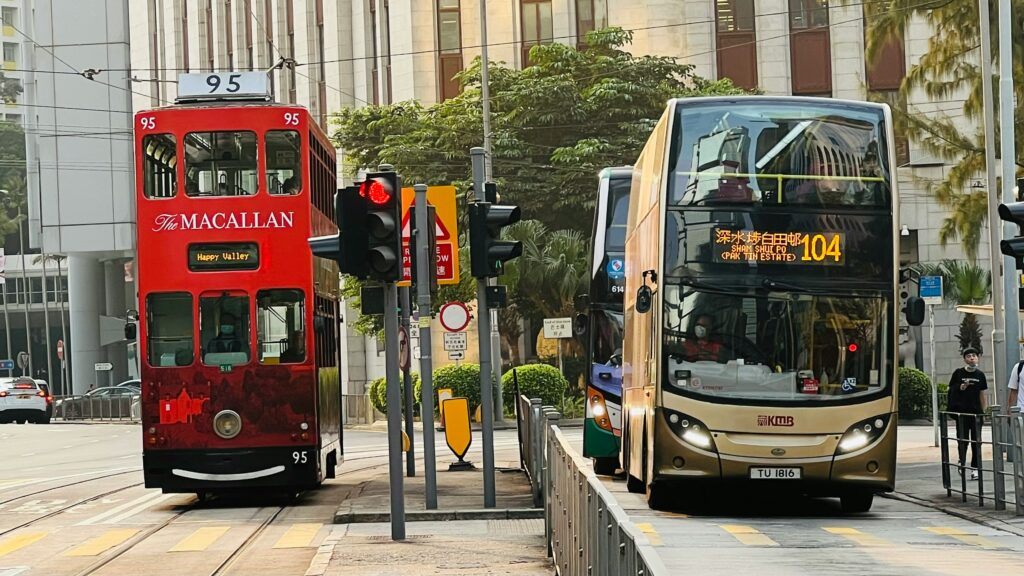
    photo by The Transport Enthusiast DC on Unsplash

    Cantonese Cuisine Lives Up to Its Home Turf

    Among Chinese cuisine, counted as one of the world’s great culinary traditions, Cantonese food truly lives up to its Guangzhou roots.

    When you travel the world, you’ll find Chinese and Indian food just about everywhere. That’s exactly why they’ve always saved me when nothing else suited my palate. For a world traveler, Chinese and Indian food are like a lifeline.

    The Cantonese food I ate at its source was, as expected, in a class of its own.
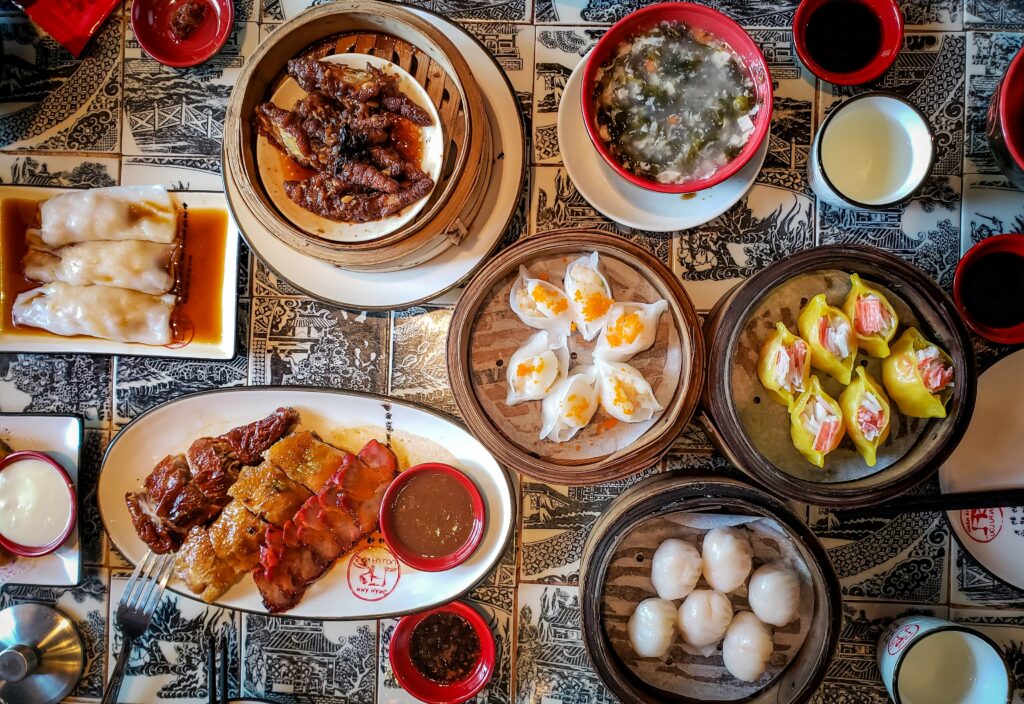
    photo by Fernando Santos on Unsplash

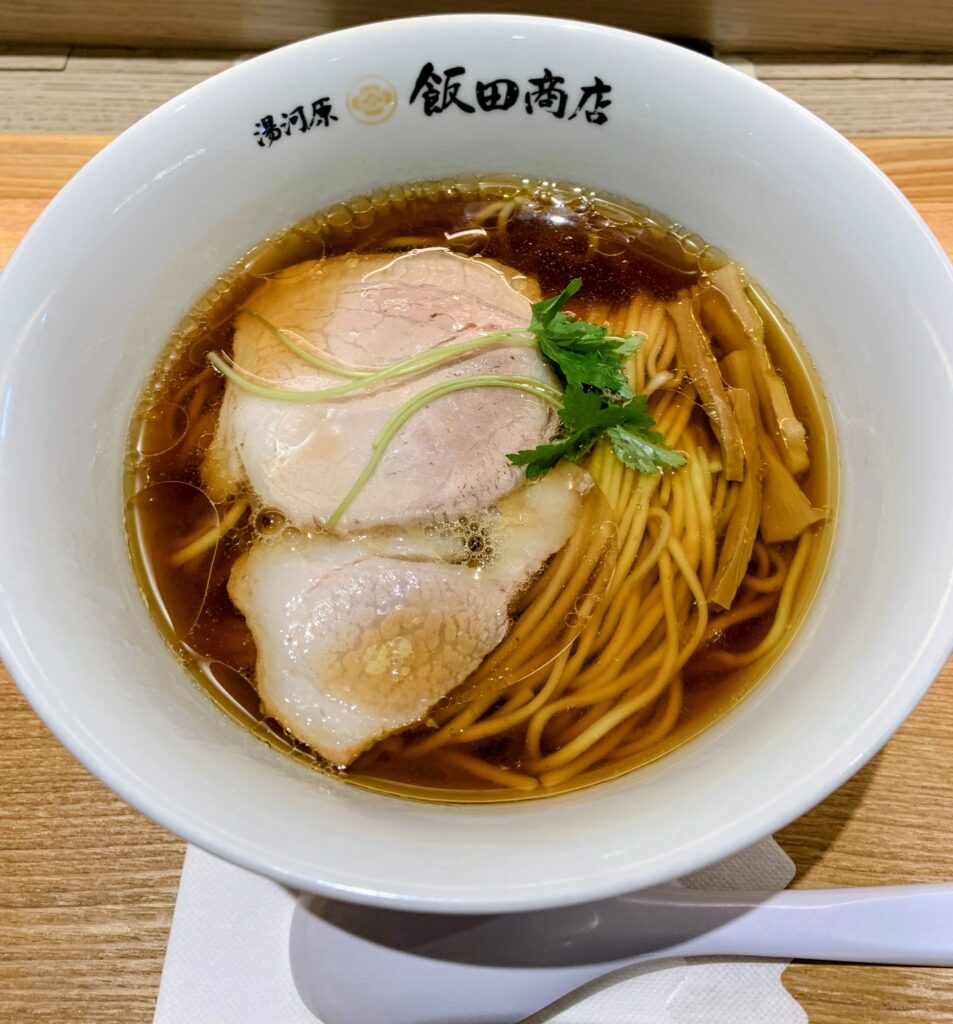
    Trying Tang Mian, the Ancestor of Ramen

    I’ve actually been a Japanese ramen enthusiast for years, eating my way across the country.

    So I tried tang mian, the original noodle soup that could be called the ancestor of ramen. My honest impression? With apologies, I think Japanese ramen, which evolved on its own path, is better, at least to my taste.

    Of course the authentic tang mian was delicious too. But it made me realize that Japanese ramen has evolved into a different food entirely. With full respect for its roots, that’s my honest take.

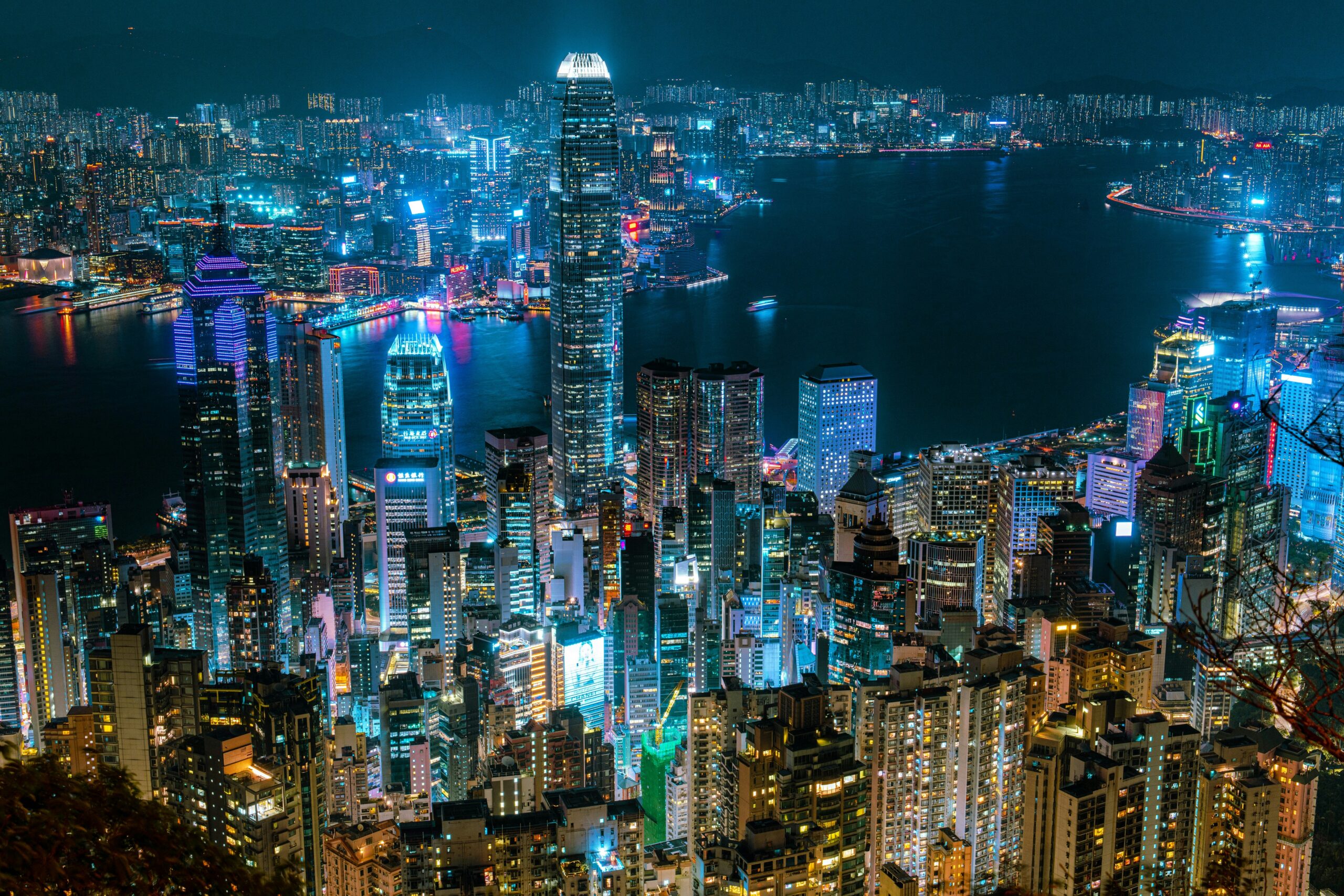
    Hong Kong’s Night View Is World-Class

    I love natural scenery and night views alike. And Hong Kong’s night view is counted among the world’s three greatest.

    The night view of Hakodate in Hokkaido is beautiful too, but every time I come to Hong Kong, I head up to Victoria Peak without fail. The sea of light called the million-dollar view never fails to overwhelm me, no matter how many times I see it.

    Hong Kong night view spots
    └ Victoria Peak
      One of the world's three great night views
      Reach the summit by Peak Tram
    └ Victoria Harbour
      The "Symphony of Lights" sound and
      light show every night at 8pm

    For the record, the remaining one of the world’s three great night views, Naples, I have yet to see. That’s homework for another day.
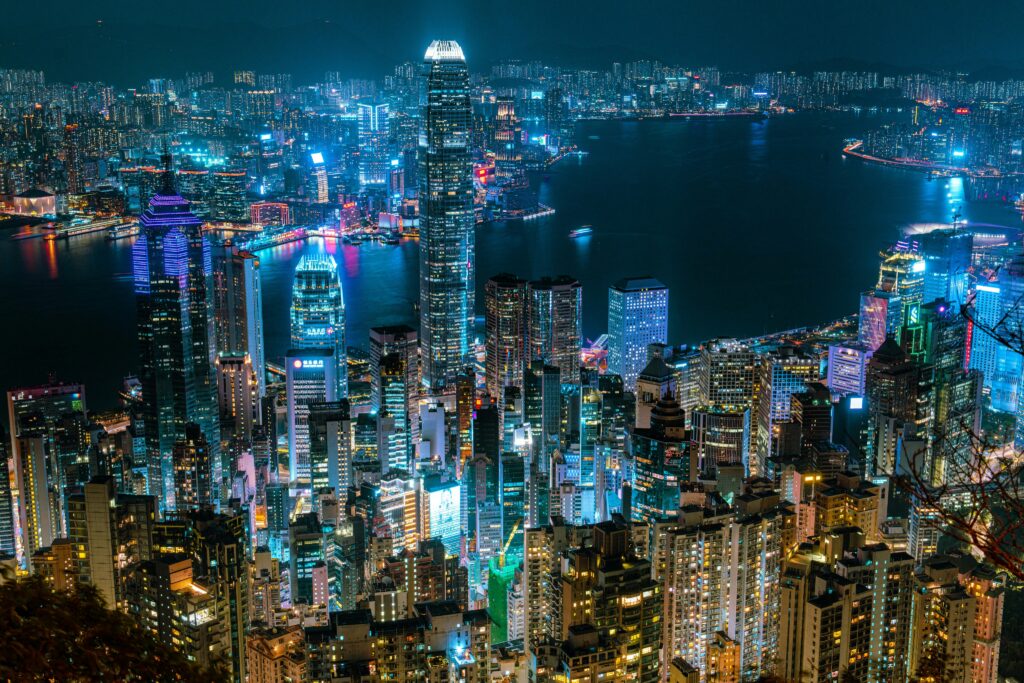
    photo by Henry Lai on Unsplash

    Chungking Mansions, a Sanctuary for Deep Travelers

    Hong Kong has modern hotels and hotels steeped in history. But for the deeper kind of traveler, I want to introduce “Chungking Mansions.”

    Inside this jumbled complex, restaurants and shops of every ethnicity and dirt-cheap hotels are packed in tight. People of African, Indian, and Middle Eastern descent mingle together, creating a uniquely chaotic world.

    The appeal of Chungking Mansions
    └ Rooms are quite small
    └ But being singles, calmer than dorms
    └ Cheap above all
    └ Authentic cuisine from many countries

    The hotel rooms are quite small, but since they’re singles, they’re calmer than a dormitory. And above all, they’re cheap. Tasting authentic dishes from various countries is also an experience unique to this place. Clean hotels are nice, but this kind of deep, chaotic world is part of the joy of travel too.
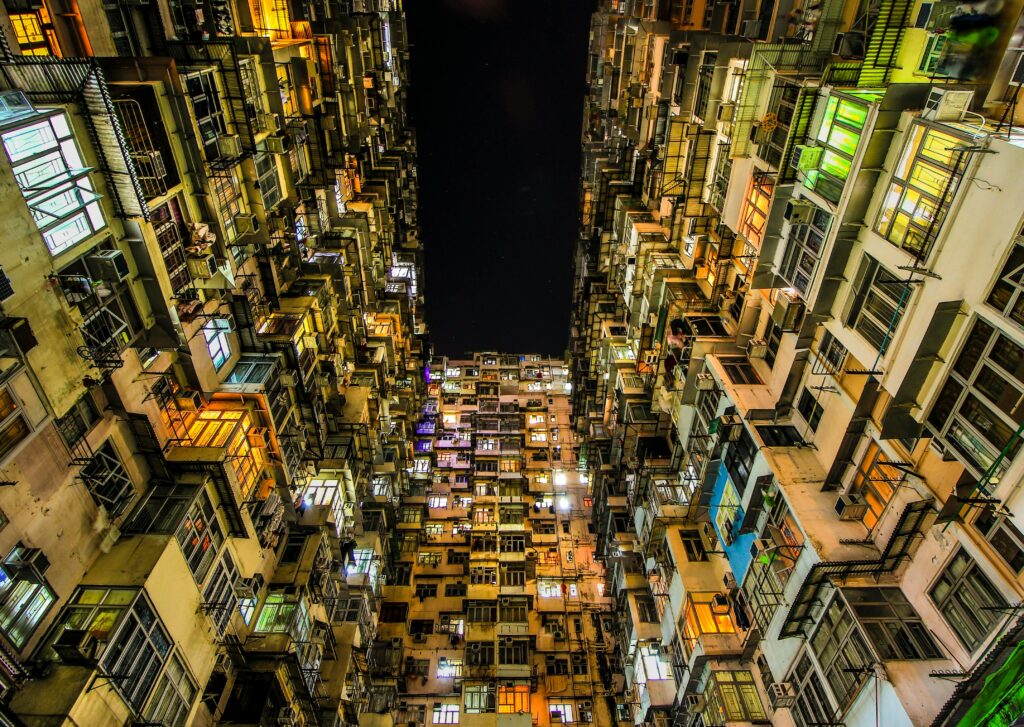
    photo by Florian Wehde on Unsplash

    A Day Trip to Shenzhen from Hong Kong

    From Hong Kong, you can take a day trip by train to the modern Chinese city of Shenzhen.

    But caution is needed. On mainland China, foreign apps don’t work. Without preparation, your usual Google Maps and other apps will stop working. Set up a VPN before you go.

    Hong Kong itself has a history as a British colony, so English works and the people are kind. It has a distinct culture, different from mainland China.


    Macau Is Just a Ferry Ride Away

    Once you’re in Hong Kong, you’ll want to visit Macau as a set. It’s just a ferry ride away.

    From Hong Kong to Macau
    └ Ferry: about 1 hour
    └ HZMB bridge bus: about 40 min, 24-hour service
    └ The bus is cheaper than the ferry

    Macau is the only place in mainland China where casinos are legalized. As a result, the city had a glittering atmosphere like Las Vegas.
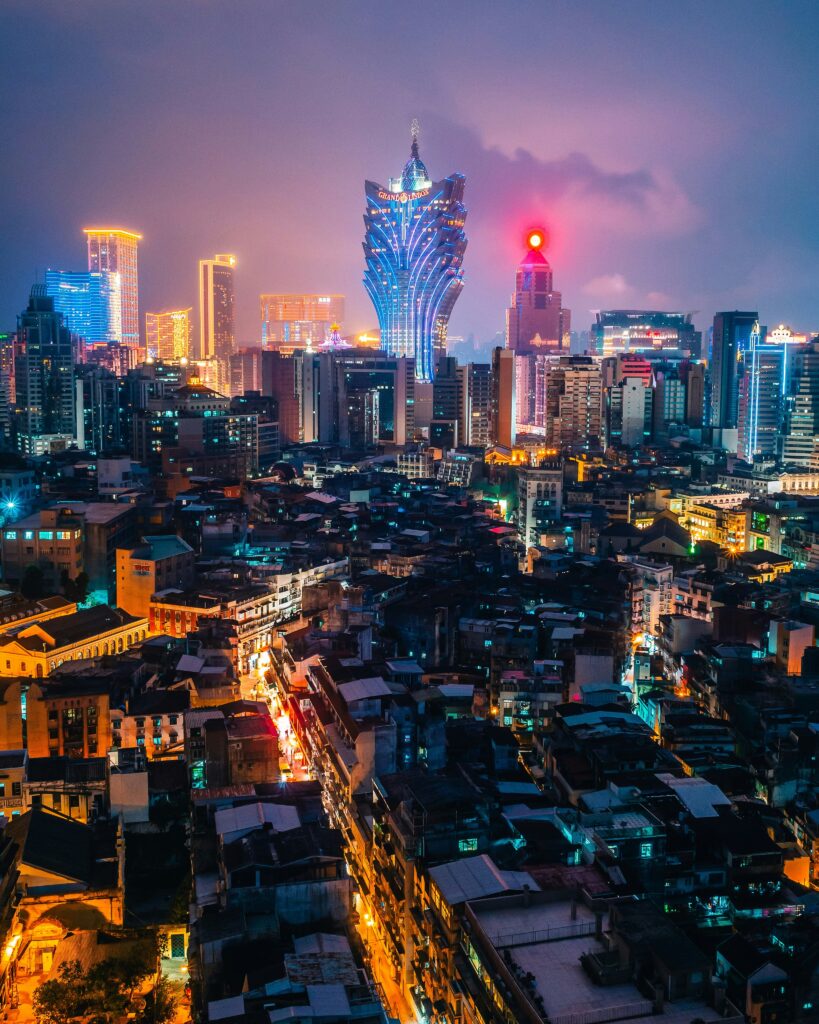
    photo by Simon Zhu on Unsplash

    My USD 500 Doubled at the Macau Casino

    Macau has luxury casino resort hotels like Las Vegas. But they were expensive, far beyond what I could afford to stay in. As for hotels, I felt Las Vegas offers more reasonable prices even for luxury options.

    Now, about the casino.

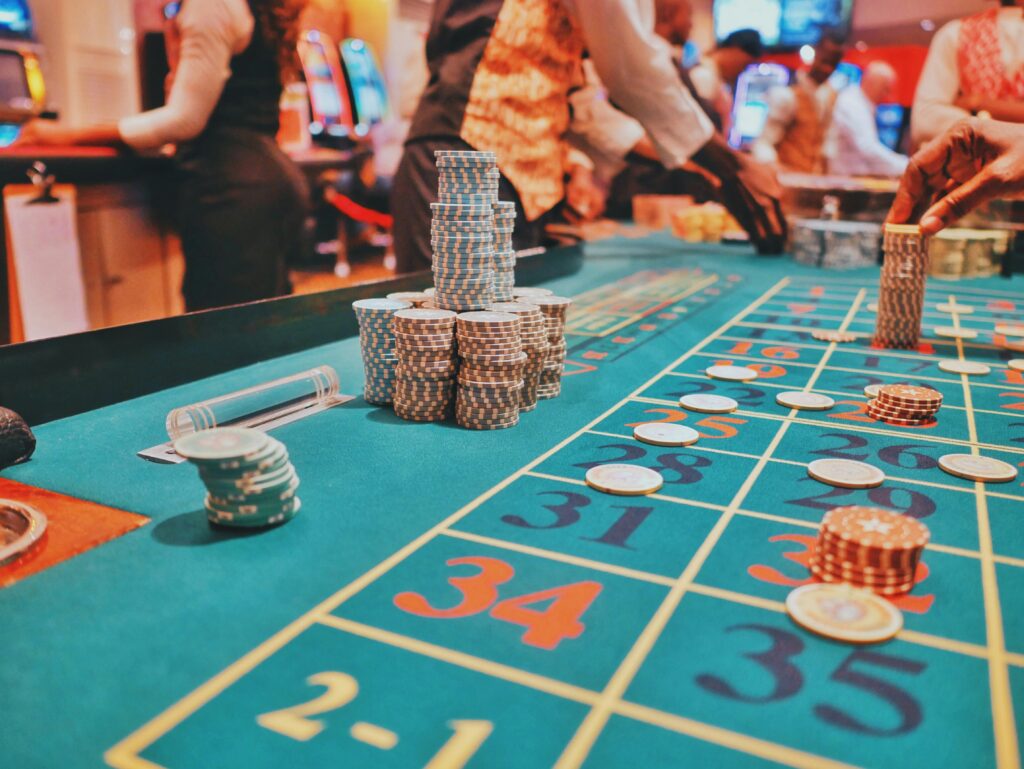
    I don’t have the courage for person-to-person table games like blackjack. So I tried roulette. A near 50-50 bet on red or black, excluding zero.

    Just once, I put USD 500 on a single bet. And luckily it hit, doubling my stake.

    And I quit immediately. For someone who had kept losing at the casinos in Singapore and Manila, this was a miraculous victory. I had finally learned that knowing when to walk away is everything.
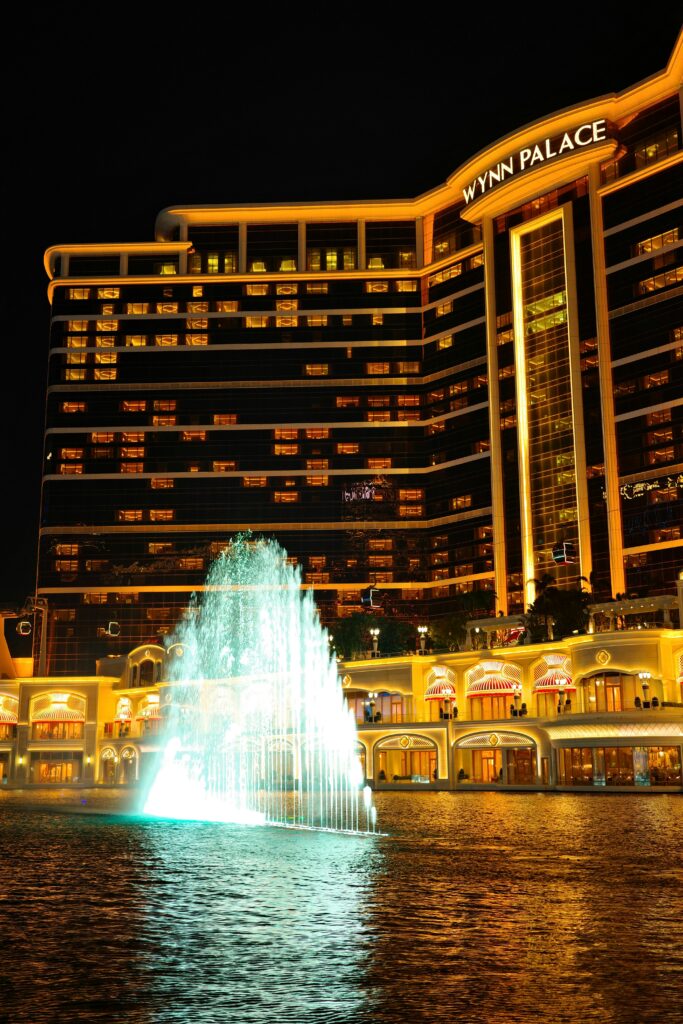
    photo by ün LIU on Unsplash

    Macau Is Also a City of World Heritage

    Macau isn’t only a casino city. It’s actually a historic city dense with World Heritage sites.

    Macau's World Heritage
    └ Ruins of St. Paul's (Senado façade)
      The symbol of Macau, only the front wall
      remains after a fire
    └ Senado Square
      A European-style plaza with wave-patterned
      mosaic cobblestones and colonial architecture

    A remnant of Portuguese colonial rule, the streetscape is somehow European. The glamour of the casinos and the old streets of World Heritage. Having these two faces is what makes Macau fascinating.


    Macau Cuisine Shows Portuguese Influence

    Macau specialties
    └ Portuguese cuisine
      Bacalhau (salted cod), African chicken
    └ Macau-style egg tart
      Pastel de nata, with browned custard
      on a pastry crust

    Where Hong Kong egg tarts have a crisp cookie crust, Macau’s use a pastry crust. Comparing the two is fun in itself.


    Hong Kong Airport Is an Asian Hub

    Hong Kong International Airport is also a hub for Asia.

    If you’re traveling with Cathay Pacific or similar, stopping by on a transit is a good option. You can structure a trip to enjoy a bit of Hong Kong on a layover. That ease of access is another great appeal of Hong Kong.
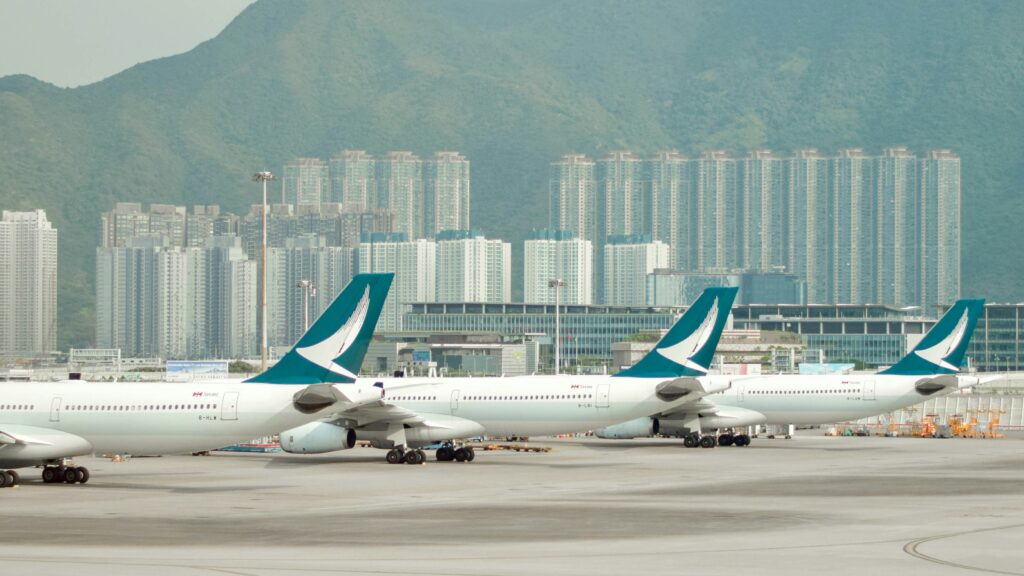
    photo by Al Reile Dela Torre on Unsplash

    Travel Basics

    Best season
    └ October to December (clear skies, comfortable)
    └ Avoid: May to September
      (hot and humid, typhoon season July-Sept)
    
    Cost guide
    └ Local eatery: 50-80 HKD
    └ Subway base fare: around 5 HKD
    
    Currency
    └ Hong Kong Dollar and Macau Pataca
    └ Hong Kong Dollars work as-is in Macau

    Cautions: Hong Kong’s Current Situation

    In recent years, Hong Kong’s political situation has affected travel as well.

    What to know
    └ Refusing to give authorities your phone
      password when asked is a criminal offense
    └ Stay away from demonstrations and gatherings
    └ Avoid clothing with political slogans
    └ TikTok is unavailable
      (other foreign apps work without a VPN)

    Hong Kong is a safe city, but it’s good to be aware of these current realities. There’s no problem with ordinary sightseeing, but keep them in mind just in case.


    Final Thoughts

    Hong Kong, which I’ve visited five times, is a city where I find something new every single time. Authentic Cantonese cuisine, a world-class night view, the deep chaos of Chungking Mansions. The modern and the historic, the refined and the chaotic, all coexist here.

    And in Macau, just a ferry ride away, you can enjoy two faces: the glamour of the casinos and the old streets of World Heritage. Winning miraculously at roulette is a good memory too.

    Hong Kong and Macau bring out each other’s appeal when visited as a set. Starting from an Asian hub airport, I encourage you to tour these two cities. Next time, I’ll definitely go see the night view of Naples too.
  • Cheap Sushi in the Philippines? How to Enjoy Manila and Cebu

    Cheap Sushi in the Philippines? How to Enjoy Manila and Cebu

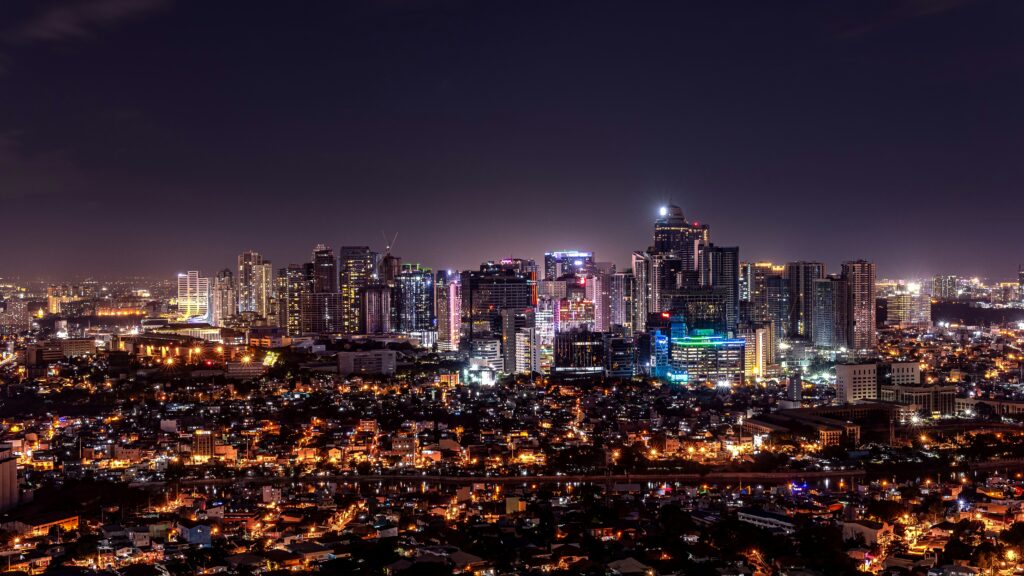
    The Philippines holds a unique appeal among Southeast Asian countries. English is an official language, the beach resorts are excellent, and the prices are low.

    I visited Manila and Cebu. This time I want to write honestly about everything, from losing at the Manila casino, to the strangely cheap sushi and sea urchin bowls, to the taxi negotiation troubles.


    photo by Sean Yoro on Unsplash

    Manila Is Urban, Cebu Is Resort

    Manila
    └ The political and economic center
    └ Few tourist attractions
    └ Casino resorts increasing in recent years
    └ Caution needed at night
    
    Cebu
    └ A resort famous for its beautiful sea
    └ Diving and snorkeling
    └ Relatively safer than Manila
    └ Nightlife to enjoy too
    photo by Denys Nevozhai on Unsplash

    English as an Official Language Brings Many Students

    English is an official language in the Philippines. Thanks to this, the country is known for offering affordable English-language study.

    When I visited, I noticed a striking number of Koreans. Drawn by the chance to learn English cheaply, language students gather here from across Asia. Hearing Korean so often around the city left an impression on me.


    At the Manila Casino, I Lost (Of Course)

    Manila is a city without many tourist attractions, but casino resorts have been popping up in recent years.

    Since I was there, I gave one a try. The result? I lost, of course. Following my defeat at Marina Bay Sands in Singapore, it seems I’m genuinely incompatible with casinos. A man who never learns.

    Still, Manila’s casino resorts are large in scale and fun just to soak in the atmosphere. There are huge casinos like Okada Manila. If you play, please set a budget before you go in.

    photo by Kaysha on Unsplash

    Sushi and Sea Urchin Bowls Are Astonishingly Cheap

    This was the biggest surprise in the Philippines.

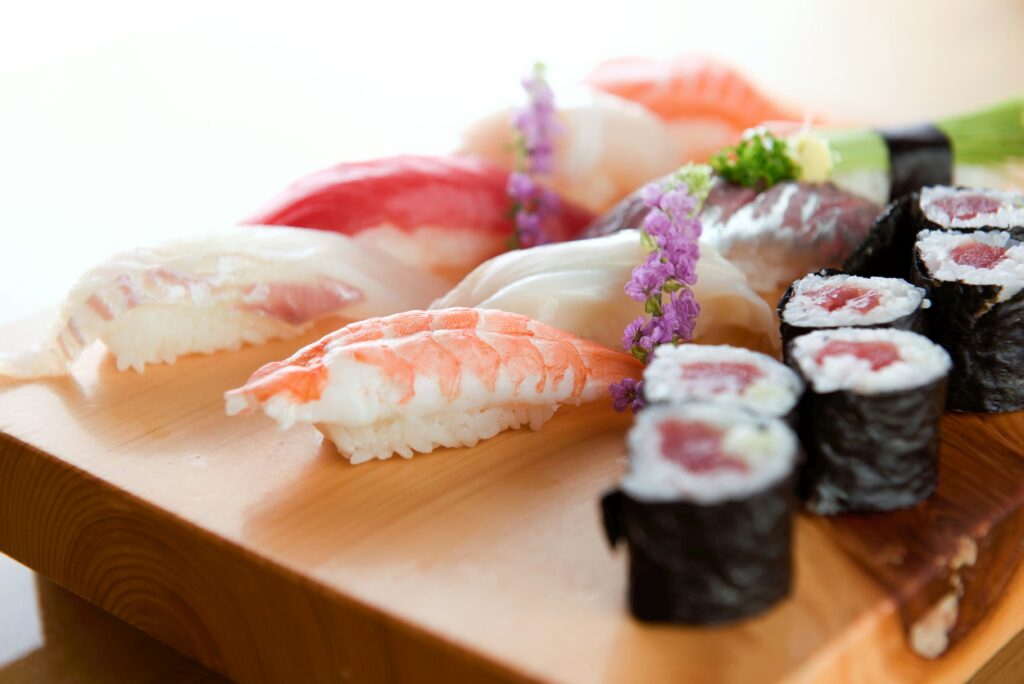
    Filipinos don’t have a custom of eating raw fish. Perhaps that’s why, even when sea urchin is harvested, they may not eat it. Whatever the reason, when I went to Japanese restaurants, sushi and sea urchin bowls were astonishingly cheap.

    What’s more, even at places with a proper sushi chef, prices were very reasonable. And the taste was excellent. Being surrounded by the sea, the seafood is fresh. A sea urchin bowl that would be out of reach price-wise at home was something I could eat casually here. That was an unexpected discovery.

    photo by Buddy AN on Unsplash

    Taxi Negotiation Troubles and Grab as the Savior

    On a past visit to the Philippines, I had some unpleasant taxi experiences.

    Riding in a taxi with another person, we got into a serious dispute after getting out over whether the fare was per person or per vehicle. This happened about twice. When negotiation is the premise, these troubles are unavoidable.

    But things are different now. The Philippines has Grab, so I’ve become free of these troubles. The fare is confirmed in advance, so there’s no arguing after you get out.

    Manila in particular is a little dangerous to walk at night, so Grab is a huge help for nightlife at casinos, pubs, and bars. For safety too, Grab is an essential app.


    Even Shisha, Banned in Thailand, Is Available

    A small aside, but shisha (water pipe), which is banned in Thailand, could be smoked freely in the Philippines.

    It’s interesting how rules differ by country. Having gotten used to Thailand’s strictness, I felt a little liberated here.


    Cebu Is the Island of Diving and Nightlife

    Cebu is a resort famous for its beautiful sea.

    You can enjoy diving and snorkeling, and it’s also reassuringly safer than Manila. Enjoy the sea by day and the nightlife by night. It’s a well-balanced resort destination.

    photo by Olga ga on Unsplash
    Popular spots around Cebu
    └ Oslob
      Swim alongside whale sharks
    └ Sumilon Island
      Island hopping with high water clarity

    Next Time, I Want to Visit Boracay

    Actually, there were about five Filipinos at the same school during my language study in Taiwan.

    When I asked them, they all said the same thing: “Boracay is more beautiful than Cebu and highly recommended.” If the locals say so, it must be true.

    Boracay is said to have White Beach, boasting some of the finest beauty in the world. After an island-wide renewal for environmental protection, the sands have apparently become even more beautiful. That’s homework for next time. I definitely want to go someday.

    photo by Karl Joshua Bernal on Unsplash

    You Must Have a Return Ticket on Entry

    I want to strongly emphasize this point.

    On entering the Philippines, my return ticket was checked. Not only that, my ticket was strictly checked again even when entering the airport for the return journey.

    Philippines entry cautions
    └ An onward/return ticket is required
    └ Without it, you're highly likely
      to be denied boarding
    └ Checked at the point of entering the airport
    └ Keep it readily accessible

    eTravel registration is also required. Register on the official site (etravel.gov.ph) up to 72 hours before departure and save the QR code on your phone. Registration is free.


    Don’t Worry If the Food Doesn’t Suit You

    Even if Filipino food doesn’t suit your taste, there’s no need to worry. Fast food restaurants are everywhere.

    The most common is the Filipino-born fast food chain “Jollibee.” It’s the national fast food of the Philippines, said to be even more popular than McDonald’s. Fried chicken and spaghetti are the signature menu items, an easy way to try a local flavor.

    And the perfect sweet for a hot country is “Halo-Halo.” It’s the Filipino version of shaved ice, piled high with purple yam ice cream, beans, jelly, and fruit. For a body overheated by the sun, this cold and sweet Halo-Halo is the ultimate refreshment.


    Travel Basics

    Best season
    └ Dry season (December-May) is ideal
    └ January-March especially has little rain
      and calm seas
    └ Rainy season (June-November) is typhoon season
    
    Cost guide (USD)
    └ Local eatery: USD 3-5 per meal
    └ Island hopping tour: USD 25-50
    └ Mid-range hotel: USD 50-120/night
    
    Cautions
    └ Don't drink tap water
    └ Toilets often have no paper
    └ Watch for pickpockets in busy areas

    Filipino Food Is Delicious Too

    Recommended dishes
    └ Adobo
      The national dish of pork or chicken
      simmered in soy sauce, vinegar and garlic
      Goes great with rice
    └ Lechon
      Roast suckling pig, Cebu's is the most famous
    └ Sinigang
      A soup with the sourness of tamarind

    The balance of sour and sweet is characteristic, and it suits the Japanese palate well.


    photo by Karl Joshua Bernal on Unsplash

    Final Thoughts

    The Philippines is a surprising hidden gem where English works, prices are low, and you can even eat sushi dirt cheap. Enjoy the casino and urban nights in Manila, and soak up the sea and resort life in Cebu.

    I lost at the casino and once argued over taxis, but now, thanks to Grab, travel is comfortable. Next time I want to see the world-class White Beach at Boracay, recommended by my Filipino friends.

    Just watch out for the return ticket check on entry. Get that right, and the Philippines is a top-value resort paradise.

  • Bali Family Travel Guide: Mother-Daughter Resort Vacation & Jet Ski Adventure

    Bali Family Travel Guide: Mother-Daughter Resort Vacation & Jet Ski Adventure

    Bali is a paradise where travelers from Asia and Oceania gather. Close to Australia, it draws surfers and resort lovers from all over the world.

    Partying with friends at a beach club. That was the dream I carried with me to Bali. But this time, for some reason, I was traveling with my mother. The nightlife I’d dreamed of was put on hold, but in its place I witnessed something unforgettable.


    Bali, the Crossroads of Asia and Oceania

    Bali draws a huge number of travelers from Asia and Oceania, partly thanks to its proximity to Australia.

    Resort hotels, diving, surfing, and a vibrant club scene. Every way of traveling is here. The Kuta area in particular has a huge concentration of clubs and a thriving nightlife.

    What’s interesting is that, unlike mainland Indonesia, Bali is predominantly Hindu. Perhaps that’s why the island feels relatively relaxed about alcohol. Within a country where Islam is the majority, Bali holds onto its own distinct “Balinese Hinduism,” deeply rooted in daily life.

    photo by Guillaume Marques on Unsplash

    What to Do Before You Leave (2026 Update)

    Before getting carried away, Bali now requires a few things to be arranged before arrival. To avoid airport queues, it’s best to complete everything online in advance.

    Things to prepare in advance
    └ Bali Tourist Tax
      About USD 10 per person
      Pay by credit card in advance via the
      official "Love Bali" app or site, get a QR code
    └ Visa on Arrival (e-VOA)
      About USD 35, 30-day stay (extendable once)
      Getting it in advance lets you use
      the airport e-gates
    └ All Indonesia e-Arrival Card
      Register online from 72 hours before arrival

    The rules are more developed than when I went, so check the latest information and prepare ahead.


    Access: 2.5 Hours from Singapore

    From Singapore
    └ Direct flights from Changi Airport
    └ About 2.5 hours
    └ Popular as a weekend short trip
    
    From other Asian cities
    └ Direct flights or budget carriers
    └ Around 7 hours

    If you’re touring Southeast Asia, it’s easy to slot in as a detour from Singapore.


    The Beach Club Dream, Postponed

    When you think of Bali, you think of beach clubs. To gather with friends, a whole group of us, and party to our hearts’ content. I’d held onto that dream for a long time.

    But this time, for some reason, I was on a two-person trip with my mother.

    I obviously couldn’t dance until dawn at a beach club with my mom, so the nightlife I’d dreamed of was postponed. That’s homework for next time.

    Places like Potato Head Beach Club in Seminyak and FINNS Beach Club in Canggu are famous worldwide. Sipping drinks on a poolside daybed while a DJ plays and the sun sets is apparently the classic style. Someday I will let loose at one of those beach clubs with my friends.

    photo by Cassie Gallegos on Unsplash

    Mom Floored the Jet Ski and Left Me Stunned

    I gave up on the nightlife, but I could enjoy water sports with my mother.

    We each rented a jet ski, and this is where the incident happened.

    When I sped up, the jet ski bounced over the water and scared me, so I couldn’t really open the throttle. But when I glanced over, my mother was tearing across the water at incredible speed, bouncing wildly the whole way.

    I was genuinely stunned. My normally gentle mother had transformed into a different person, racing across the sea. Seeing an unexpected side of a parent might just be one of the great joys of travel.


    My Surfing Ended with Just Paddling

    Bali is a world-famous surf destination. Since I was there, I rented a board and gave surfing a try.

    I’ll be honest. I’ve tried surfing a few times before. But I have never once managed to stand up when a wave came.

    This day was no different. I spent the whole time just paddling, bobbing around on top of the water. There was zero sign of me ever standing.

    So in the end, I laid the surfboard down on the beach and settled for just looking the part of a surfer. I think I pulled it off reasonably well.

    That said, as a world-class surf spot, Bali has plenty of beginner-friendly waves, and there were many people enjoying surfing. I think even beginners like me can have fun here. There are lots of surf schools too, so with proper lessons, you’d surely manage to stand up.


    An Island with Completely Different Faces by Area

    Bali shows a completely different character depending on the area. The key is choosing where to stay based on your purpose.

    Main area characteristics
    └ Kuta
      Lively surfer town near the airport
    └ Seminyak
      Stylish cafes and upscale beach clubs
    └ Ubud
      Inland village of art and culture,
      rice terraces and yoga
    └ Canggu
      The hottest surf-and-cafe town right now
    └ Sanur
      Calm east coast, family-friendly
    └ Nusa Dua
      Government-developed luxury resort area
    photo by Geio Tischler on Unsplash

    Luxury Resorts at Surprisingly Good Prices

    Bali has a wealth of luxury resort hotels. They’re concentrated mostly along the coast, but high-end villas are also scattered in quiet spots like Ubud where you can see rice terraces.

    This time I stayed at a coastal resort hotel. What surprised me was how reasonable the prices were for a luxury resort. For the same quality, Bali is clearly cheaper than other resort destinations.

    Accommodation guide (USD)
    └ Budget: USD 10-30/night
    └ Mid-range: USD 50-150/night
    └ Luxury: from USD 250/night

    Thanks to that, I could indulge in a relaxed, luxurious resort experience. Bali is an excellent resort destination in terms of value for money too.

    photo by Ern Gan on Unsplash

    Diving with Manta Rays

    I skipped it this time, but Bali is also famous for diving.

    There are even spots where you can encounter manta rays. Nusa Penida (where you can meet mantas) and Tulamben in the east (with a famous shipwreck dive) are especially renowned. As a diving enthusiast, I really wanted to, but since this was a trip with my mother, I passed this time. That’s more homework for next time.


    Plenty of Delicious Food

    The food in Bali is wonderfully varied.

    Recommended dishes
    └ Nasi Goreng (Indonesian fried rice)
    └ Babi Guling (roast suckling pig,
      a festive dish)
    └ Sate (grilled skewers with peanut sauce)
    └ Ubud and Canggu are packed with
      world-class vegan cafes

    From the classic nasi goreng to fresh seafood, you can find anything. As a resort destination, there are also many restaurants serving international cuisine, so I never struggled to find something to eat.


    Culture and Cautions Worth Knowing

    Bali's unique culture
    └ Canang
      Small palm-leaf offerings placed on
      roadsides and shopfronts; take care not
      to step on them
    └ Nyepi (Balinese New Year, around March)
      Fire, electricity and going outside are
      banned, even the airport closes
      The whole island falls silent
    
    Cautions
    └ Use Grab or Gojek for safe transport
    └ Many accidents happen renting bikes
      without an international license; ride carefully
    └ Tap water is not drinkable
    └ Using your phone while walking in busy
      areas makes you a target for bag snatchers

    Best Season

    Dry season (April-October)
    └ Best season
    └ Low humidity, crisp air
    └ Ideal for surfing and sightseeing
    
    Rainy season (November-March)
    └ Mostly short squalls
    └ Fruit is delicious
    └ Flights and hotels are cheaper
    photo by Tom Bixler on Unsplash

    Final Thoughts

    My trip to Bali, which turned into a two-person journey with my mother, may have postponed the beach club dream, but it became an unforgettable trip all the same.

    My mother flooring the jet ski, settling for just looking like a surfer on the beach, the reasonably priced luxury resort. All of it is a good memory now.

    Bali is a deep, versatile island where you can enjoy resorts, surfing, diving, and nightlife alike. Next time I’ll definitely party with friends at a beach club and swim with manta rays. This trip gave me those goals too.
    Solo, with friends, or as a trip to treat a parent. The fact that it works in any style is, I think, the real charm of Bali.

  • Singapore Culture & Food Guide: Exploring Little India, Chinatown & Hawkers

    Singapore Culture & Food Guide: Exploring Little India, Chinatown & Hawkers

    The appeal of Singapore isn’t just the modern skyline or Marina Bay Sands. This tiny city-state is home to three completely different cultures living side by side: Chinese, Indian, and Arab.

    One trip lets you experience the atmosphere of three countries. That, to me, is Singapore’s greatest value. This time I want to write about Sentosa Island, the multicultural districts, and the incredible hawker food.


    Sentosa Island Is One Giant Attraction

    Sentosa Island feels like a massive theme park in its own right.

    With a casino, an aquarium, and countless attractions, it offers something for everyone from children to adults. Families, couples, solo travelers — it has the depth to accommodate them all.

    Main attractions on Sentosa
    └ Universal Studios Singapore
      (Minion Land now open)
    └ Singapore Oceanarium
      (the renewed former S.E.A. Aquarium)
    └ Resort World Sentosa Casino
    └ Sensoryscape
      (digital light art at night)

    The casino on Sentosa is free to enter, but you must show your original passport and there’s a smart casual dress code. Having already taken a beating at the Marina Bay Sands casino, I kept my hands in my pockets this time.


    Three Countries’ Worth of Culture in One Place

    Like Malaysia, Singapore is a multi-ethnic nation. Simply walking through the city lets you experience three entirely different cultures.

    As you move from district to district, the smell of spices, the food, and the whole atmosphere of the streets shift completely. It was vivid enough to remind me of my old backpacking days. That alone made Singapore feel like remarkable value.

    Chinatown

    └ Buddhist temple (Buddha Tooth Relic Temple)
      and Hindu temple coexisting
    └ Traditional goods hunting
    └ Michelin-listed hawker food

    Little India

    └ A lively street filled with the scent of spices
    └ Mustafa Centre, a giant 24-hour
      supermarket and souvenir treasure trove

    Arab Street

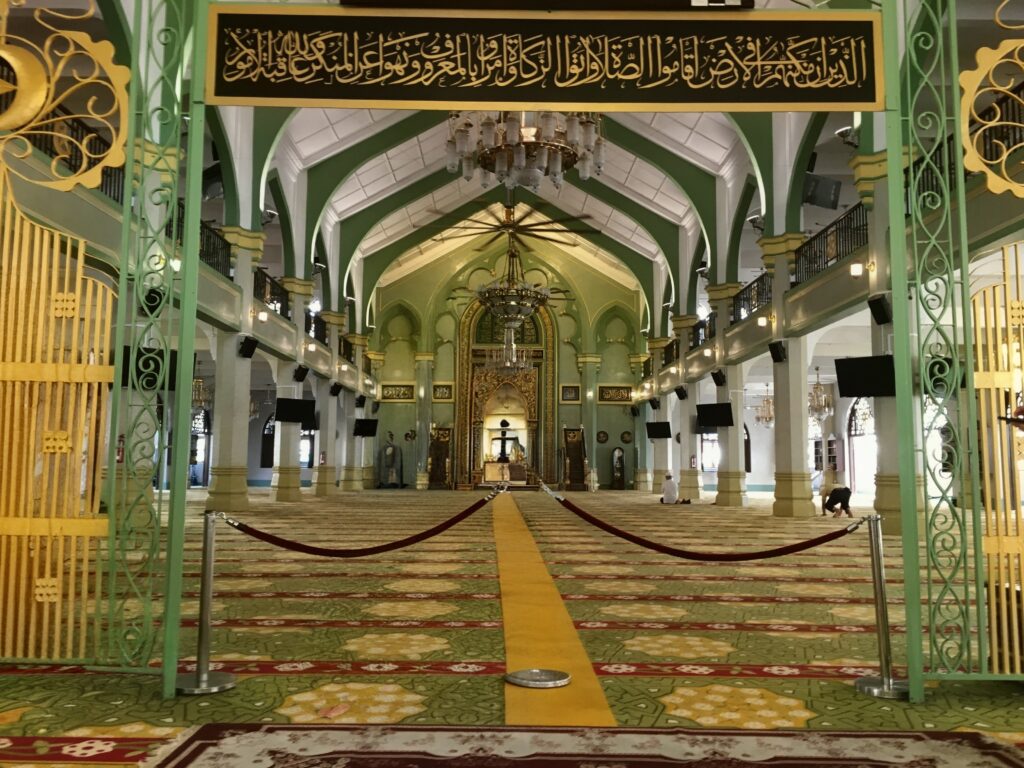
    └ The golden-domed Sultan Mosque
    └ Adjacent Haji Lane is packed with
      stylish street art and cafes

    Walking through a single city, you feel as though you’ve toured China, India, and the Middle East. It’s an experience few other countries can offer.


    Hawker Centers Are Clean and Multicultural

    You can’t talk about food in Singapore without mentioning hawker centers — open-air complexes packed with food stalls.

    What surprised me was the cleanliness. Despite the density of stalls, they’re covered and remarkably clean. It’s a completely different image from the typical Southeast Asian street stall. They’re even recognized as a UNESCO Intangible Cultural Heritage.

    Hawker center etiquette
    └ Chope (saving seats)
      Locals reserve seats by placing
      a packet of tissues or an umbrella
    └ Return your tray after eating
      (required by law, fines for violations)
    └ Bringing wet wipes is handy

    Chicken Rice, Satay, and Biryani Were Outstanding

    Everything I ate at the hawker centers was delicious.

    What I ate
    └ Chicken Rice
      Rice cooked in chicken broth
      topped with poached chicken
      eaten with chili sauce
      (the national dish)
    └ Satay
      Southeast Asian-style grilled skewers
      with sweet peanut sauce
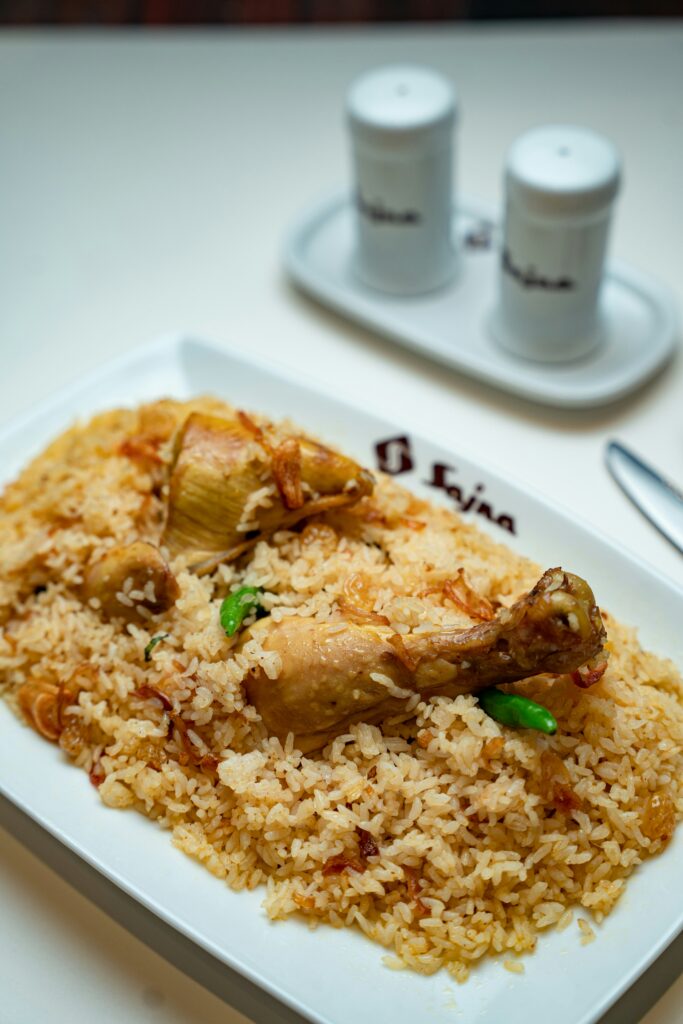
    └ Biryani
      Fragrant Indian-style rice cooked
      with spices, long-grain rice and meat

    The joy of Singapore’s hawker centers is having multinational cuisine all in one place. Chinese, Indian, Malay — pick whatever you want, as much as you want. You can even treat yourself to luxurious seafood like chili crab.

    photo by Circle Digital Marketing Agency on Unsplash

    Night Safari: Honestly, I Expected Too Much

    I want to be honest here.

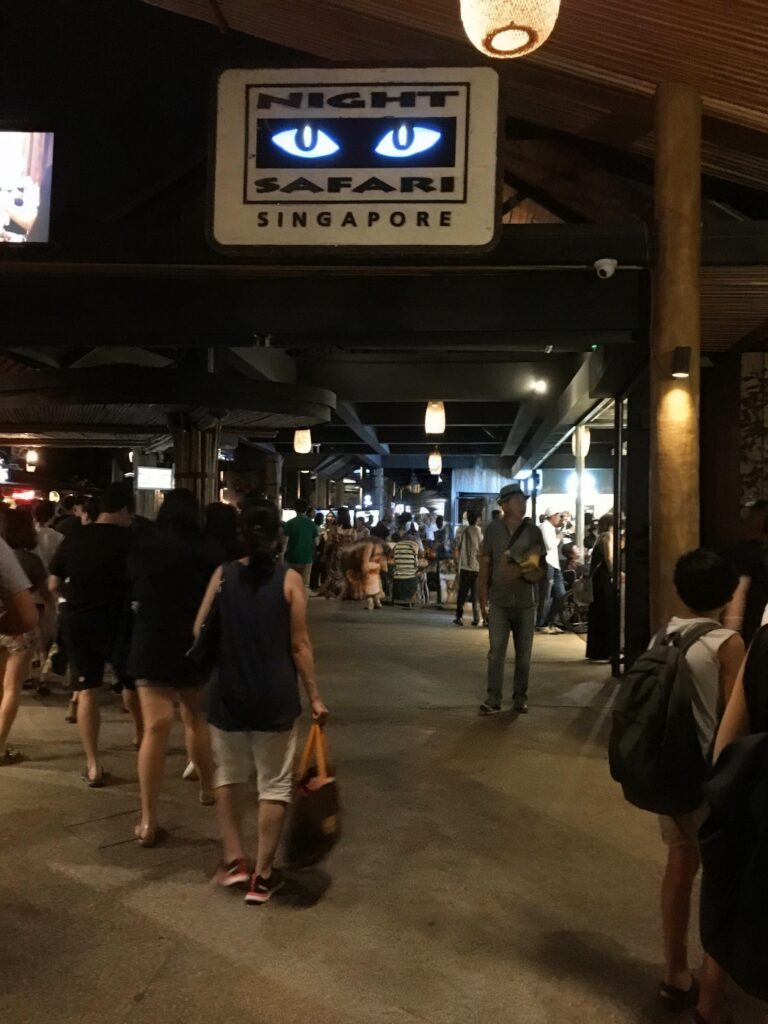
    I visited the Night Safari, famous as the world’s first nocturnal zoo. I went with high hopes, but to be blunt, it wasn’t what I expected.
    My honest take on the Night Safari
    └ Long lines, lots of waiting
    └ Animals hard to see from the tram
      because it's so dark
    └ Despite being night, the animals
      weren't very active
    └ The child with me looked
      a little disappointed too

    Of course, opinions vary from person to person. But for the amount of time spent waiting in line, I had to be honest about my impression.

    If you go, keep your expectations in check, and if you want to see animals up close, combine the tram with the walking trails. Admission runs about S$58 for adults and S$41 for children.


    Gum Is Banned, but You Can Drink the Tap Water

    Singapore is known as a “Fine City” — a clever play on words meaning both a wonderful city and a city of fines.

    It’s by far the cleanest country in Southeast Asia, and the secret lies in its strict rules.

    Rules to know
    └ Bringing in or chewing gum is banned
    └ Littering and spitting can incur
      fines up to S$1,000
    └ Eating and drinking on the MRT is banned
      (including water and candy, fines up to S$500)

    On the other hand, unusually for Southeast Asia, you can drink the tap water straight. There are plenty of water refill spots around the city, so bringing a reusable bottle saves money. This cleanliness and safety is one of Singapore’s biggest draws.


    Getting Around with Grab and Contactless Payment

    MRT (subway)
    └ Covers nearly all major tourist spots
    └ No tickets needed
    └ Just tap a contactless credit card
      at the gate
    
    Grab
    └ Grab's headquarters are in Singapore
    └ Essential as a taxi replacement
    └ Fares confirmed in advance
    └ No worries about getting ripped off

    As Grab’s home base, the app works exceptionally well in Singapore. If you’ve been traveling up from Thailand, you can use the same app seamlessly.


    Prices Are High, but Balance Is Key

    Cost guide
    └ Hawker meal: S$5-8
    └ Restaurant: from S$30
      (plus 10% service charge and 9% tax)
    └ Bottled water: S$1.5-2

    Singapore is by far the most expensive country in Southeast Asia. But if you use hawker centers wisely, you can keep food costs down. The trick is balancing high-end restaurants with hawker meals.


    Tips for Traveling with Kids

    Watch the temperature gap
    └ It's tropical outside, but the
      air conditioning in malls and the
      MRT is extremely strong
    └ Always carry a jacket for children
    
    Prepare for squalls
    └ Sudden heavy rain in the afternoons
    └ Bring rain gear and build in time
      to spend indoors
    
    Barrier-free
    └ The city is flat throughout
    └ Easy to get around with a stroller

    Final Thoughts

    Singapore is a remarkable-value destination where a single trip lets you experience Chinese, Indian, and Arab cultures. Play on Sentosa Island, wander the multicultural districts, and feast on incredible hawker food.

    The Night Safari was a personal letdown, but that’s part of an honest travel record. Clean, safe, drinkable tap water, and easy Grab access. It’s a place I can recommend to first-time travelers and Southeast Asia veterans alike.

    Prices are high, but the country is worth it. Indulge at Marina Bay Sands, enjoy the local side at the hawker centers. That kind of balanced trip suits Singapore perfectly.

  • Marina Bay Sands Review: Is It Worth It? Iconic Rooftop Infinity Pool at Night

    Marina Bay Sands Review: Is It Worth It? Iconic Rooftop Infinity Pool at Night

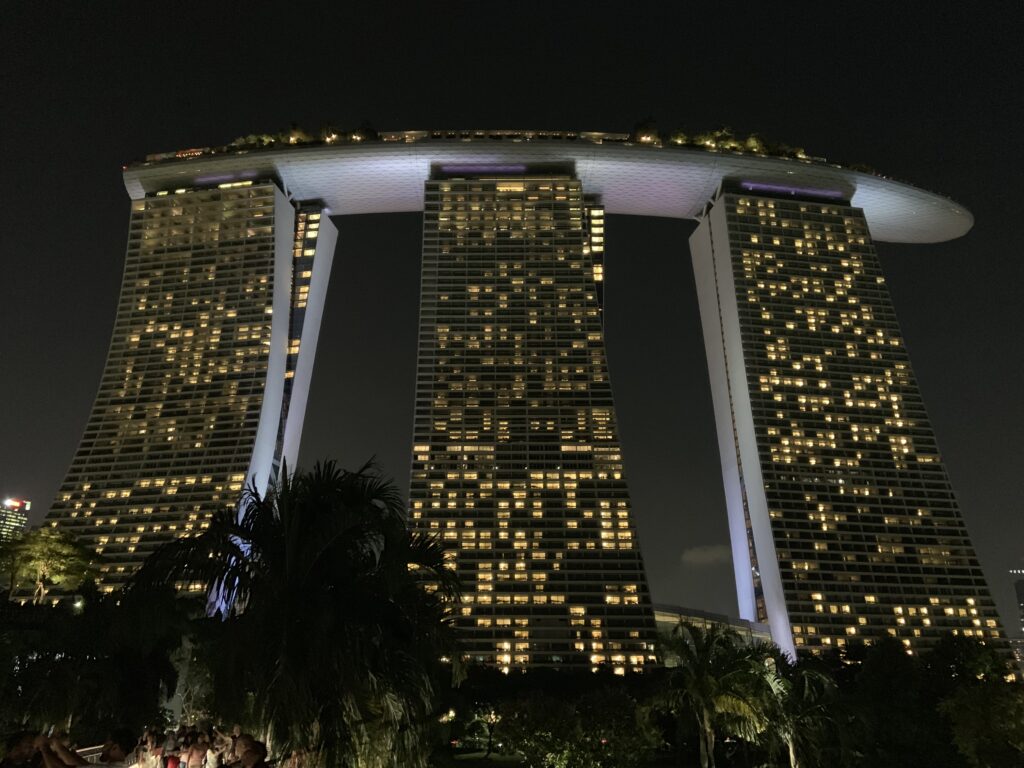
    When you think of Singapore, one image comes to mind that almost everyone has seen on television or social media. A hotel that looks like a ship balanced on top of three towers: Marina Bay Sands. The photo of that long rooftop pool overlooking the city is the envy of people around the world.

    This time, I actually stayed at Marina Bay Sands. Did the dream live up to expectations? Here’s my honest report.


    The Standard Room Was Surprisingly Ordinary

    Marina Bay Sands has an enormous number of rooms. I stayed in a standard room, which kept the price relatively reasonable.

    To be honest though, the interior wasn’t much different from any other mid-range or high-end hotel. Not overly luxurious, just simple and comfortable. If you have sky-high expectations for the room itself, you might be slightly underwhelmed.

    But the real value of this hotel isn’t in the rooms. It’s on the roof.


    To the Guests-Only Rooftop Pool

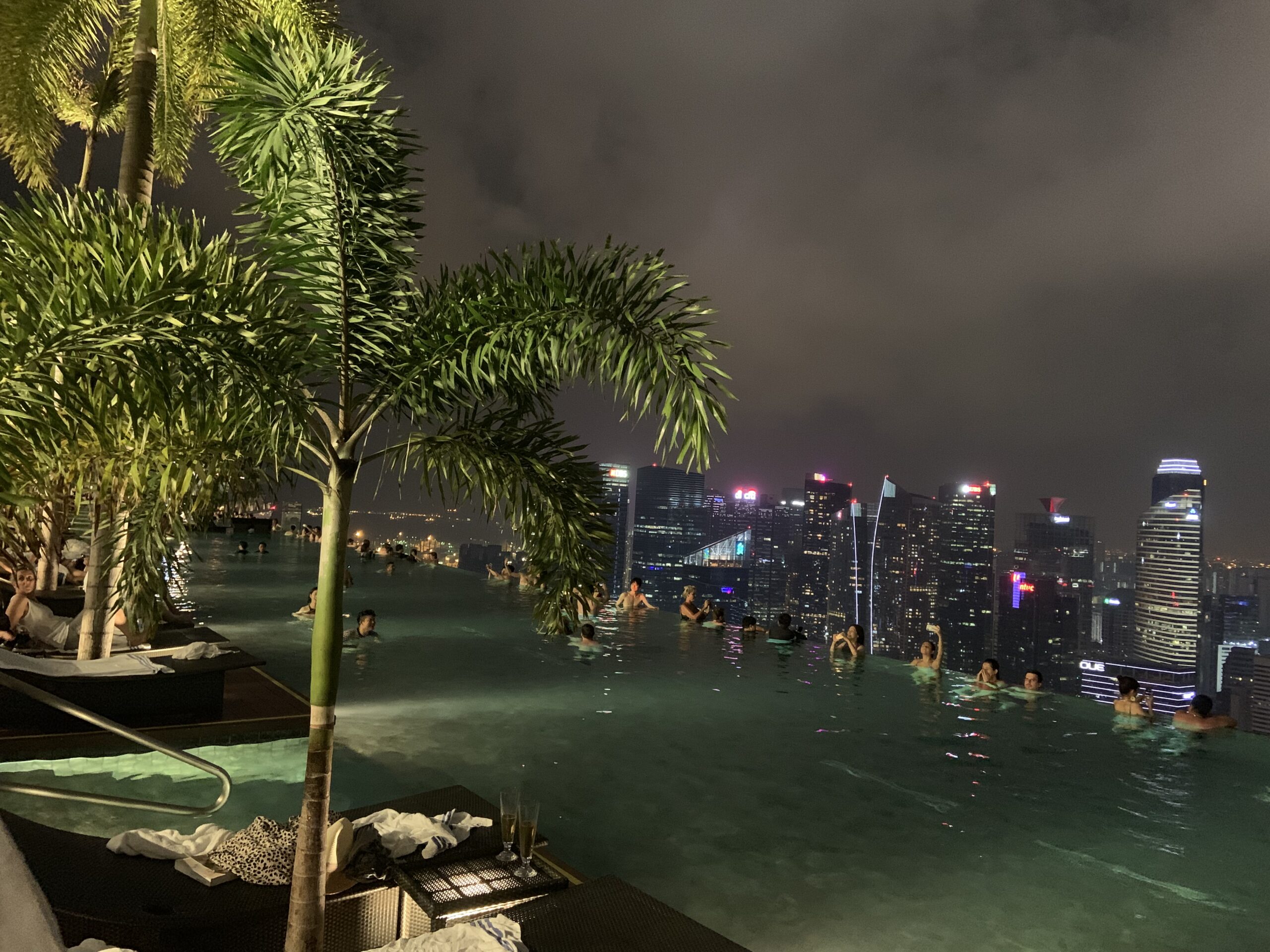
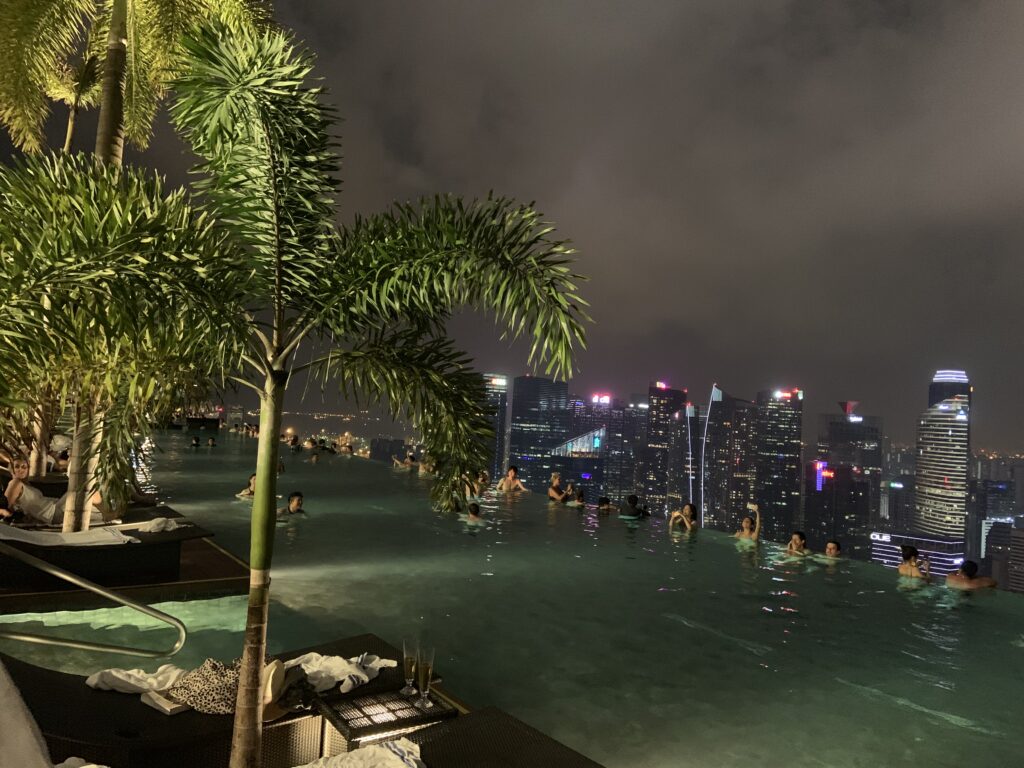
    The biggest draw of Marina Bay Sands is the guests-only rooftop pool on the 57th floor. That long infinity pool you’ve seen all over television and social media.

    This is a privilege reserved for hotel guests. You can’t get in without a room key. Outside visitors can’t pay to enter, which makes staying here all the more worthwhile.

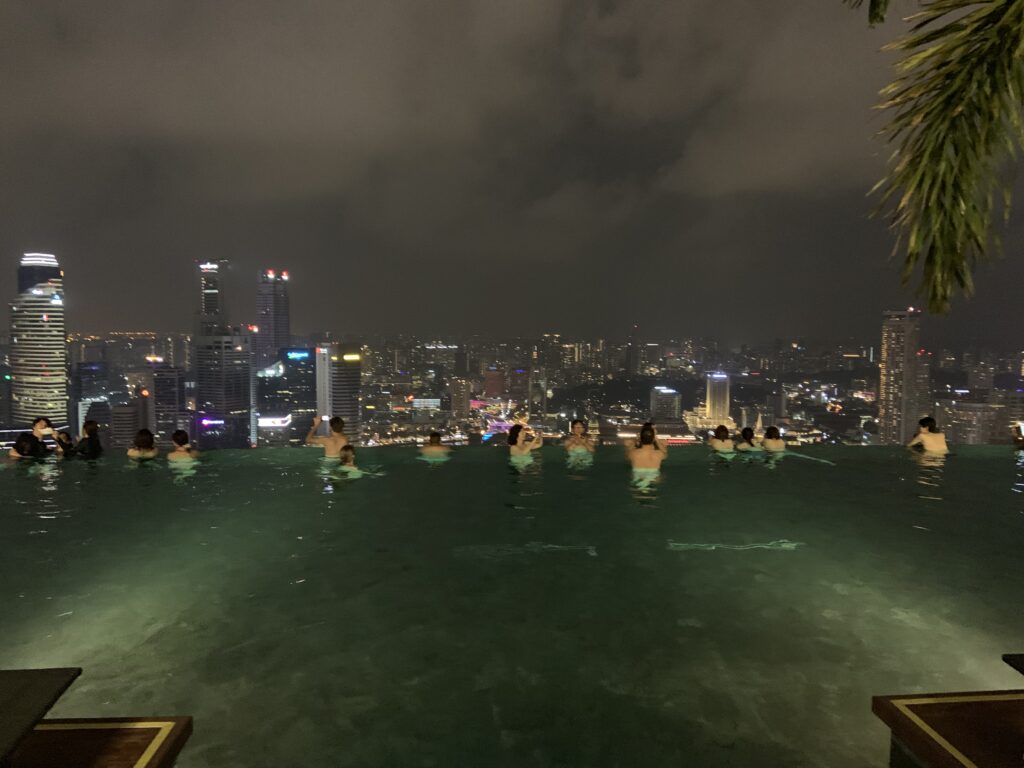
    The view of the city below and that long stretch of pool. During the day, many guests relax with a drink in hand. Everyone soaks up this special space in their own way.


    The Pool Is Far Better at Night

    The daytime pool is wonderful, but personally I preferred it at night by a wide margin.

    As the sun sets, the pool is illuminated. Overlooking the night view, you’re wrapped in a sophisticated, grown-up atmosphere that makes you feel like a celebrity. It’s a completely different world from the open, breezy feel of the daytime.

    The glittering night view and the illuminated water. That view alone makes staying at Marina Bay Sands worth it. To actually be standing inside the scene I had only ever admired from afar. It was a truly luxurious moment.


    How I Lost USD 500 in Five Minutes at the Casino

    Marina Bay Sands has a casino attached. Since I was there anyway, I wandered in on a whim.

    The first thing that struck me was how strict the security check was before entering. It took quite a while, and I was overwhelmed before I’d even set foot inside.

    Then came the real event. I sat down at a slot machine and started playing casually, and lost USD 500 in five minutes. It vanished in an instant.

    I went straight back to my room, close to tears. My celebrity mood at the dream hotel evaporated in a single moment.

    Casinos are genuinely dangerous. If you’re heading to the Marina Bay Sands casino, don’t repeat my mistake. Decide when to walk away before you go in. Above all, set a firm budget before entering. In the rush of that excitement, rational judgment goes out the window.


    A Picnic at Gardens by the Bay

    To pick myself back up, I headed to Gardens by the Bay, right next to Marina Bay Sands.

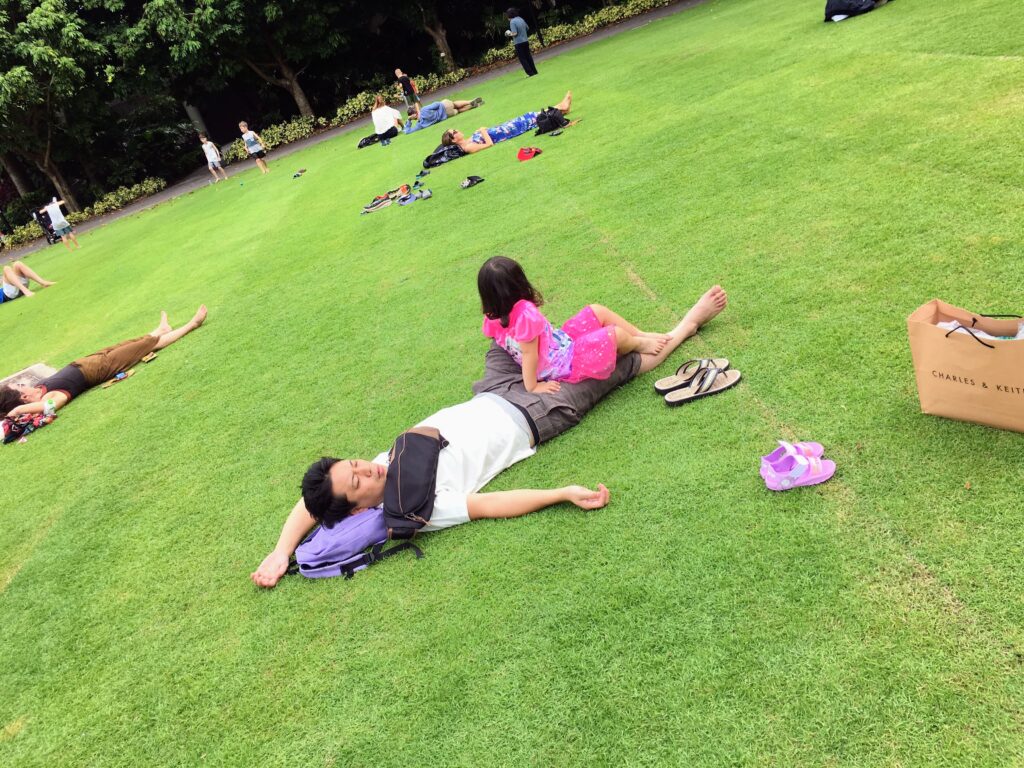
    It’s a vast garden complex, but it’s not just a place to look at plants. Near the main Supertrees there’s a large lawn where you can lie down for a nap, or eat takeout from the on-site restaurants picnic-style.

    I never expected to find a place this relaxing right in the middle of the city. When your feet get tired, you just flop down on the grass. That alone becomes a luxurious moment. I even managed to forget about the USD 500 I’d lost at the casino, at least for a while.


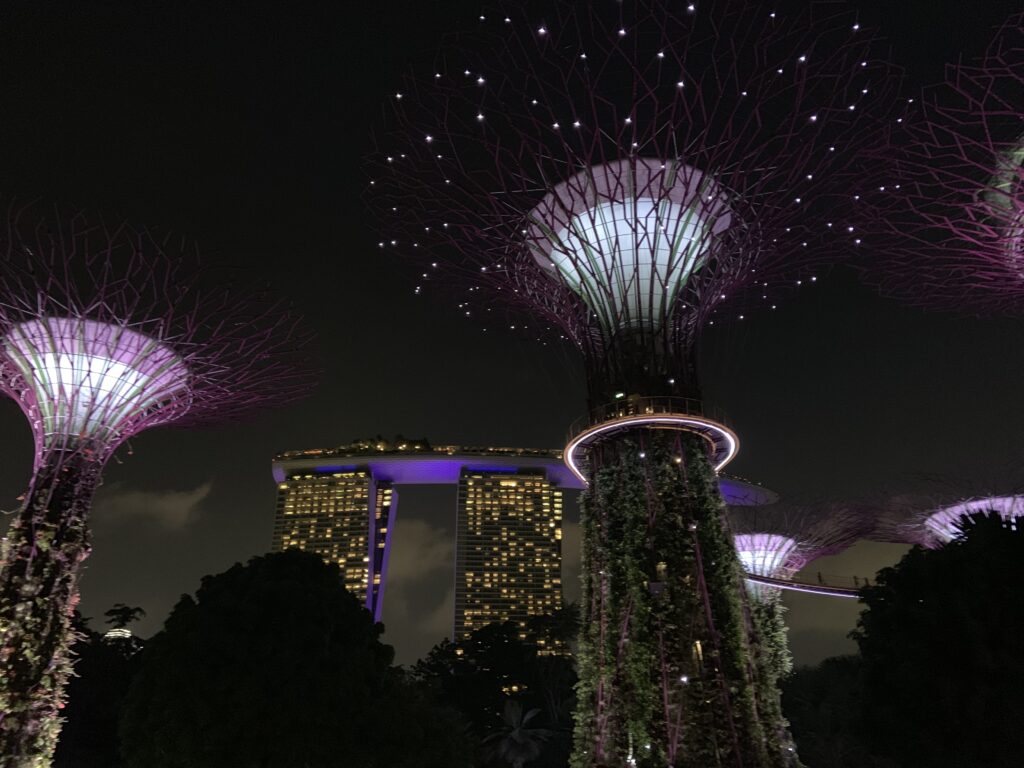
    The Supertree Light and Sound Show

    The highlight of Gardens by the Bay is, of course, the night.

    After dark, the giant Supertrees light up and a sound and light show begins. The futuristic artificial trees glowing in time with the music are a spectacular sight. And the show is completely free.

    Relax on the lawn by day, watch the light show by night. It’s a place you could spend an entire day and never get bored.


    Even the Airport Is a Tourist Attraction

    Singapore is enjoyable right up to the airport on your way out.

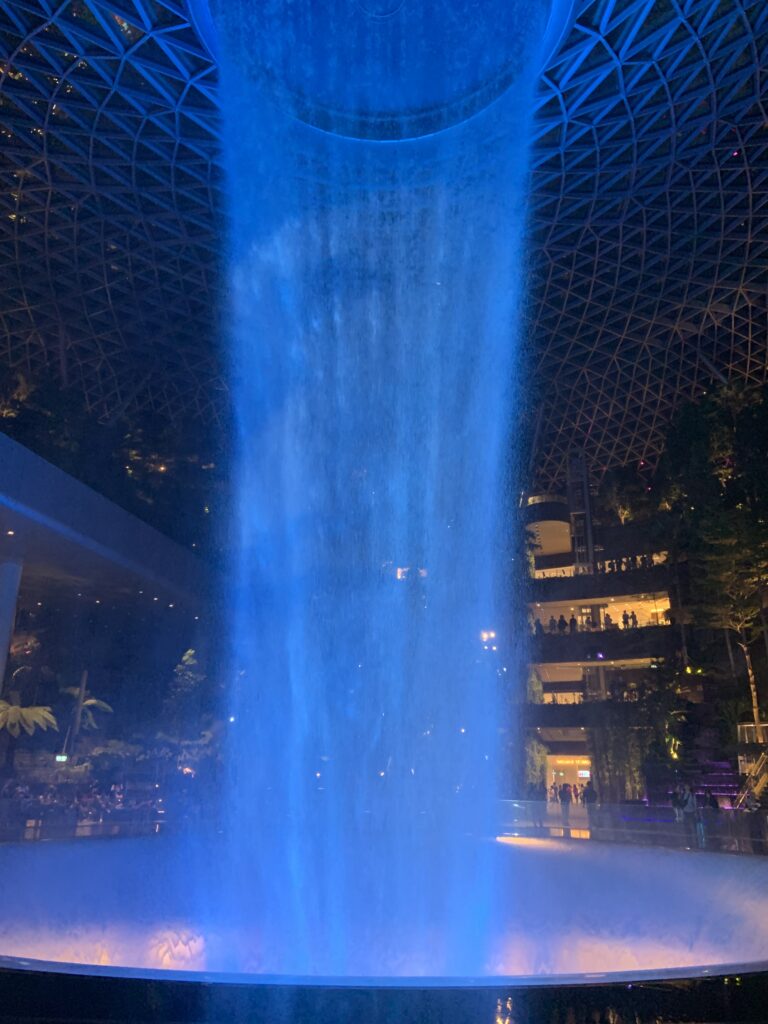
    At Jewel, the shopping mall directly connected to Changi International Airport, you can shop, but you can also be soothed by the giant indoor artificial waterfall and the forest atmosphere inside. There aren’t many airports where you can spend this much time happily. Far from being bored, I almost didn’t have enough time before my flight.


    Final Thoughts

    The room at Marina Bay Sands might be ordinary. But the view from that rooftop pool will undoubtedly stay with you for life. The illuminated pool at night especially was the moment a dream became reality.

    I took a painful hit at the casino, but even that became part of an unforgettable trip. Relaxing at Gardens by the Bay, enjoying the light show at night, and being soothed at Changi Airport on the way home. The Marina Bay area alone is more than enough to enjoy Singapore.

    Some dream destinations really are worth seeing with your own eyes at least once. Just keep your hands off the casino. Next, I want to write about Singapore’s multicultural districts and food.
  • My Hospital Experience in Malaysia: Why You Need Travel Insurance

    My Hospital Experience in Malaysia: Why You Need Travel Insurance

    There is one moment in all my years of travel when I genuinely thought I might die. It happened in Malaysia.

    The short version: if I hadn’t had travel insurance, that night would have been far more devastating. This is the story of a sudden illness in a foreign country, and why travel insurance is not something to skip.


    It Started with a Mango and a Bowl of Red Noodle Soup

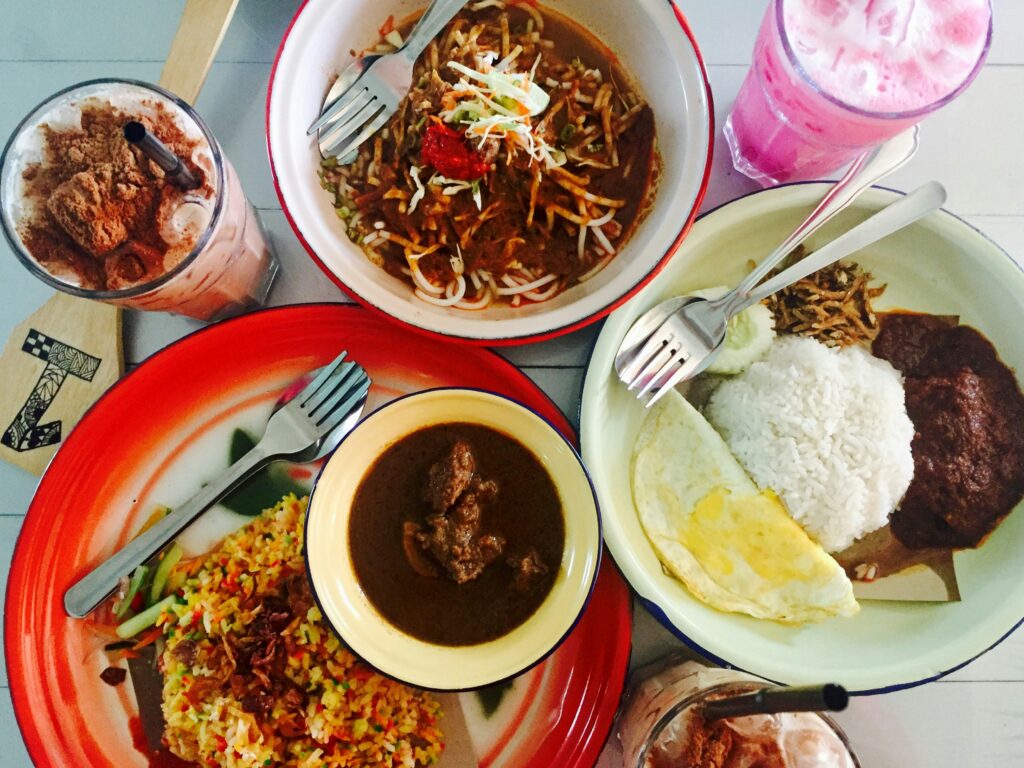
    That day I had been walking around the city. Along the way I picked up a mango from a street vendor. Later, I spotted someone nearby eating a bowl of noodles in a vivid red broth that looked too good to pass up. I ordered one.

    Looking back, one of those two things was almost certainly the cause of what followed. Or perhaps it was the unfamiliar climate catching up with me. I never found out for certain.


    Back at the Guesthouse, Something Was Wrong

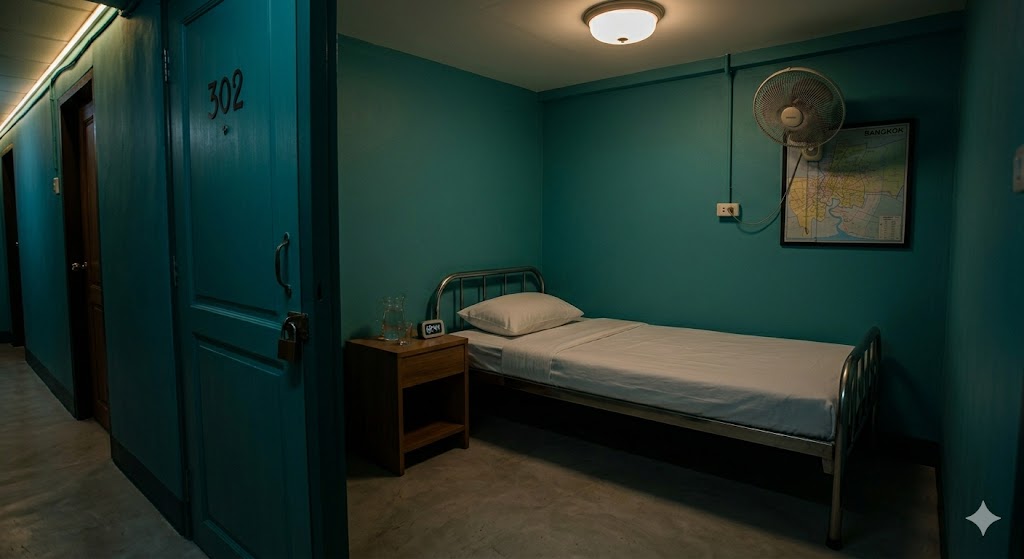
    I returned to my accommodation — a cheap place, quiet, a little dark, not many other guests around.

    I felt lightheaded and off, so I lay down on the bed for a couple of hours. Normally, a short sleep fixes almost everything. I assumed this would be no different.

    I was wrong. When I woke up, I felt worse. My stomach turned and I vomited, repeatedly.

    Every time I tried to drink water it came straight back up. My stomach felt completely inert, like it had simply stopped working. Then the shaking started.


    “I Might Actually Die Here”

    That was the moment the fear hit me.

    Lying alone in a dim guesthouse room in a foreign country, no one to call, no shared language with anyone nearby, and my body refusing to cooperate. The thought arrived clearly: if I stay here, this could get very bad.

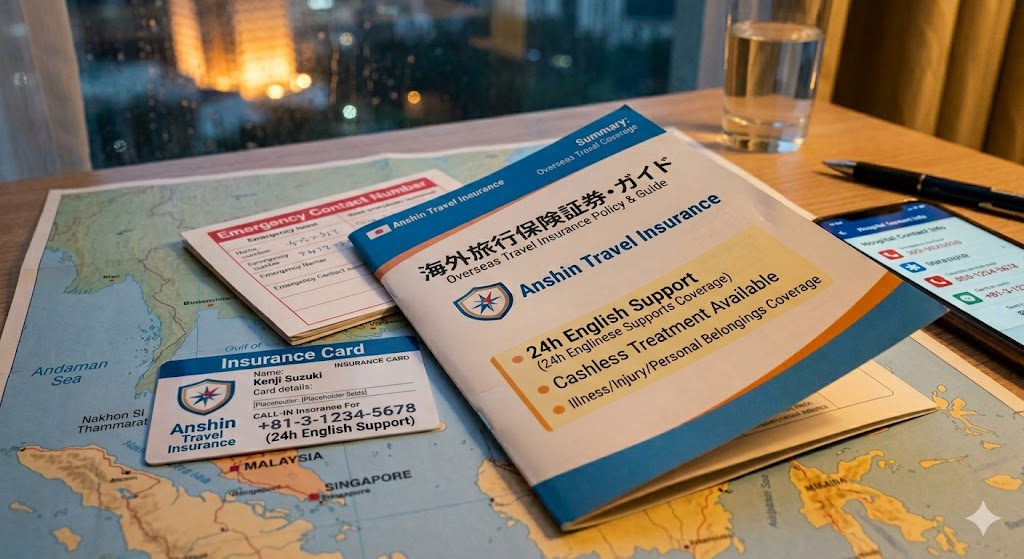
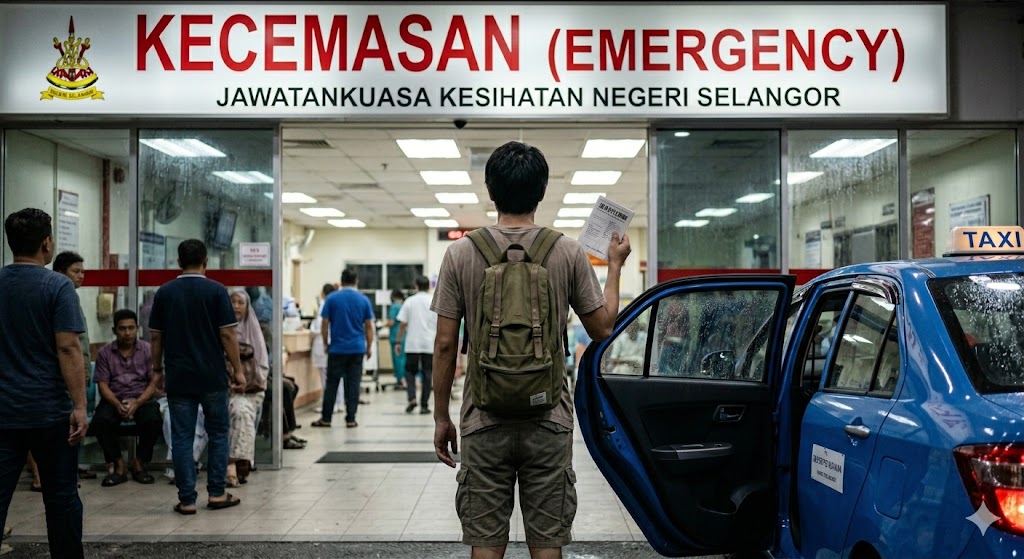
    I forced myself upright, got outside, and flagged down a taxi. The only lifeline I had was a small booklet from my travel insurance provider that listed approved hospitals in the area. I showed the driver the address and we went.


    The Emergency Room

    By the time we arrived it was night. The outpatient department was closed. The emergency entrance was open, and there were already several patients waiting.

    What happened next surprised me. A foreign patient showing up at the door, clearly unwell, unable to communicate properly, visibly distressed — the staff seemed to read the situation quickly. I was seen sooner than I expected.

    Perhaps looking genuinely terrible had its advantages.

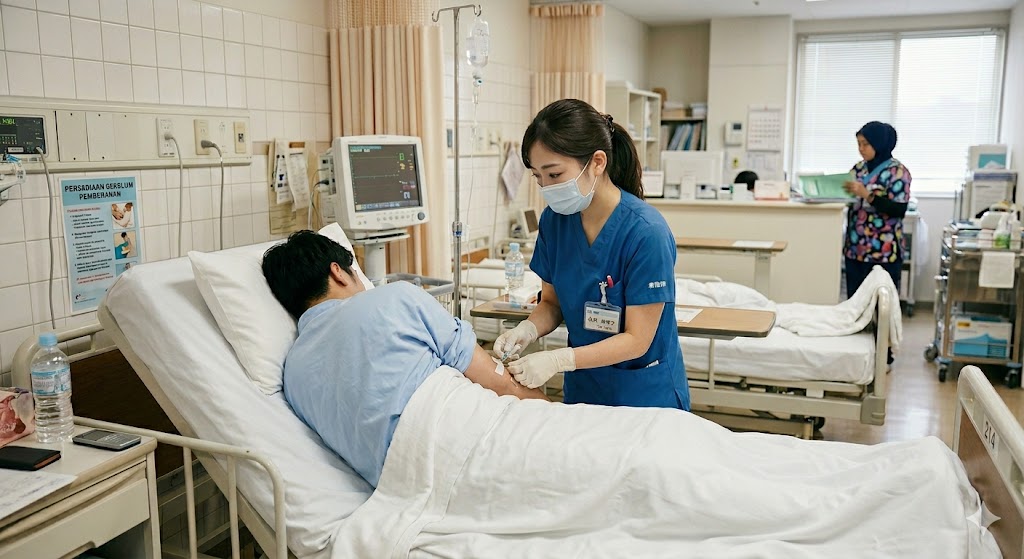
    I was admitted for the night. Through the early hours they gave me injections and medication at intervals. By morning the worst of it had passed.


    The Nurses Who Kept Peering In

    One memory from that night stays with me.

    A group of nurses kept appearing at the door of my room, peering in with expressions somewhere between curiosity and quiet amusement. It happened several times.

    Thinking about it later, a panicked foreigner who had burst into their emergency room in a state of high distress was probably a memorable sight. I can see the humor in it now. At the time I was too frightened to notice.


    Milo for Breakfast

    The next morning, a hospital breakfast tray arrived. My stomach still wasn’t right, so I couldn’t manage much of it.

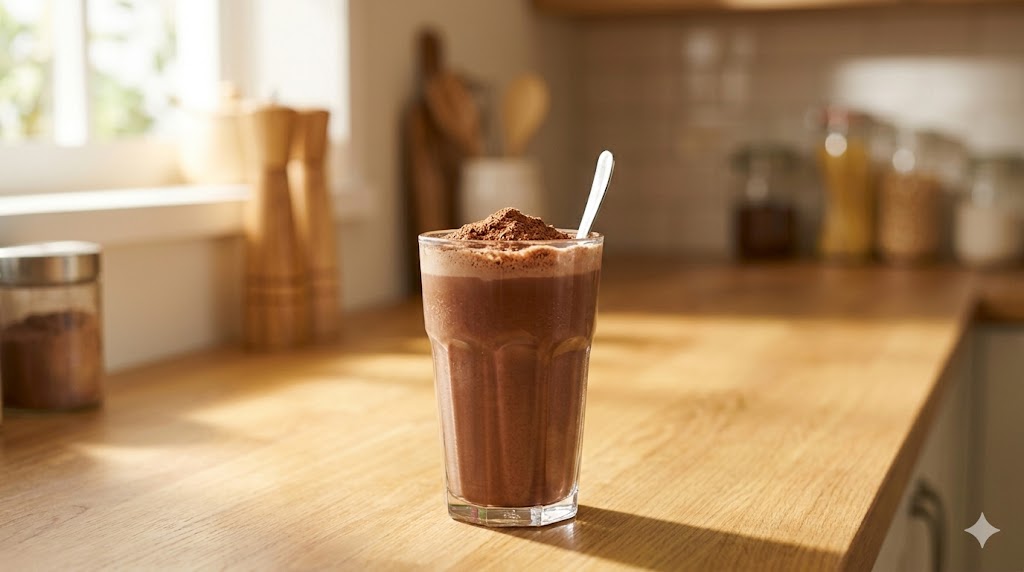
    But on the tray was a cup of Milo — the chocolate malt drink that used to be everywhere in Japan but has mostly disappeared there now. The nostalgia hit me immediately. I left everything else and drank the Milo. In a hospital bed in a foreign country, that cup of Milo was quietly comforting.


    The Bill: Around USD 450 for One Night

    At checkout, the bill came to approximately USD 450 for a single overnight stay.

    I didn’t have that much cash on me. Paying out of pocket and waiting for reimbursement would have meant a significant delay and hassle.

    Instead, I told the hospital to bill my insurance provider directly. I handed over the contact details from the insurance booklet I’d been carrying. The insurance company’s Japanese-speaking representative contacted the hospital, arrangements were made, and the bill was settled directly between them.

    I paid nothing out of pocket.

    That is what travel insurance actually does when you need it.


    Malaysian Healthcare Was Impressive

    One thing worth saying: Malaysian healthcare is genuinely good. The level of care and the facilities were comparable to what I would expect at home. I was well looked after throughout.

    After discharge I recovered fully and continued on to Singapore without further incident.


    What This Experience Taught Me

    Always carry travel insurance
    └ One night cost USD 450
    └ A more serious situation
      could cost many times more
    └ "Probably fine" is not a plan
    
    Always carry your insurance documents
    └ The booklet was my lifeline
    └ It listed approved hospitals
    └ Save the details on your phone too
    
    Tell the hospital to bill insurance directly
    └ You may not need to pay upfront
    └ Cashless settlement is available
      with many policies
    └ Check this before you travel

    A Note on Credit Card Insurance

    Credit card travel insurance
    └ Often has conditions attached
    └ May require the trip to be
      paid for using that card
    └ Coverage limits may be insufficient
    └ Read the fine print before you travel
    
    When in doubt
    └ Take out a separate policy
    └ Look for cashless settlement coverage
    └ The cost is small compared
      to the risk of going without

    Final Thoughts

    Getting sick while traveling can happen to anyone. An unfamiliar climate, unfamiliar food, accumulated fatigue — even healthy people can be hit without warning.

    That night in Malaysia, without insurance, I would have been lying in a dark guesthouse room in a foreign country, too sick to move, worrying about money on top of everything else. Insurance meant I could focus entirely on getting better.

    If you travel internationally, get travel insurance. Check that the coverage is adequate. Confirm whether cashless settlement is available. These things take ten minutes to sort out before a trip.

    No amount of money saved on a premium is worth what can happen without it.

  • Malaysia Train Travel: Cross the Border from Thailand by Night Rail

    Malaysia Train Travel: Cross the Border from Thailand by Night Rail

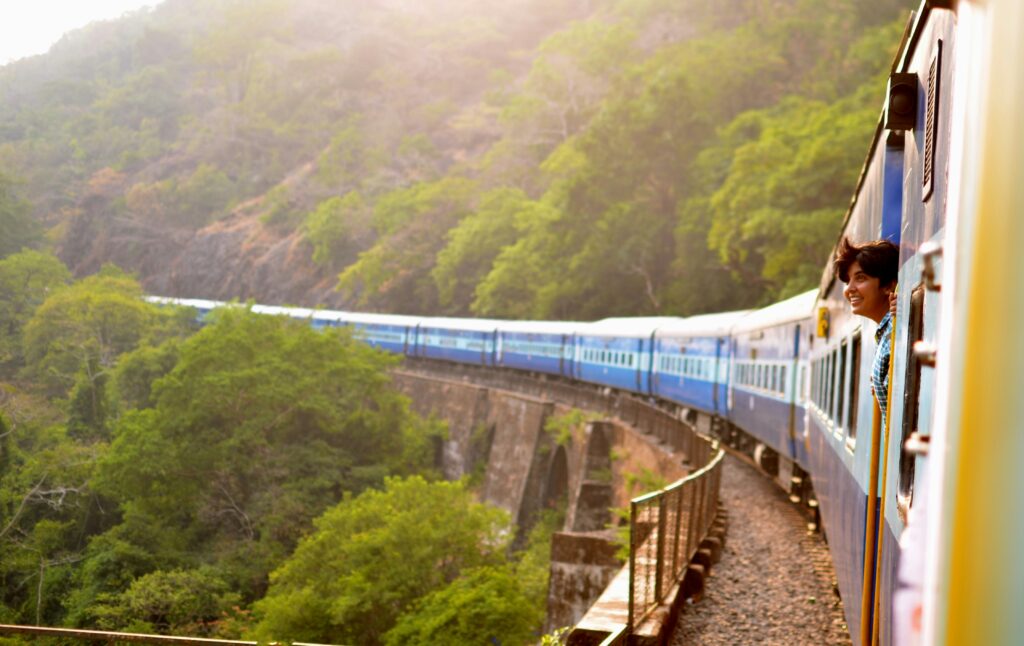
    After exploring Thailand’s beach resorts, I crossed the border by train from Surat Thani into Malaysia. Rolling south through the countryside on a sleeper train, soaking in the atmosphere of the journey itself — this is what travel in Southeast Asia is all about.

    Malaysia tends to get skipped by travelers rushing between Thailand and Singapore. That’s a mistake. Once you actually spend time here, the food alone will make you glad you stopped.


    Crossing the Border by Train

    I boarded the Malay Railway from Surat Thani in southern Thailand and crossed overland into Malaysia.

    Taking the sleeper train all the way from Bangkok to Malaysia is slow, but the atmosphere is hard to beat. Watching the landscape shift as you move south, passing through small towns and jungle — this is a kind of travel that flying simply can’t replicate.

    The Malay Railway border crossing route
    └ Bangkok Central Station sleeper train
      (Train 45 etc.) to Padang Besar
      (approximately 16 hours)
    └ Thai exit and Malaysian entry
      immigration completed at
      Padang Besar station
    └ Transfer to KTM ETS high-speed train
    └ KL Sentral station in about 5.5 hours

    Crossing a land border is a special experience. As of 2026, a special direct service called the “MySawasdee Express” also runs between Hat Yai in southern Thailand and Kuala Lumpur on selected dates.

    photo by JK on Unsplash

    Langkawi: Beach Resort on the Andaman Sea

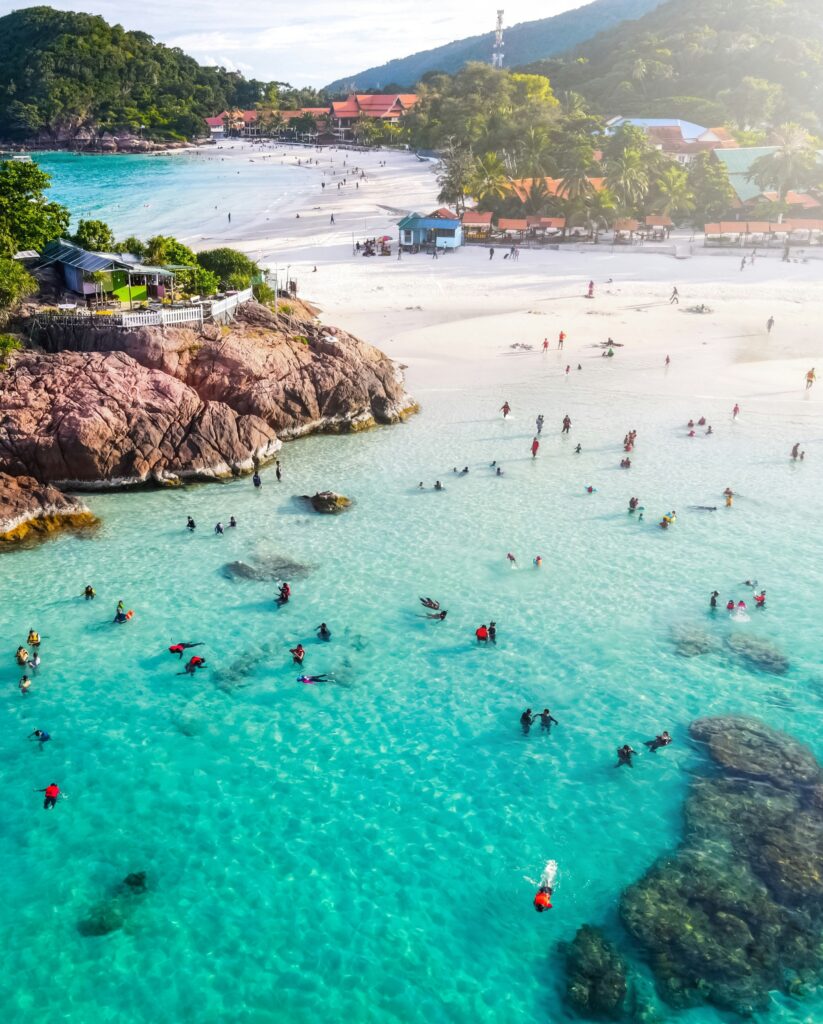
    On the Malaysian side of the Andaman Sea sits Langkawi, a beautiful beach destination that holds its own against anything Thailand has to offer.

    Close to the Thai border, this lush island is entirely designated as a duty-free zone. Beer, chocolate and other goods can be bought at prices well below the rest of Malaysia. Beyond the beaches, kayaking tours through the mangrove jungle are popular.

    If you’ve already spent time on Thai beaches, Langkawi still has plenty to offer.

    photo by Nazarizal Mohammad on Unsplash

    The Japanese Food in Penang Shocked Me

    Before heading to Kuala Lumpur, I made a stop in Penang. Something unexpected happened here.

    The Japanese food at a street stall was extraordinary. I ordered katsudon and miso soup, and for a moment I genuinely forgot I was overseas. The quality coming out of a street stall was remarkable.

    Everything else I ate there was equally impressive.

    Penang’s George Town is a UNESCO World Heritage Site, its colonial-era streets lined with famous street murals. But it’s above all known as Malaysia’s premier food city.

    Penang street food highlights
    └ Char Kway Teow
      (stir-fried flat rice noodles)
    └ Assam Laksa
      (sour and spicy fish-based noodle soup)
    └ Gurney Drive and other hawker centers
      packed with locals every evening

    Malaysian Food Is the Best in Southeast Asia

    Honest opinion: Malaysian food is the best I’ve eaten in Southeast Asia.

    Dishes that stood out
    └ Nasi Lemak (national dish)
      Coconut rice served with
      spicy sambal, anchovies,
      peanuts and boiled egg
      I ate this multiple times every day
    └ Rice with three sides
      (choose your own combination)
    └ Bak Kut Teh
      Pork ribs simmered in
      herbal broth, a Chinese-Malaysian classic
    └ Satay
      Grilled skewers with peanut sauce

    Why is Malaysian food so good? Because Malaysia is a multi-ethnic country. Malay, Indian and Chinese food cultures have merged over generations, producing a range and depth of flavor that’s hard to find anywhere else. The use of spices and coconut milk creates a richness that keeps you coming back.

    photo by Damia Mustafa on Unsplash

    Kuala Lumpur Is a Modern City

    Kuala Lumpur was more developed than I expected.

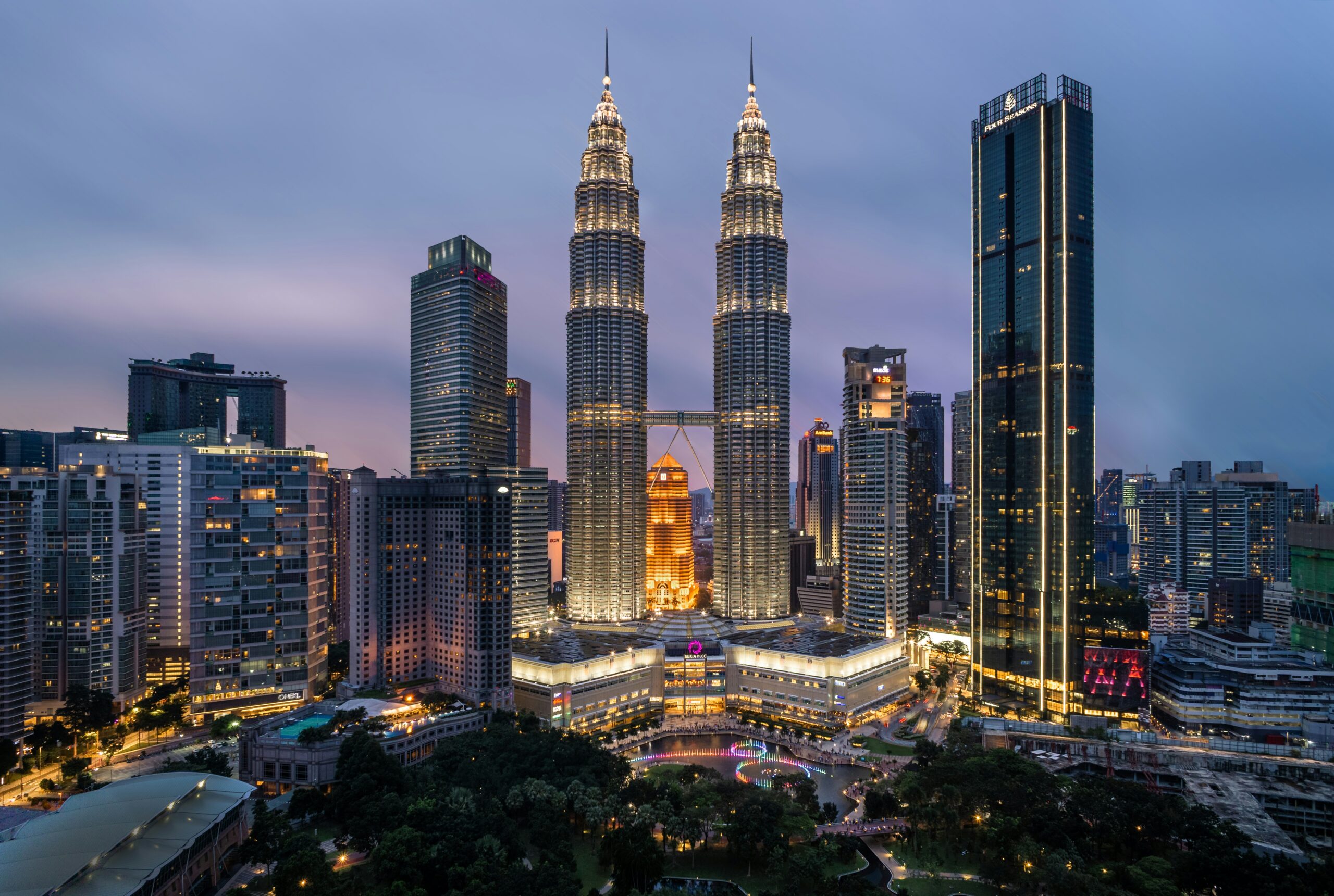
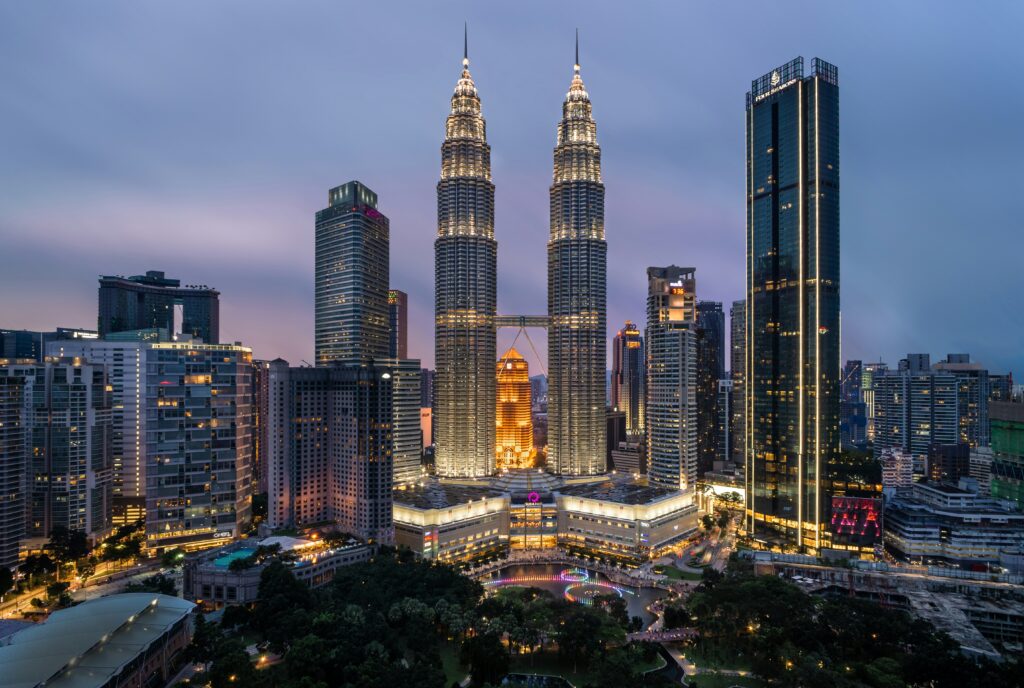
    KLCC (Kuala Lumpur City Centre) is home to the Petronas Twin Towers, the city’s unmistakable symbol. At 452 meters tall, you can visit the Sky Bridge on the 41st floor and the observation deck on the 86th.

    Petronas Twin Towers tips
    └ Tickets are limited
      book online in advance through
      the official site
    └ Walk-up tickets often sell out early
    └ The illuminated towers viewed
      from KLCC Park at night
      are free and spectacular

    Grab works seamlessly in Kuala Lumpur. If you’ve already been using it in Thailand, you can use exactly the same app without any setup.

    photo by Esmonde Yong on Unsplash

    Borneo: Wild Orangutans in the Jungle

    A place I didn’t make it to this time, but one that stays on my list.

    Borneo highlights
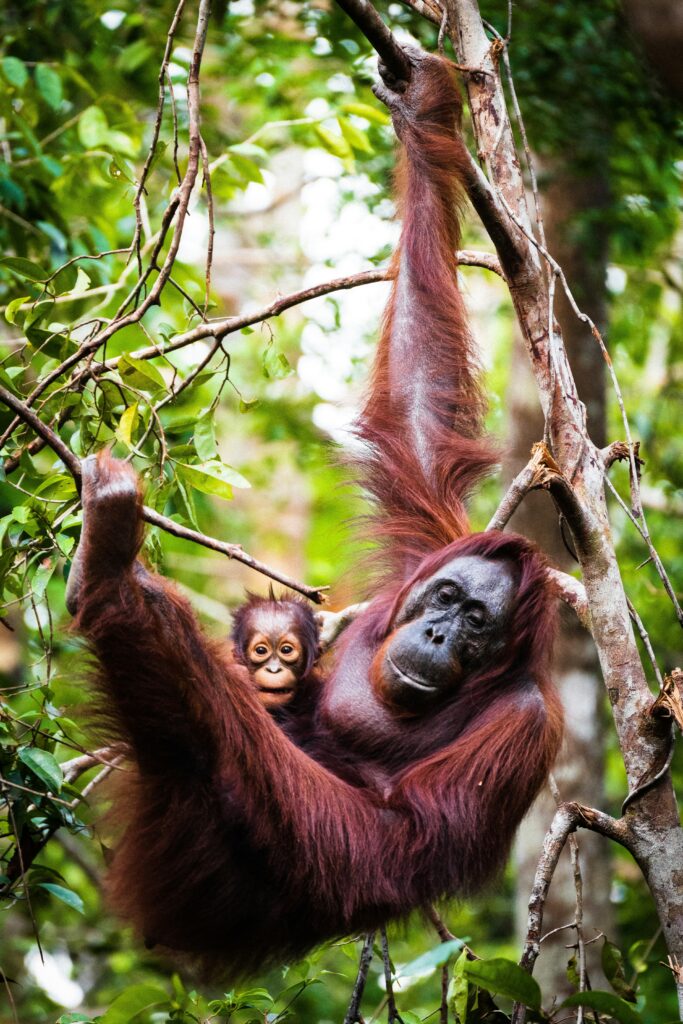
    └ Sepilok Orangutan
      Rehabilitation Centre
      Watch rescued orangutans
      being fed up close
    └ Kinabatangan River cruise
      Chance to spot wild proboscis
      monkeys and pygmy elephants

    A completely different face of Malaysia from the cities.

    phtoto by Dimitry B on Unsplash

    Understanding Islamic Culture

    Malaysia is an Islamic country, but it’s a tolerant, multi-religious society. A few things worth knowing.

    Cultural notes
    └ At mosques, cover shoulders and knees
      Robes are often loaned free at
      major mosques
    └ Use your right hand for
      giving, receiving and eating
    └ Muslim-run establishments
      don't serve pork or alcohol
      Chinese and Indian restaurants
      and tourist venues serve both

    Essential Travel Information

    Best season
    └ West coast (KL, Penang, Langkawi)
      November to March is driest
    └ East coast and Borneo
      April to October is best
    
    Cost
    └ Roughly half to two-thirds
      of prices in the US or Europe
    └ Local hawker stalls around
      USD 2-4 per meal
    └ Alcohol is heavily taxed
      and costs similarly to back home
    
    Safety
    └ Relatively safe by
      Southeast Asian standards
    └ Watch for pickpockets and
      bag snatchers in busy areas
    └ Grab is the safest way to get around

    The Perfect Detour Between Thailand and Singapore

    Too many travelers pass straight through Malaysia without stopping. That’s worth reconsidering.

    Low prices, outstanding food, multi-cultural energy, beaches and a modern city all in one country. Grab works everywhere. It’s easy.


    Final Thoughts

    Taking the train south from Thailand, eating my way through Penang, and arriving in Kuala Lumpur on the rail — Malaysia made for a perfect chapter in a longer Southeast Asian journey.

    The food surprised me more than anything else. If you’re planning a trip between Thailand and Singapore, build in a few days here. The detour will be worth it.

    Next stop: Singapore.

  • Thailand Packing List & Best Time to Visit: 20 Years of Travel Tips

    Thailand Packing List & Best Time to Visit: 20 Years of Travel Tips

    After 20 years of traveling to Thailand, I’ve learned what to bring, what to leave behind, and when to go. This guide cuts through the noise and tells you what actually matters.


    Thailand Has Three Seasons

    Cool Season (November - February)
    └ Best season for travel
    └ Less rain, comfortable temperatures
    └ Clearest sea conditions
    └ Higher prices for flights and hotels
    
    Hot Season (March - May)
    └ Hottest time of year, up to 40°C
    └ Songkran water festival
    └ Brutal for daytime sightseeing
    
    Rainy Season (June - October)
    └ Daily heavy downpours, usually 1-2 hours
    └ Cheapest time to travel
    └ Lush scenery and great fruit
    └ Roads can flood
    photo by Evan Krause on Unsplash

    The Biggest Trap: Different Regions Have Different Rain Seasons

    Thailand is long and narrow, so the weather varies dramatically by region. This catches many travelers off guard.

    Bangkok (Central)
    └ Hot year-round
    └ Rainy season brings evening downpours
    
    Chiang Mai (North)
    └ Cool season mornings can drop to 15°C
    └ February-April: smoke and PM2.5
     from agricultural burning
    
    Phuket (Andaman Sea side)
    └ Rainy season: May - October
    └ Many beaches closed to swimming
    
    Koh Tao, Koh Phangan, Koh Samui
    (Gulf of Thailand side)
    └ Rainy season: October - December
    └ Sunny in July and August
    └ Better choice than Phuket
     during summer holidays

    This is crucial. Travelers who visit Phuket during summer often hit the rainy season. The Gulf of Thailand islands are the smarter choice in July and August.

    photo by Ibrahim Rifath on Unsplash

    The Four Things You Actually Need

    After all these years, it comes down to four essentials.

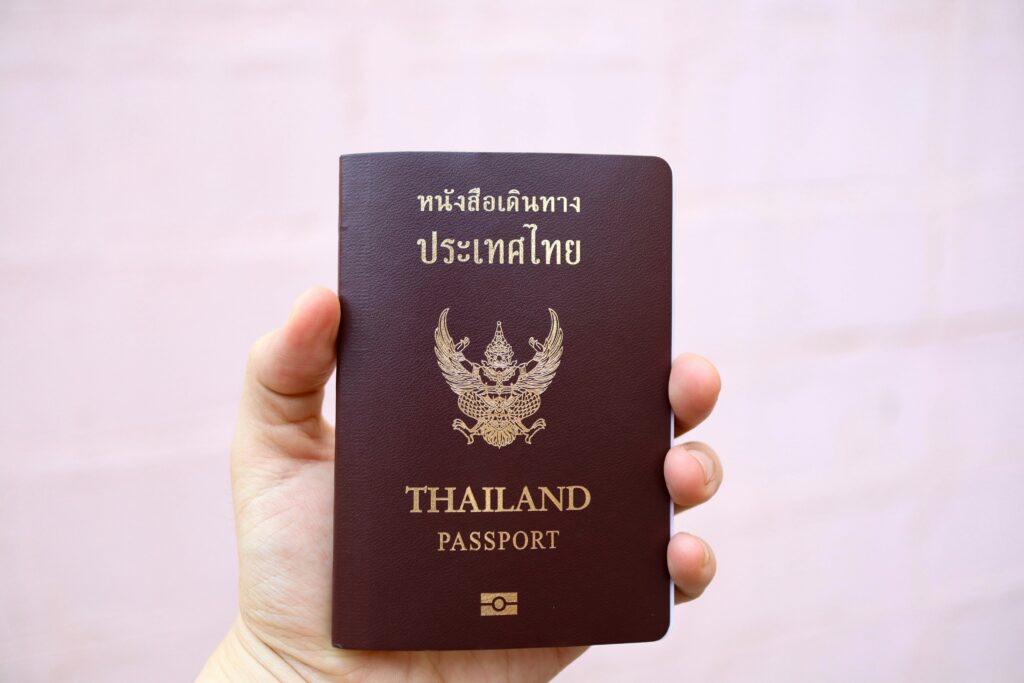
    └ Passport (minimum 6 months validity remaining)
    └ Cash (Thai baht)
    └ Credit card with cash advance function
    └ Smartphone

    Most other things can be bought locally. Thailand has pharmacies everywhere. Travel light and buy what you need when you need it.


    photo by Noppon Meenuch on Unsplash

    Do This Before You Leave

    TDAC (Digital Arrival Card)
    └ Register online up to 72 hours before arrival
    └ Free and mandatory
    
    Check your passport validity
    └ Must have 6+ months remaining
    
    Sort out your mobile data
    └ Check if your current plan covers Thailand
    └ If not, get an eSIM before departure
    └ SIMs are also available at Thai airports
    
    Install Grab
    └ Register your credit card in advance
    └ Makes getting around dramatically easier
    
    Travel insurance
    └ Check if your credit card includes coverage
    └ If not, take out a policy before departure

    photo by Julia Kicova on Unsplash

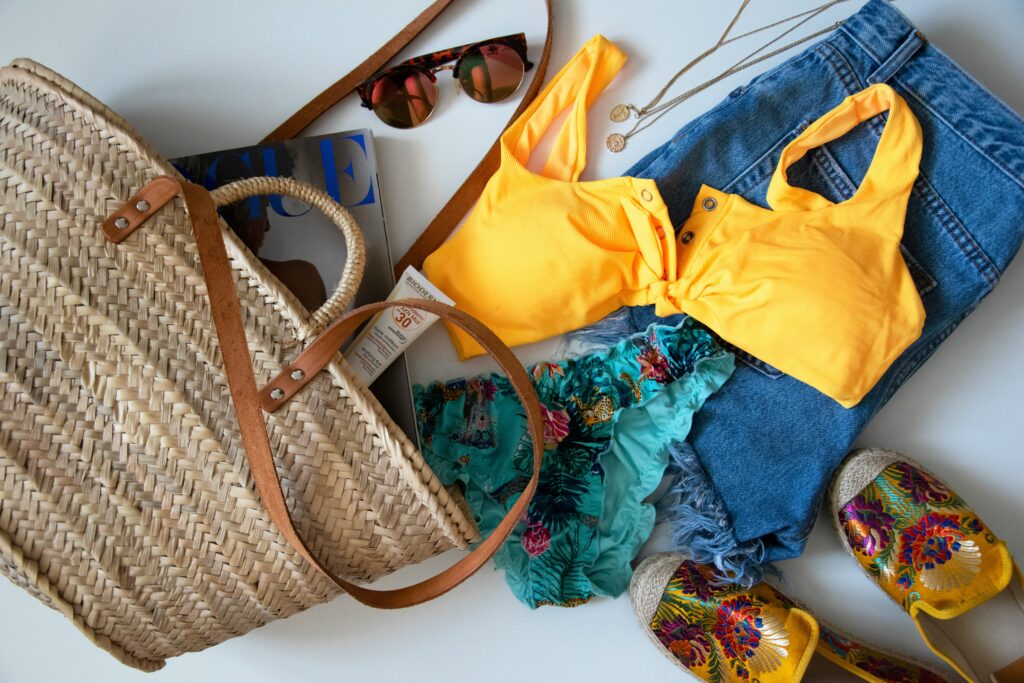
    For Beach Trips

    └ Swimwear
    └ Beach sandals
    └ Reef-safe sunscreen
    └ Motion sickness medication
     (essential for speedboats to islands)
    └ Waterproof phone case

    Motion sickness medicine is not optional on island ferry routes. The boats can get rough. Bring it regardless of whether you think you need it.

    UnsplashThe DK Photography

    Things People Forget

    Something warm to wear

    Long-distance buses and trains in Thailand run their air conditioning at arctic levels. Bring a light jacket or cardigan regardless of the season outside.

    Temple-appropriate clothing

    Temples turn away visitors in sleeveless tops, short shorts, miniskirts, or ripped jeans. Pack a light cover-up and long pants.

    photo by Brenton Williamson on Unsplash

    Wet wipes

    Street food stalls and public toilets often have no paper. Wet wipes earn their weight every single day.

    Reusable bag

    Plastic bags are no longer provided free at convenience stores and supermarkets.


    Watch Out on the Plane

    Neck pillow
    └ Useful for long flights
    
    Inflatable foot rest
    └ Some airlines including Thai Airways
     do not permit these
    └ Check the rules before packing one

    Never Bring These

    E-cigarettes (vapes)
    └ Illegal in Thailand
    └ Confiscation and heavy fines
    └ Leave them at home, no exceptions
    
    Shisha pipes
    └ Also prohibited
    
    Regular cigarettes
    └ These are fine

    E-cigarettes are illegal in Thailand. This surprises many travelers who use them at home. Do not bring them under any circumstances.


    Money and Exchange

    Exchange money in Thailand, not before
    └ Rates at home airports are poor
    └ Bangkok exchange booths offer
     far better rates
    └ Look for Super Rich (green or orange signs)
    
    Always carry cash for
    └ Street food stalls
    └ Tuk-tuks
    └ Small local shops
    └ Tips
    └ Keep small bills handy (20 and 100 baht)
    
    Credit cards work at
    └ Mid to large hotels and restaurants
    └ Shopping malls
    └ Grab ride payments

    Don’t Worry About Food

    If the local food isn’t working for you, McDonald’s, Burger King and other fast food chains are everywhere. There’s always a fallback option.

    photo by Andrew Ly onUnsplash

    When Exhaustion Hits

    Thailand is hot year-round and sightseeing drains energy fast. Every convenience store stocks energy drinks including the original Thai Red Bull. It works. Keep one handy on long travel days.


    Suitcase or Backpack?

    Suitcase makes sense for
    └ Bangkok and Chiang Mai city trips
    └ Hotel-based travel
    └ Buying lots of souvenirs
    
    Backpack makes sense for
    └ Island hopping
    └ Koh Tao and Koh Phangan involve
     boats, beaches and sandy paths
    └ A suitcase becomes a burden fast

    Leave These at Home

    Too many clothes
    └ Laundry services are cheap and everywhere
    └ Buying a local t-shirt is part of the fun
    
    Heavy guidebooks
    └ Your phone handles everything
    
    Heeled shoes
    └ Bangkok pavements are uneven
    └ Sneakers and sandals are all you need

    photo by Sumit Chinchane on Unsplash

    Final Thoughts

    The most important decisions in Thailand are timing and region. Get those right and everything else falls into place.

    For everything else, the four essentials cover you. Travel light, buy what you need locally, and enjoy the fact that Thailand makes everything easy.

    Just leave the e-cigarettes at home. Every time.

  • Koh Phangan Full Moon Party Guide: Survival Tips & Night of Endless Dancing

    Koh Phangan Full Moon Party Guide: Survival Tips & Night of Endless Dancing

    Koh Phangan is the island that appeared in the movie “The Beach.” Though the film never mentioned it, this island became world famous for its monthly Full Moon Party. Often called one of the world’s three great raves, it’s a legendary beach party held on the night of the full moon.

    I’ve always loved club music, and I first learned about Koh Phangan from a book by a traveler who toured outdoor raves around the world. I have to go there someday. That thought stayed with me for years, until the night it finally came true. This is that story.


    Getting to Koh Phangan

    I traveled from Bangkok by sleeper train to Surat Thani, then transferred to a ferry. Since it saves on accommodation costs, this is a popular route among backpackers.

    Route 1: Fastest and most comfortable
    └ Flight to Koh Samui + ferry
    └ About 4-5 hours
    
    Route 2: Budget-friendly
    └ LCC to Surat Thani + bus + ferry
    └ About 5-6 hours
    
    Route 3: For atmosphere and lowest cost
    └ Night train/bus + ferry
    └ About 11-16 hours

    Since it’s close to Koh Tao, flying to Koh Samui and transferring to a ferry is the easiest option.

    photo by Sotiris Savvides on Unsplash

    I Arrived a Week Before the Party

    I’d heard that accommodation gets hard to book right before the Full Moon Party, so I reserved a cottage and stayed from about a week before. This turned out to be the right call. Popular places fill up two to three months in advance around the full moon, so early booking is essential.

    It let me enjoy the days leading up to the party at a relaxed pace. Koh Phangan has many beaches, so I spent my days lounging around or exploring the island on a rented motorbike.

    photo by Eirik Skarstein on Unsplash

    How I Ended Up Covered in Blood

    The island has songthaews (shared taxis), so getting around isn’t a problem. But renting a motorbike gives you total freedom and amplifies that sense of island liberation.

    This is where I messed up. I didn’t have much motorbike experience, and I crashed in town, ending up covered in blood.

    Fortunately I only had a few scrapes. The real problem was something else. The rented bike was brand new, so I had to pay a hefty repair bill. Honestly, the damage to my wallet hurt more than the damage to my body.

    Koh Phangan has very steep roads and tourist scooter accidents are common. If you’re not confident riding, just use the songthaews.

    photo by Casper Westera on Unsplash

    Waved Through the Police Checkpoint on the Full Moon Night

    On the night of the Full Moon Party, I headed to the venue by motorbike around midnight.

    There was a police checkpoint along the way. Since Koh Phangan is famous for parties, drugs circulate here and police crackdowns have intensified. The car of Western tourists ahead of me was stopped and subjected to a drug check.

    I wasn’t carrying anything, but perhaps because I was mistaken for a local Thai, I was simply waved through. My sun-tanned face may have worked in my favor.


    The Beach Transforms into a Massive Outdoor Club

    When I arrived at Haad Rin Beach just after midnight, it was packed with people. The roughly 800-meter beach had transformed into a giant outdoor club.

    There were countless outdoor booths and bars, fire dance shows blazing everywhere, and the whole atmosphere was overwhelming. It lives up to its reputation of drawing 20,000 to 30,000 young people from all over the world.

    The scene
    └ More than 10 stages
    └ EDM, techno, hip-hop, reggae, trance
    └ Neon body paint everywhere
    └ Spectacular fire shows
    └ The iconic "bucket cocktails" sipped through straws

    Each booth plays a different genre, so I claimed my spot at the trance area.


    Dancing Until 7AM, Fueled by Beer

    At the trance booth, I danced fueled by nothing but beer. Before I knew it, it was 7 in the morning.

    What amazed me was that even without any drugs, the music and party atmosphere alone had my brain flooding with natural highs. Dopamine must have been pouring out. I felt no fatigue at all and danced until dawn, genuinely surprising myself.

    As the sun rose, the party ended and I returned to my room to sleep. That sense of unity and euphoria was more than enough of an experience without resorting to anything artificial.

    photo by Danny Howe on Unsplash

    Never Touch Drugs

    I want to say this firmly.

    The danger of drugs
    └ Thailand is extremely strict on illegal drugs
    └ Undercover stings and random urine tests happen
    └ Worst case can mean the death penalty
    └ Even recreational cannabis use in public is illegal

    As I proved by dancing until morning, the music and atmosphere alone are more than enough. There’s no reason to risk throwing your life away.


    Other Safety Tips

    Drink spiking (sedatives)
    └ Never accept drinks from strangers
    └ Never leave your bucket cocktail unattended
    
    Clothing and belongings
    └ Always wear shoes (broken glass on the beach)
    └ Minimal cash, leave passport at your hotel
    └ Use a waterproof case and strap for your phone
    
    Fire rope (skipping)
    └ People get severe burns trying it drunk
    └ Just watch, don't participate
    
    Don't go in the sea at night
    └ Drunk drowning accidents happen
    phtoto by Yoav Aziz on Unsplash

    Daytime Koh Phangan Is Wonderful Too

    Koh Phangan isn’t just a party island. Its rich nature is a major draw.

    Daytime activities
    └ Bottle Beach Viewpoint (scenic trekking)
    └ Sri Thanu area (world-famous yoga and healing hub)
    └ Ang Thong National Marine Park tour
    └ Zen Beach (sunsets and chill vibes)
    └ Mae Haad Beach (walk to an island at low tide)

    The Sri Thanu area in particular is renowned as a yoga mecca. The coexistence of wild parties and quiet yoga is, I think, the strange charm of Koh Phangan.


    Thailand’s EDM Scene Is Hot Right Now

    Thailand’s EDM scene is on fire at the moment.

    Belgium’s world-famous EDM festival “Tomorrowland” is reportedly holding its first Thailand edition near Pattaya this December. Tickets are apparently already sold out, so if it returns next year, I want to try for it. I’m personally a big Avicii fan, and surely his tracks will play.

    Thailand has also seen outdoor EDM events heat up during the Songkran water festival. The stage blasts huge amounts of water over the crowd, everyone gets soaked, and it’s an absolutely incredible time.


    Best Season

    December - April (dry season)
    └ Most stable weather, peak high season
    
    July - August
    └ Coincides with European summer holidays, huge crowds
    
    Avoid
    └ October - November (monsoon, heavy rain and high waves)

    Final Thoughts

    The Full Moon Party on Koh Phangan exceeded my wildest expectations. Under the full moon, 20,000 people dancing wild on an 800-meter beach. I surrendered to the rhythm of trance and danced until 7AM, fueled by nothing but beer.

    Without relying on anything artificial, music and a sense of unity alone can lift a person that high. That night taught me this firsthand.

    If you love club music, go to Koh Phangan under a full moon at least once in your life. Just be careful with the motorbike and the drugs. The former hurts your wallet, the latter your entire life.

  • Koh Tao Diving Guide: How a Non-Swimmer Got a Cheap License in Thailand

    Koh Tao Diving Guide: How a Non-Swimmer Got a Cheap License in Thailand

    Koh Tao in Thailand is a mecca for divers from around the world. It’s also the island where you can get a diving license cheaper than anywhere else on earth.

    I’ll be honest with you. I’ve never been a good swimmer. Yet here on Koh Tao I earned my Open Water certification, and went on to get my Advanced license later in Dahab, Egypt. I did it while vomiting from seasickness and getting scolded by a female instructor who refused to let me quit. This is that story.

    photo by Hasmik Ghazaryan Olson on Unsplash

    Getting to Koh Tao from Bangkok

    I traveled from Bangkok on a joint bus and ferry ticket. Most long-distance tours from Bangkok depart from the Khao San Road area, making it a convenient starting point.

    Route 1: Overland (cheapest, classic)
    └ Bus + Ferry
    └ About 10-12 hours
    └ Around 1,250-1,550 baht
    └ Night departure from Khao San, arrive morning
    
    Route 2: Budget flight + ferry
    └ LCC to Chumphon + bus + ferry
    └ About 6-8 hours
    └ Around 2,500-3,500 baht
    
    Route 3: Fastest and most comfortable
    └ Flight to Koh Samui + ferry
    └ About 4-6 hours
    └ Around 5,000-7,000 baht

    If time is limited, flying to Koh Samui and catching the ferry from there is by far the most comfortable option.


    Choose a Dive School in Your Own Language

    There are plenty of dive schools on Koh Tao. When I visited, I chose one with Japanese-speaking staff.

    Most dive schools have accommodation and restaurants on site, so you can enjoy a relaxed resort stay between sessions. That’s one of the great things about Koh Tao.

    English and Japanese-friendly schools (2026)
    └ Big Blue Diving (established Japanese-run shop)
    └ Ban's Diving Resort (world-class mega resort)
    └ Houbouya Koh Tao (20+ years of safe operation)
    └ Coral Grand Divers

    Whatever language you speak, always choose a school that can teach you in your mother tongue. This involves your life. It’s not a place to cut corners.

    photo by Desiree M on Unsplash

    My Instructor Who Claimed to Know a Japanese TV Celebrity

    The instructor assigned to me claimed to be connected to a famous Japanese TV personality. I won’t pretend that made any sense to non-Japanese readers, but it was the kind of strange, memorable detail you only get on the road.

    The group was multinational but everyone clicked immediately. The days spent working toward the license were genuinely fun. Diving alongside people from around the world is one of those travel experiences that stays with you.


    Cost and Time to Get Open Water Certified

    Koh Tao is known as the cheapest place in the world to get a diving license.

    Cost
    └ Around 10,000 baht (approximately USD 280)
    └ Includes materials, certification fees,
      equipment rental
    └ Some schools include free accommodation
    
    Time needed
    └ 3-4 days
    └ Complete online theory in advance
      and you can finish in as little as 3 days

    Underwater Is Another World

    I was never a strong swimmer, but diving is something else entirely compared to snorkeling.

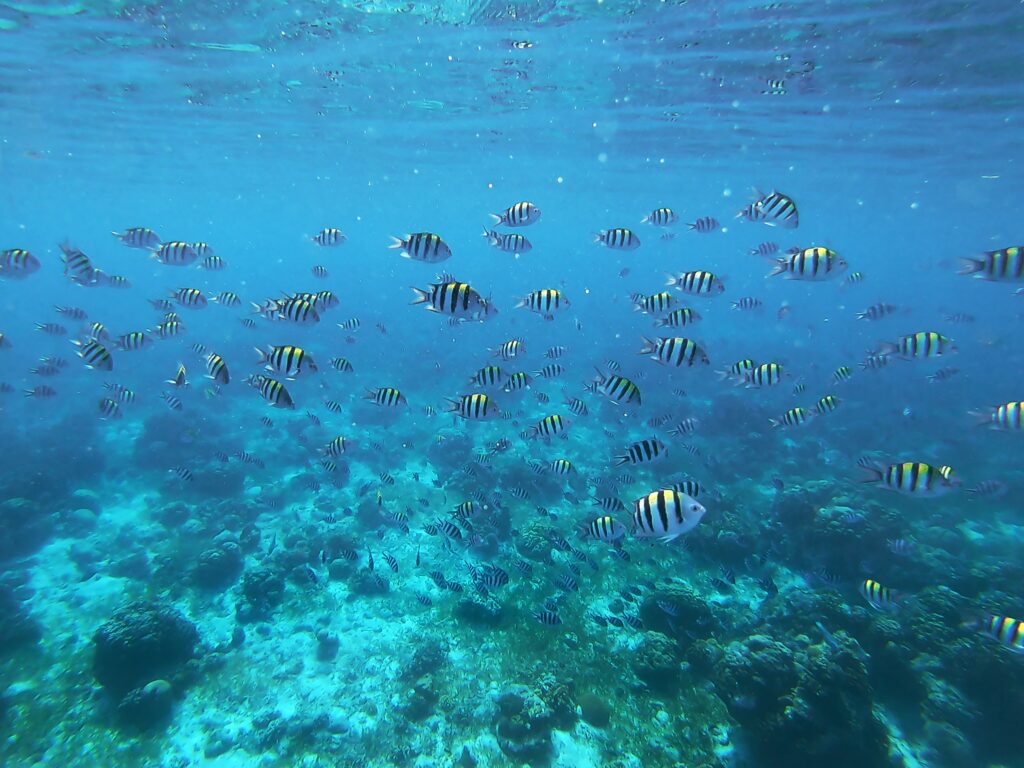
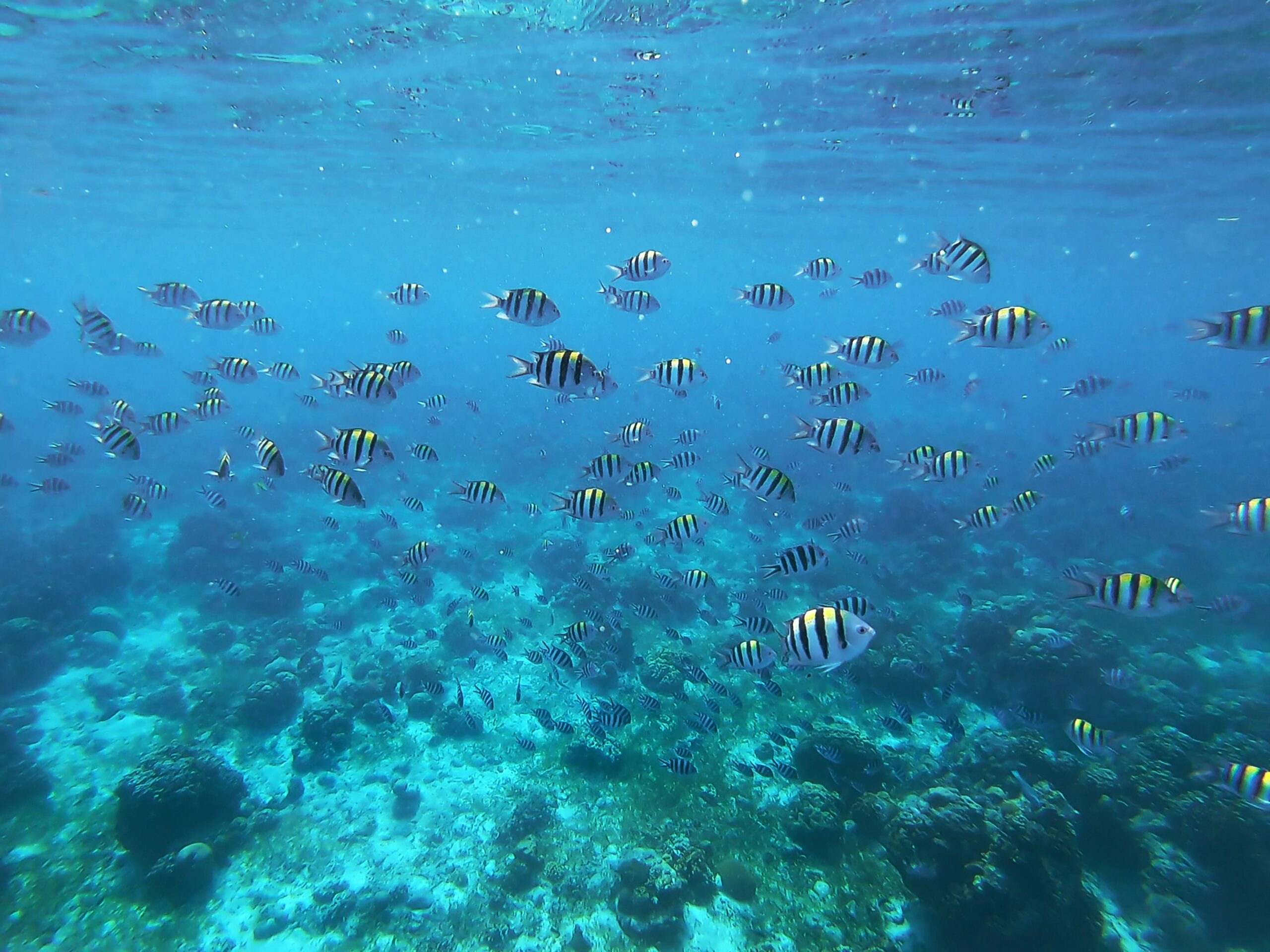
    The moment you descend into clear water and see enormous fish and schools of thousands moving around you, it feels like floating in outer space. That weightless, silent world is unlike anything else I have ever experienced.

    The marine life around Koh Tao is extraordinary.

    What you might see
    └ Giant schools of trevally and barracuda
    └ Yellowstripe scad (like a golden carpet)
    └ Sea turtles and clownfish
    └ Whale sharks
    photo by Max Gotts on Unsplash

    I Missed the Whale Shark

    Koh Tao is world famous for whale shark sightings. Another group on my trip encountered one. I did not.

    Best times for whale sharks
    └ March - May (dry season)
    └ October - November
    └ Chumphon Pinnacle and other offshore spots

    That remains unfinished business. One day I will swim with one.

    photo by Sebastian Pena Lambarri on Unsplash

    The Seasickness Was Brutal

    I have to be honest. The worst part of the whole experience was seasickness.

    Koh Tao diving is mostly done from boats, and when the weather turns, those boats rock hard. I got so sick I genuinely wanted to quit and go home. I had earned exactly zero sympathy from my female instructor, who made it very clear that giving up was not an option.

    Surprisingly, once I got underwater, the motion was gone. The ocean below the surface was completely calm.

    The moment I will never forget

    During our first classroom session, the instructor mentioned that if you need to vomit underwater, you can do it through the regulator. Just exhale hard and it clears.

    I used this information sooner than expected.

    What happened next was that a cloud of vomit drifted into the water around me, and within seconds a swarm of fish descended on it, apparently mistaking it for food. It was disgusting and somehow also one of the most memorable moments of the entire trip.

    photo by Hiroko Yoshii on Unsplash

    Seasickness Prevention Is Non-Negotiable

    Learn from my experience. Bring motion sickness medicine.

    Best option in Thailand
    └ Available at 7-Eleven and pharmacies
    └ "Dimenhydrinate" small yellow tablets
    └ Around 10 baht per pack
    └ Take 30 minutes before boarding
    └ Warning: causes strong drowsiness

    On the boat, avoid looking down at your phone. Sit in the middle or rear section where there is airflow, and keep your eyes on the horizon.


    Best Spots on Koh Tao

    Sairee Beach
    └ Largest beach on the island
    └ Cafes, bars, restaurants and shops
    └ Beautiful sunsets and nightlife hub
    
    Koh Nang Yuan
    └ Three small islands connected by white sand
    └ World-class snorkeling
    └ Viewpoint with stunning panoramic views
    └ No plastic allowed on the island
    
    Shark Bay
    └ High chance of spotting blacktip reef sharks
    └ Giant sea turtles often seen here

    Best Season and Important Warnings

    Best season
    └ March - October
    └ Calm seas, visibility 20-30 meters
    └ March-May is peak whale shark season
    
    Avoid
    └ November - December
    └ Monsoon season, rough seas and poor visibility

    Allow enough time before your flight

    After diving, you must wait at least 18 hours before boarding a flight to avoid decompression sickness. Plan your final day carefully.

    Travel insurance is essential

    The island only has basic medical facilities. Serious incidents require evacuation to Koh Samui or the mainland. Make sure your travel insurance covers diving accidents before you go.


    Final Thoughts

    Even a non-swimmer who vomited through a regulator managed to get certified on Koh Tao. And that experience gave me the confidence to go on and earn my Advanced license in Egypt.

    Koh Tao is the most beginner-friendly, most affordable, and most beautiful place to start your diving journey. Poor swimmer or seasickness sufferer, it doesn’t matter. The underwater world waiting for you is worth every moment of discomfort.

    Just bring the motion sickness tablets. That is the one thing I will never stop telling people.