This article contains affiliate links.
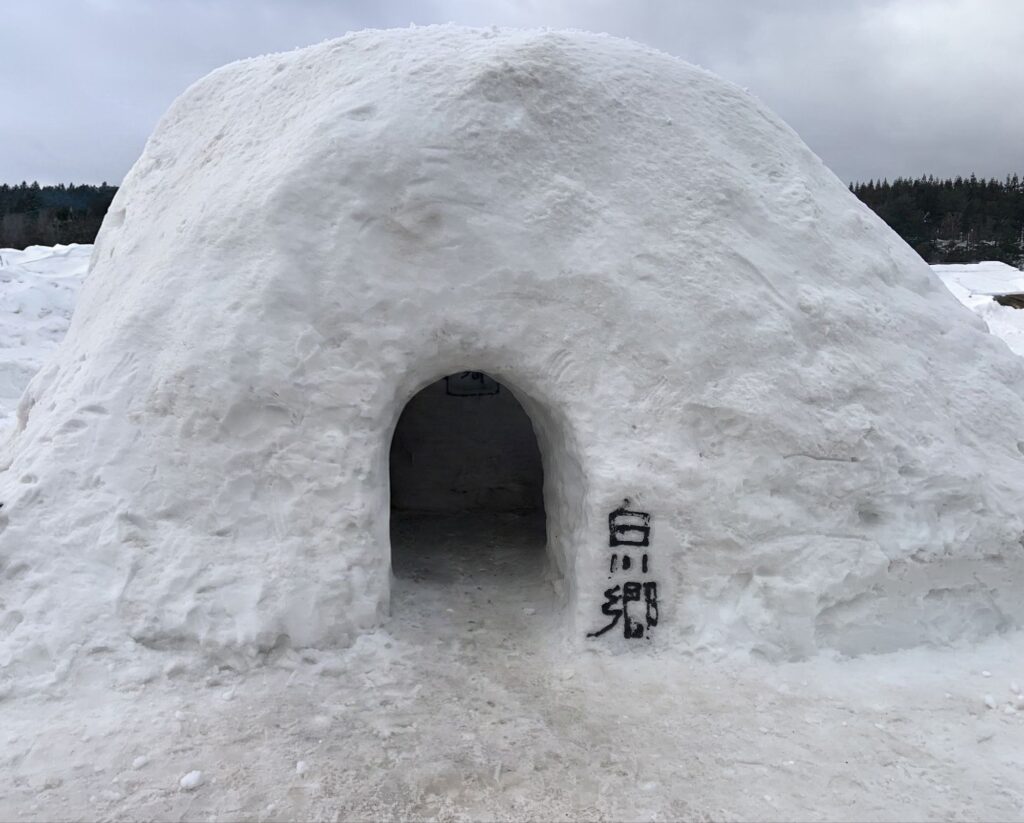
Shirakawa-go is a winter place. That’s the image, and it isn’t wrong — thatched roofs buried under snow are genuinely absurd to look at. I once stayed until closing on a heavy snow day, and when the lights came on inside those houses after dark, it stopped being the place I’d walked through that afternoon.
But this corner of Japan is not a one-season destination. Spring, summer and autumn each look completely different, and all of it sits within driving distance of Nagoya.
So this article doesn’t split by season. It puts all four in one place.
Takayama: an old street and a lot of eating
Being honest about it, the sights in Takayama are concentrated around the old merchant district. Walk it, and then it’s time to eat.
Hida beef is worth understanding properly
Hida beef isn’t just “cattle from Gifu.” It’s a defined brand with an audit trail.
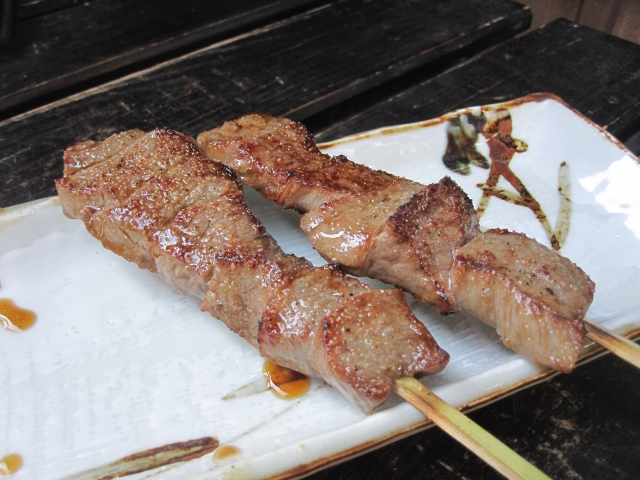
To be sold as Hida beef, an animal must be Japanese Black raised in Gifu Prefecture for at least 14 months, by a farm registered with the Hida Beef Brand Promotion Council, and graded by the Japan Meat Grading Association at meat quality grade 3 or above with a yield grade of A or B. Anything that misses those marks is sold under a different name, Hida wagyu. Same prefecture, same breed, different label.
The brand traces back to a single bull, Yasufuku-go, brought from Hyogo in 1981 and still called the father of Hida beef. The council formed in 1988, and in January 2023 the brand received GI (Geographical Indication) protection.
Its reputation was made in 2002. At the 8th National Japanese Beef Ability Exposition — the “Wagyu Olympics,” held once every five years — Hida beef took the top prize in the breeding cattle division and the best carcass award in the meat division, both at once. It repeated the carcass win five years later.
I’ll be straight, though: in the most recent competitions Miyazaki and Kagoshima have been stronger. Miyazaki beef has taken the top prize four editions running. Hida beef is not the current national champion.
Why it still matters
If you rank Japanese beef brands by how narrow their standards are, Hida beef isn’t at the top.
Saga beef requires grade 4 or above plus a marbling score of 7 or higher. Sendai beef only accepts A5 and B5. Matsusaka beef is restricted to virgin females. Kobe beef is a subset of Tajima cattle that clears a separate bar. Ishigaki beef has to be raised at least 20 months in the Yaeyama Islands. All of them are tighter gates than Hida’s grade-3 minimum, which also accepts both steers and virgin females.
Here’s why I think that’s a feature rather than a flaw.
Around 10,000 head qualify as Hida beef each year, and roughly a third of those are A5. The brand holds quality at the top while producing enough volume to actually sell. That’s why Takayama’s old streets are lined with Hida beef skewers, Hida beef nigiri, Hida beef rice bowls and Hida beef croquettes, at prices a tourist can absorb. A brand that only permits A5 and B5 cannot fill a street like that.
I tried to get into a yakiniku restaurant in Takayama and found a queue of foreign visitors running out the door and up the staircase to the second floor. That queue is the point. Wagyu here isn’t a distant luxury you save up for — it’s something you can just go and eat.
Hoba miso and the mitarashi problem
Hoba miso is sweet-savoury miso grilled on a magnolia leaf and eaten over rice. It’s dangerous with a bowl of white rice in front of you.
Then there’s mitarashi dango. In Hida, mitarashi is soy-sauce flavoured and not sweet at all. If you’ve had the sticky sweet-glazed version elsewhere in Japan, the first bite is a genuine shock.
It’s absolutely worth trying. Though if I’m being honest about my own preference, I’ll take the sweet version every time. The Hida one is a here-only experience rather than my favourite.
Hida-Furukawa and Your Name
Fifteen minutes north of Takayama by train is Hida-Furukawa, sometimes called Takayama’s inner parlour. White-walled storehouses line the Seto River, where carp swim from spring through autumn. They’re moved to a different pond over winter, so in the snow season the water is empty.
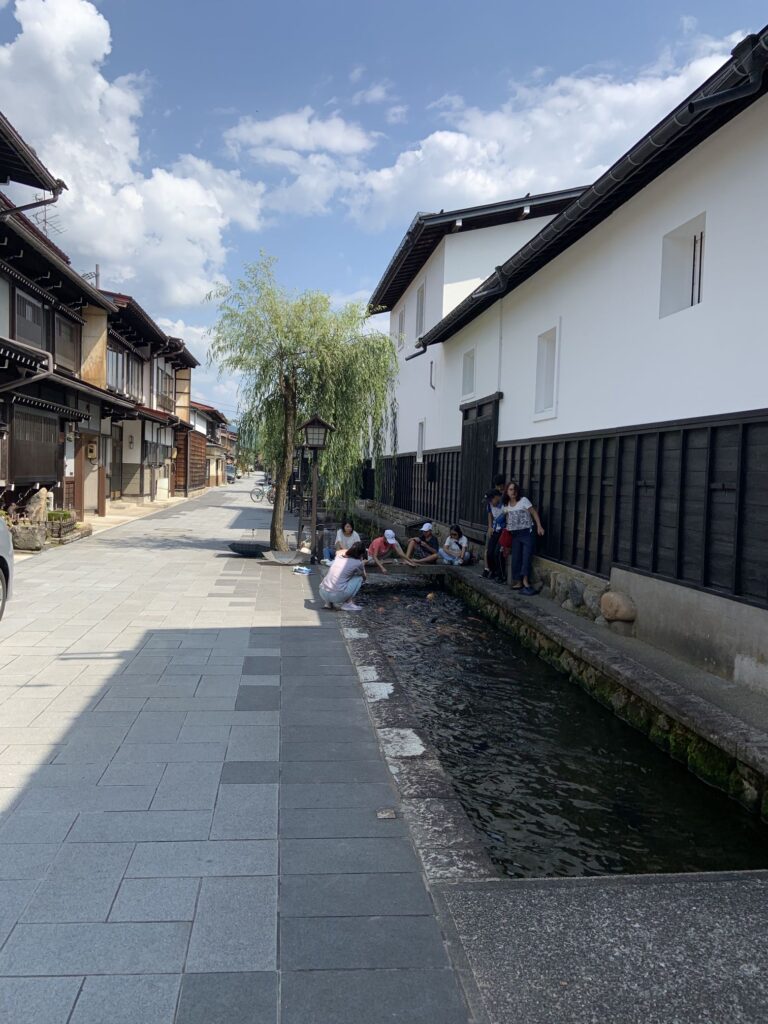
This is Your Name territory.
Full disclosure: I love that film. It hit me about as hard as Titanic did. The RADWIMPS soundtrack is welded to the story so precisely that the opening bars pull the scenes back into your head.
One thing worth getting right, though. Itomori, the town Mitsuha lives in, is fictional, and the director has said there’s no single real model for it. The lake most often named as inspiration for Lake Itomori is Lake Suwa in Nagano, and it’s generally understood to be a composite of several lakes rather than one place.
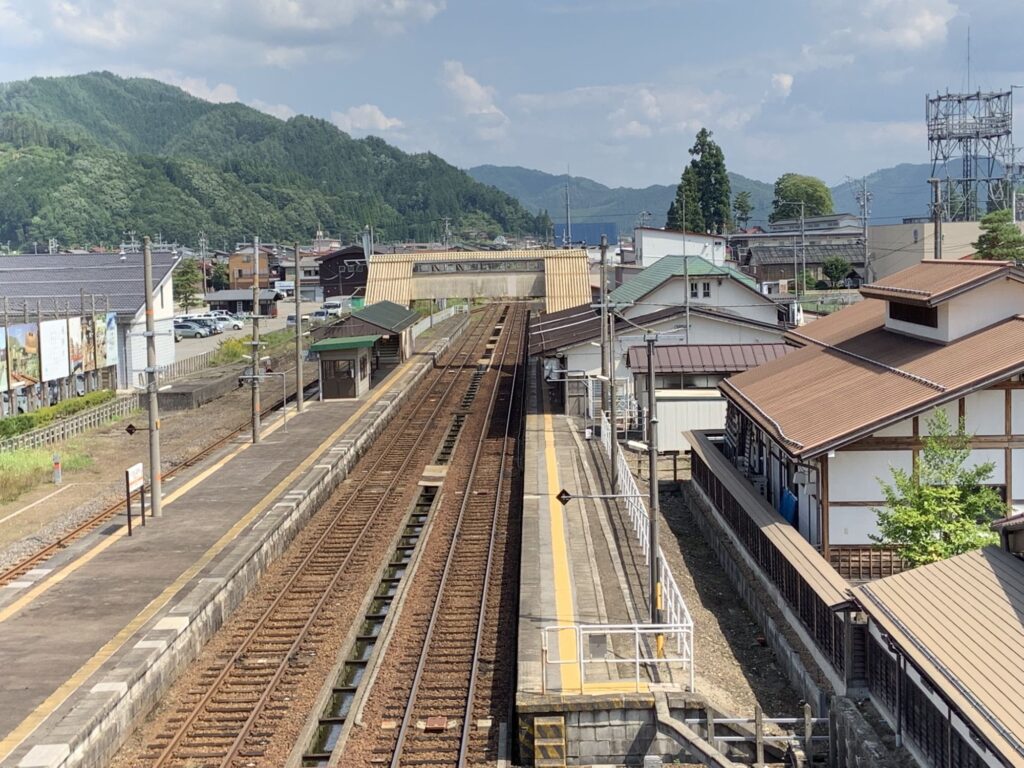
What Hida-Furukawa actually is, is the side of the story where Taki goes searching. Those locations are real and precisely drawn: the waiting room and platform at JR Hida-Furukawa Station, the Hida City Library where Taki pores over records, Ketawakamiya Shrine. A little further north in Miyagawa there’s the distinctively roofed bus stop too.
Standing on that platform does the thing. Every photo I took in Furukawa is from there.
For a place to stay, Yatsusankan. Founded in the Ansei era, it’s three connected buildings — the Shogetsu-ro from 1905, the sukiya-style Kogetsu-ro from the early Showa period, and the Kangetsu-ro from 1997. The buildings themselves are Registered Tangible Cultural Properties, and it’s a six-minute walk from the station. Not many places let you sleep inside a heritage listing.
Check availability and rates at Yatsusankan on Booking.com
Shirakawa-go works best just after snow, not during
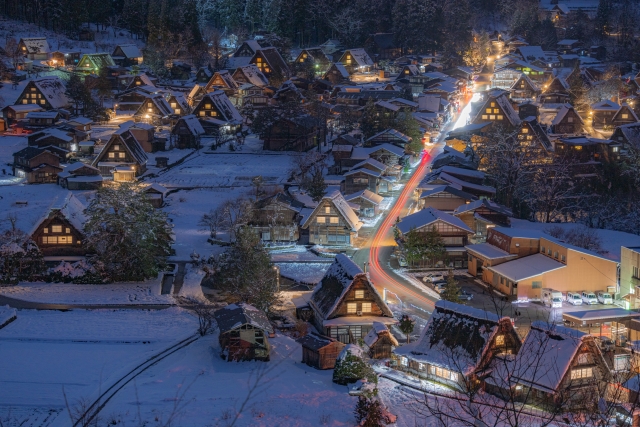
The village was inscribed as a UNESCO World Heritage Site in 1995, and several gassho-zukuri houses are open inside. Wada House is ¥300, Kanda House ¥400, Myozenji ¥300. Kanda House lets you climb up into the roof structure, which is the part you cannot possibly understand from outside. There are cafés in the village, which matters when it’s below freezing.
If you’re going in winter, aim for just after a snowfall rather than during one. That’s when the roofs carry the clean layer of snow you came to see.
The light-up has changed, though, and this is the single most important planning note in this article.
From 2026 the winter light-up is fully reservation-only, ticketed, and held just four times a year. Without a ticket you must leave the village in the late afternoon even if you’ve been there all day. The walking route to the observation deck closes at 16:10. Observation deck tickets are not sold separately at all — you either stay overnight in the village (allocated by lottery) or join a bus tour that includes one.
You cannot turn up and see this. Plan months ahead. Temperatures run around -10°C.
Parking is its own event. When I went, tour buses were stuck in the snow and unable to move. The village now runs a parking reservation site and a live congestion tracker, which tells you how bad it had become.
Spring: cherry blossom and lift passes at the same time
Once the snow melts, Takayama’s streets become easy walking again, and Shirakawa-go with green around it barely looks like the same village.
But the best thing about spring here is this: while the blossom is out down in the valleys, the ski resorts are still running.
Takasu Snow Park typically operates into late April, and the resort itself insists March onward is still high season. A spring park is built at the summit. The café at the top, at 1,550m, occasionally looks out over a sea of cloud.
Blossom in the morning, snowboarding in the afternoon. That’s what a prefecture with this much vertical gets you.
Summer: Kamikochi, and being chased by sheep
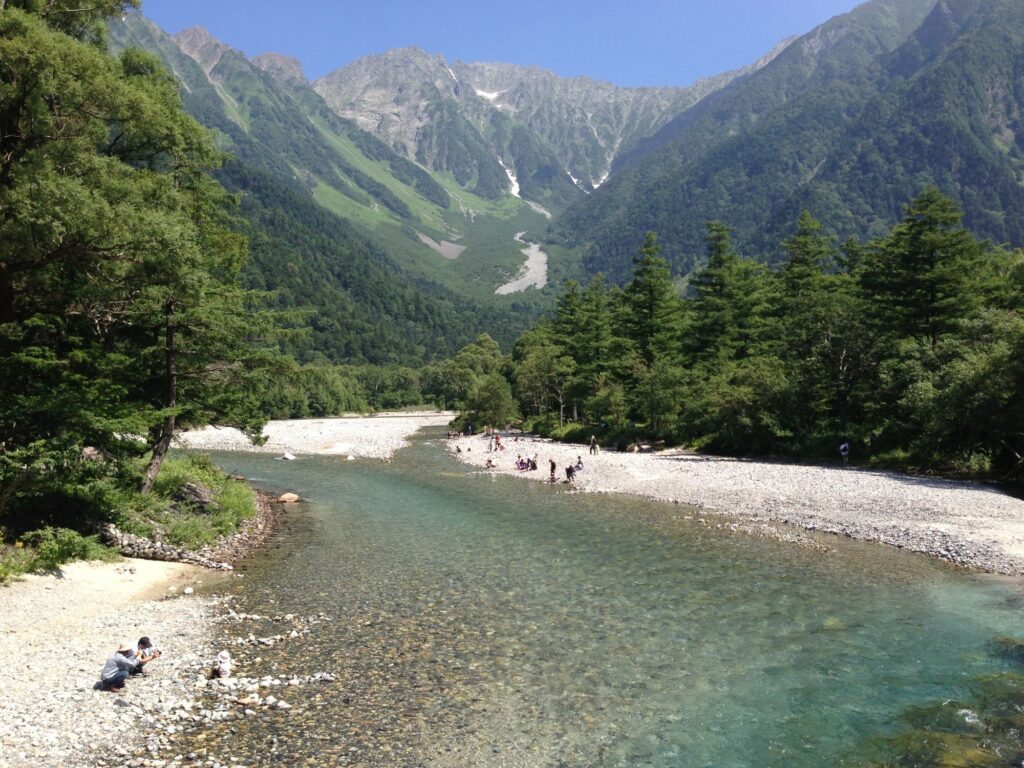
Summer in Hida is cool, and Kamikochi is the reason to come.
First, the rule that catches people out. Private cars cannot enter Kamikochi at any time of year. From the Takayama side you park at Akandana; from the Matsumoto side, Sawando. Then it’s a shuttle bus or a taxi. There is no version of this where you drive in.
I stayed in Takayama and did Kamikochi as a day trip, which I’d recommend — lodging inside Kamikochi is limited and expensive.
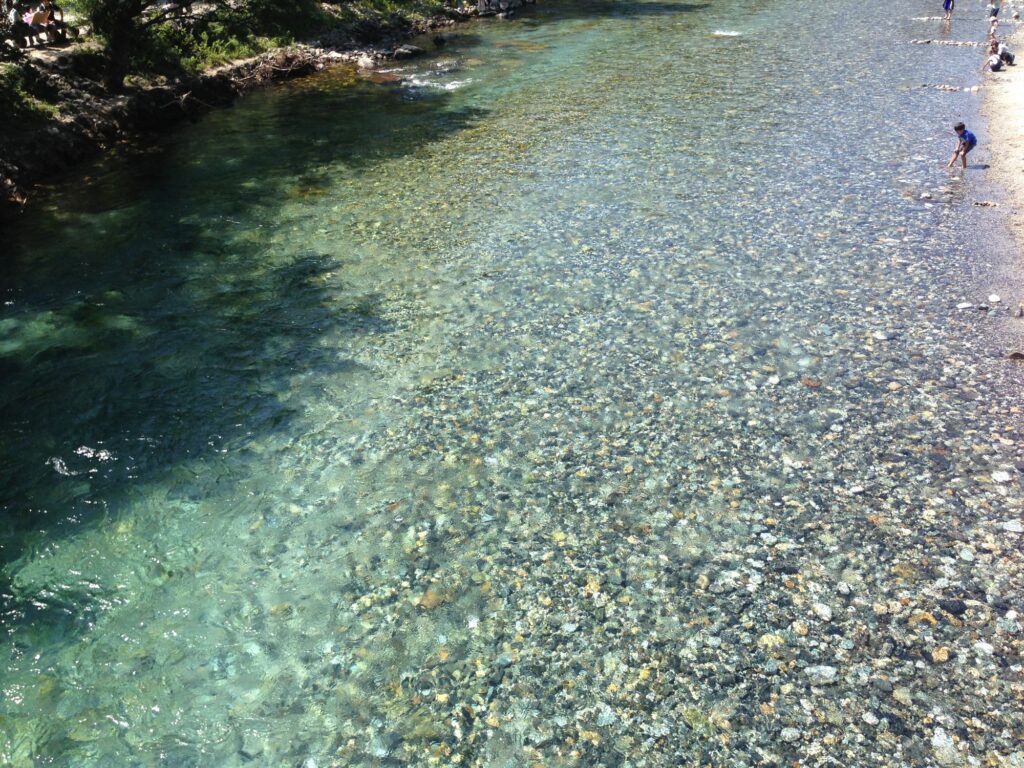
Kappa Bridge is a wooden suspension bridge, and the view of the Hotaka range from it is the postcard shot. The Azusa River underneath is startlingly clear. Note that Kamikochi is both a national park and a designated Special Place of Scenic Beauty and Natural Monument, and one of its rules is simply don’t step off. Leaving the boardwalk to get down to the riverbank breaks it. Look, don’t wade.
Then there’s the Kamikochi Imperial Hotel. Red triangular roof, log-cabin exterior — I honestly assumed it was a pension the first time I saw it. It is in fact Japan’s first full-scale mountain resort hotel, opened in 1933, and a night there costs accordingly.
You don’t have to stay to go in. The lobby lounge is open to non-guests for coffee and cake, made with Kamikochi spring water. The mantelpiece at its centre is the hotel’s symbol, and in colder months a bellman performs a lighting ceremony at 5pm. For anyone doing Kamikochi as a day trip, it’s the best possible place to sit down.
For high-country summer, there’s also Makiga-no-Sato up on Hirugano Plateau in Gujo. Lots of animals, open meadows, and sheep that will chase you across them. Genuinely chase you. The adults panic more than the children.
Autumn: the Shinhotaka Ropeway
In October I rode the Shinhotaka Ropeway, in the Okuhida hot spring region.
It’s the only double-decker gondola in Japan, climbing to an observation deck at 2,156m. During the autumn colour season the upper slopes turn first while the lower ones are still green, so the same ride looks different week to week.
And when you come down, you’re standing in Okuhida — so you go straight into an onsen. Autumn here has a very satisfying order of operations.
Browse Takayama and Shirakawa-go day trips, passes and tickets on Klook
Winter: for people who ski, and people who don’t
I’ve been to most of the ski areas in Gifu and Nagano. I snowboard.
The two I go back to are Washigatake and Takasu Snow Park. Takasu opened in 1999 and is the largest resort in western Japan, with an Italian-built 15-person gondola and two halfpipes. In peak season you can cross over the summit into neighbouring Dynaland.
One practical note: Takasu has no night skiing. If you want to ride after dark, that’s Dynaland, which runs until 23:00 daily from late December to late March.
Takasu, Dynaland, Hirugano Kogen, Washigatake and White Pia Takasu share a season pass. They’re packed that closely together.
Something else I noticed: there aren’t many Japanese people at Takasu. A lot of the visitors appear to be from parts of Asia where it doesn’t snow, which gives it a different international character from Hakuba or Niseko.
Now, the people who don’t ski.
Makiga-no-Sato stays open in winter, and it is not a ski resort. Sledding and snow tubing are the main activities, so you can play in snow without ever putting boards on. The animals are still there in winter, and there’s an onsen on site.
I went during Lunar New Year and the place was full of Taiwanese families. For people from somewhere it doesn’t snow, snow is something you touch rather than something you slide down. The idea that you need to ski in order to visit a snow resort turns out to be entirely in our heads.
There are also stylish cabins with saunas near the slopes, rented by large groups who can make as much noise as they like. No hotel neighbours to worry about. Sensible.
The onsen are probably the real reason to come
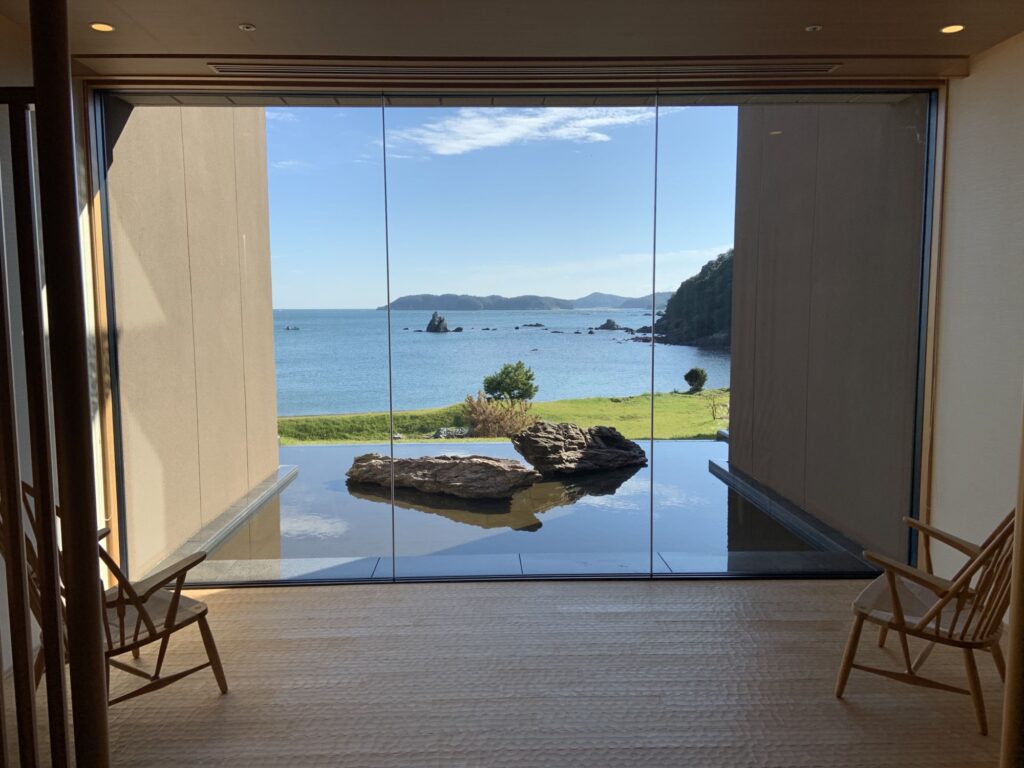
I should declare an interest: I’m a serious sento and super-sento enthusiast. I’ve worked through a lot of baths. With that said.
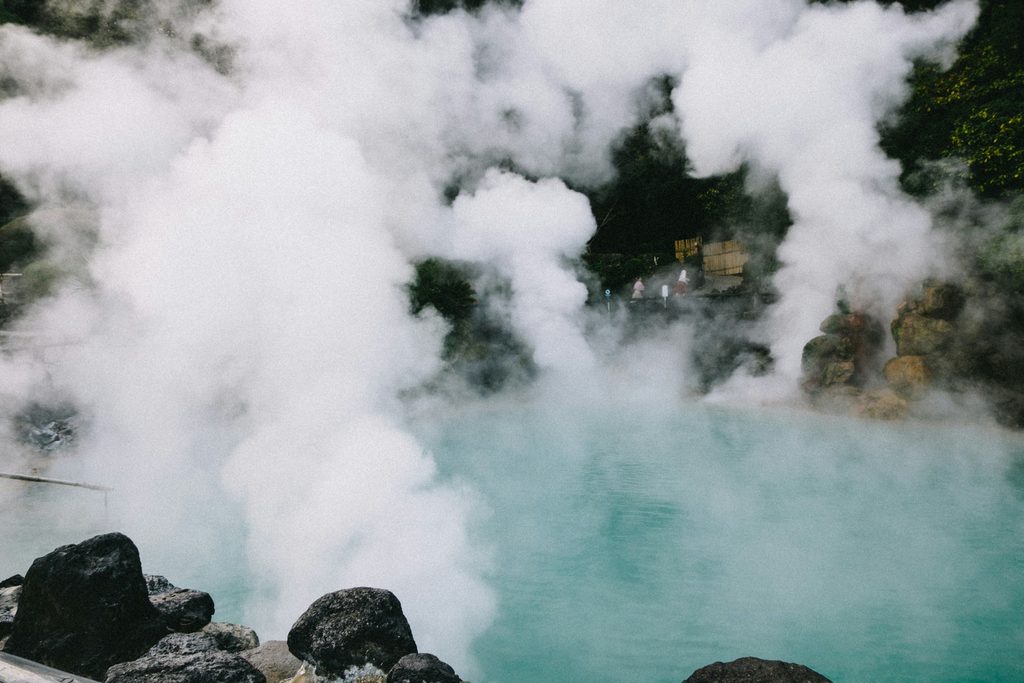
Gero Onsen is, frankly, a plain town. There’s no spectacle to it. But the water is excellent — alkaline simple spring, pH 9.18, source temperature 84°C. Colourless, barely any smell, and it leaves your skin noticeably smooth, which is why it’s known as a “beauty bath.” Alongside Kusatsu and Arima, it’s one of Japan’s three great hot springs.
I went in after watching fireworks in the depths of winter, shaking with cold. Afterwards I walked outside and stayed warm from the inside out, no chill at all. That impressed me more than I expected it to.
The fireworks are “Winter Gero Onsen: Hanabi Monogatari,” launched every Saturday from January to March, 20:30, for ten minutes, from the riverbank below Gero Bridge. Each week has its own theme tied to the season — coming-of-age, Valentine’s, exam-success prayers, the Doll’s Festival, farewells.
If you dislike the crush of Japan’s summer fireworks festivals, this is the better version. Ten minutes and done.
The town also sells a bath-hopping pass that gets you into the baths of participating ryokan, so you can use the good hotel baths without staying the night.
Check availability and rates at Suimeikan on Booking.com
A note on Funsenchi, the open-air bath in the river. It used to be exactly that: a rock pool on the Hida River, fully visible from the bridge above. That ended. Since December 2021 swimwear has been mandatory and bathing is no longer permitted; it now operates as a foot bath. Worth knowing as history, not as a plan.
Okuhida Onsen-go covers five hot spring areas — Hirayu, Fukuji, Shin-Hirayu, Tochio and Shinhotaka — and the Shinhotaka Ropeway sits inside it. It’s also the transfer point for Kamikochi, so it fits into the route without a detour.
Shirahone Onsen is technically in Nagano, but it’s 70 minutes by car from Takayama IC and about an hour from Kamikochi via the Sawando bus terminal. Same circuit, different prefecture. It sits at 1,400m inside Chubu-Sangaku National Park, and the water is a hydrogen sulphide spring. It emerges clear and turns white as it sits — that milky colour is the water reacting with air.
The famous bath here is the large mixed-gender open-air pool at Awa-no-Yu, founded in 1912, fed by 1,730 litres per minute, the highest flow in Nagano. If “mixed bathing” sounds alarming, understand how it’s actually arranged: women have a separate changing room and separate entrance, and bathing garments are provided. The water is opaque and the pool is very large, so encounters are rare. Day visitors can use it.
The water runs around 38°C, cool by onsen standards, and carries dissolved carbon dioxide that forms fine bubbles on your skin. Cool water in winter takes some resolve, but it also means you can stay in for a long time.
Ski-area onsen are cheap, too. Washigatake’s Washi-no-Yu is ¥500, and the hotel next to Dynaland does day bathing for ¥600.
Driving here: what to know
Straight answer: this region is difficult without a car.
Takayama, Shirakawa-go and Gero are connected by public transport, but once Makiga-no-Sato and the ski areas are in your plan, bus timetables start dictating your trip. I drive.
Three exceptions and traps:
Kamikochi cannot be driven into. Akandana from the Takayama side, Sawando from Matsumoto. No workaround.
Shirakawa-go parking is brutal in winter. Bad enough that coaches get stuck. The village runs a parking reservation site and a live congestion map — check before you set off.
The light-up cannot be seen without a reservation. Saying it again because it’s the thing people get wrong.
Before you go
Mobile data. Half the places here publish their hours and closing days only on social media, so having data from the moment you land removes real friction. I use Airalo.
Travel insurance. Mountain regions, snow driving, and long distances from major hospitals. World Nomads covers travellers who are already abroad, which helps if you didn’t arrange anything before leaving.
After all of that, the thing I like most is sitting in an outdoor bath while it snows.
It isn’t really about the heat. It’s the atmosphere. Steam going up, snow coming down through it, and almost no sound at all. Snow collecting on your head, your face cold, everything below your neck hot.
At night it’s better again. Just the snow showing faintly in the dark, and your sense of time quietly going away.
Cherry blossom and lift passes in spring, cool air in Kamikochi in summer, a ropeway through autumn colour — all good. But whichever season you come, the day ends in hot water.
That’s what “there’s no wrong season here” actually means.