Category: Asia

  • Tokyo Ramen Survival Guide: Honest Reviews, Reservation Tips, and the Best Rich Noodles

    Tokyo Ramen Survival Guide: Honest Reviews, Reservation Tips, and the Best Rich Noodles

    This article contains affiliate links.

    Here’s the thing about eating in Tokyo. If you want the sushi you’ve read about — Sukiyabashi Jiro, the places with three Michelin stars — good luck. Most won’t take a reservation from someone without a connection, and if they do, you’re looking at ¥40,000 a head before drinks.

    Ramen costs about ¥1,000. There’s no dress code, no reservation required at most places, and the standard in this city is genuinely absurd. It’s also the Japanese food the rest of the world actually got obsessed with.

    So this isn’t a Tokyo guide with Senso-ji and the Shibuya scramble crossing in it. You can find those anywhere. This is about ramen — where to eat it around Tokyo, Chiba and Kanagawa, and which famous places are worth your limited stomach space.

    Before I start, my bias, so you can calibrate.

    The delicate, clear soy-sauce ramen that sits permanently at the top of Japanese review sites — I don’t get it. Not saying it’s bad. I just can’t pick up whatever everyone else is picking up. I love food across a lot of categories, but the subtle Michelin-type flavours are honestly lost on me. I have a fairly ordinary palate and I’ve made peace with that.

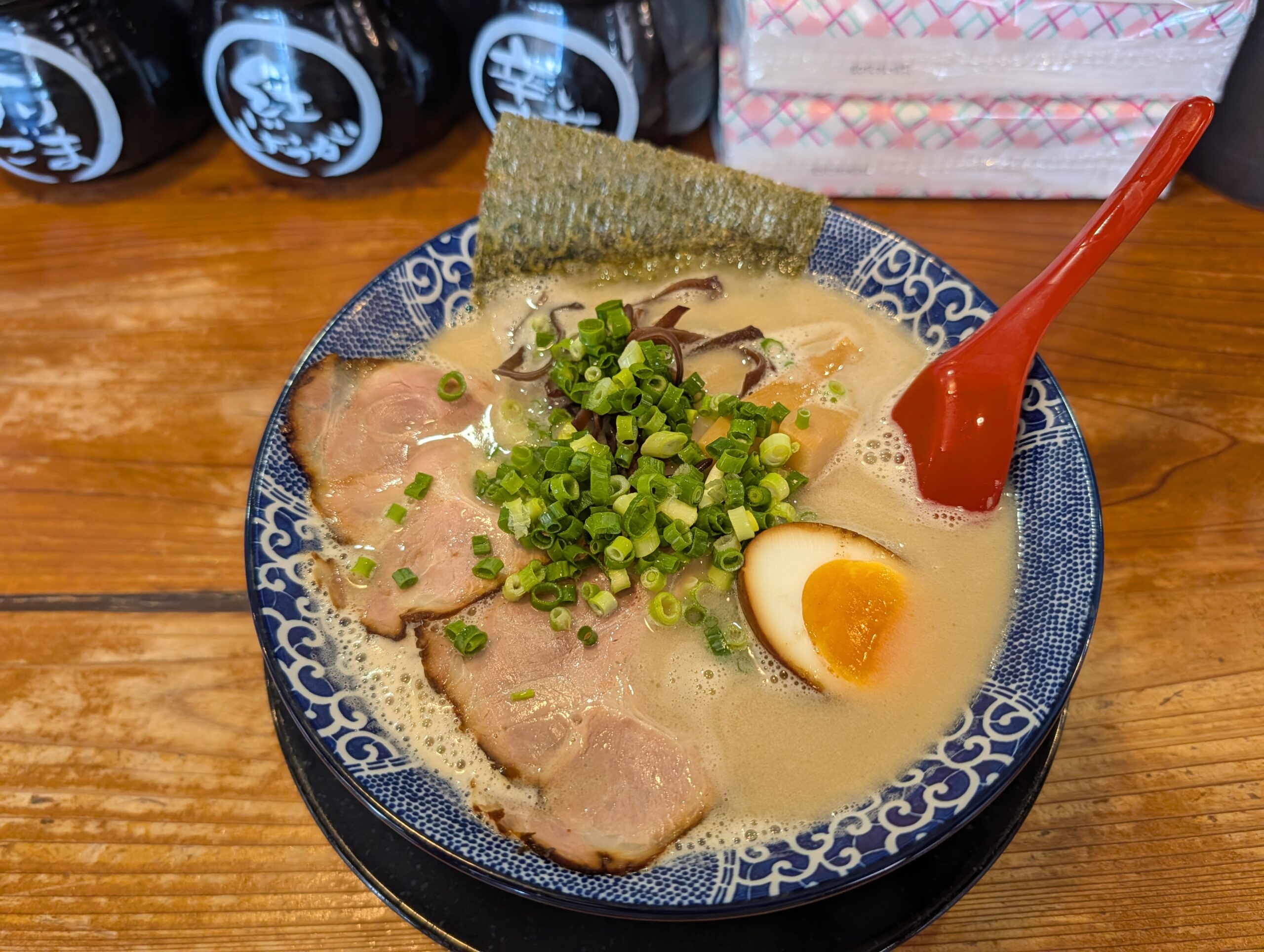
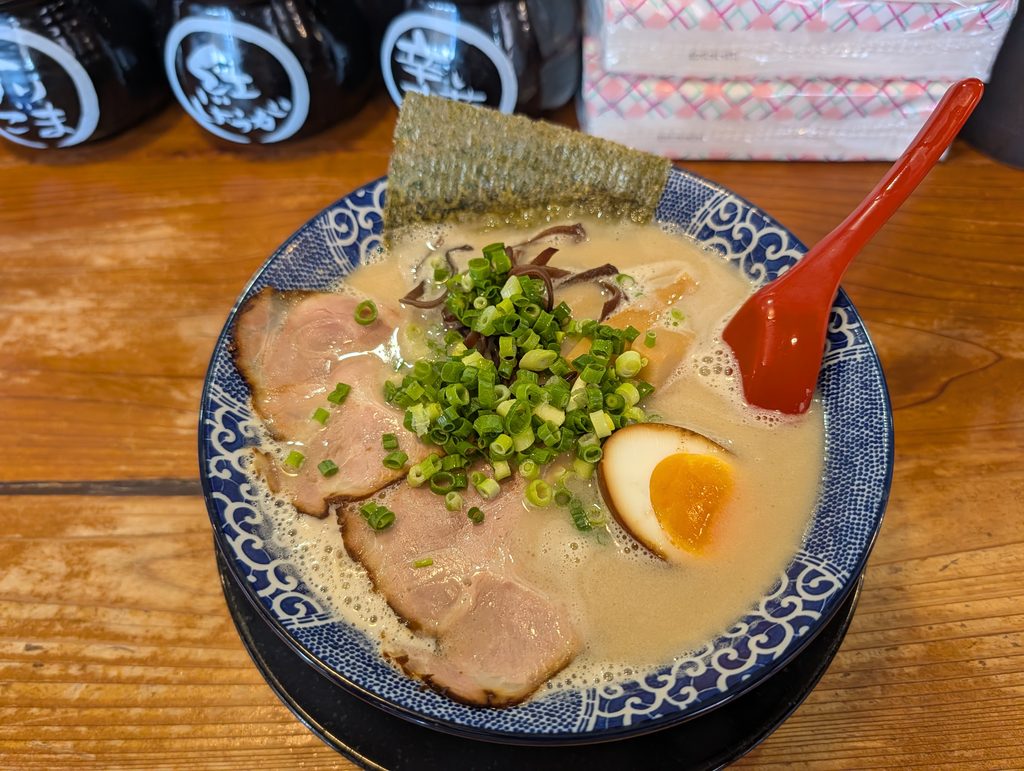
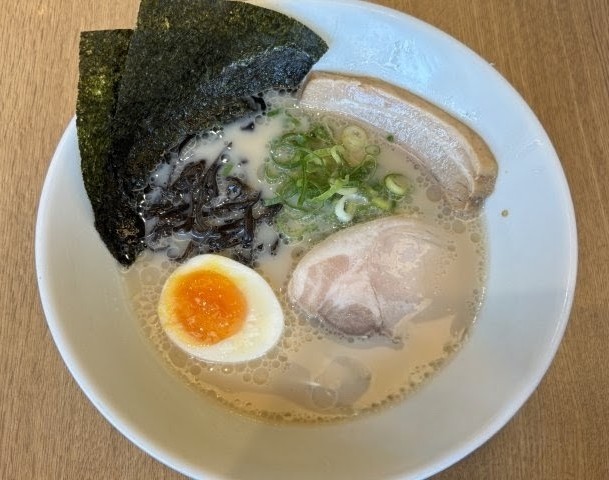
    What I like is thick and heavy. Tonkotsu above all. Pork-and-fish tsukemen, the fat noodles of Jiro-style, iekei, spicy miso. The kind of bowl where the broth clings to every noodle and you finish with a full stomach and mild regret. If there’s raw garlic on the counter, I’ll agonise over it and then put it in.


    First, the thing most visitors don’t realise

    Almost every famous regional ramen chain in Japan has a branch in Tokyo.

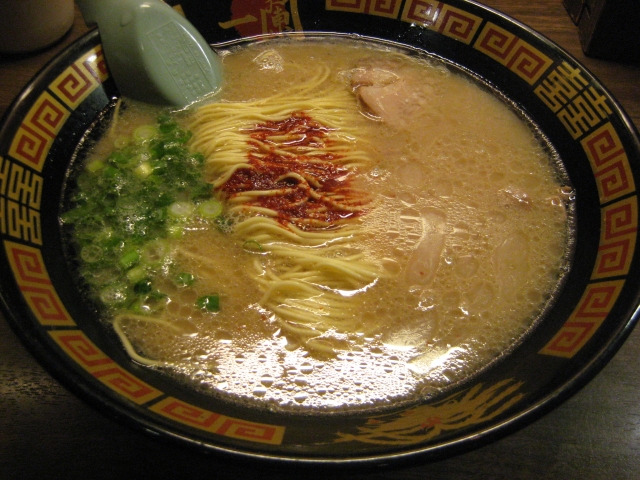
    Ichiran and Ippudo from Fukuoka. Tenkaippin, Ramen Yokozuna and Shinpuku Saikan from Kyoto. Kamukura from Osaka. Ebisoba Ichigen from Hokkaido. The ramen you’d normally have to cross the country for is mostly sitting in Tokyo already.

    There’s a caveat: a flagship shop has an atmosphere a branch doesn’t. Walking into the original Tenkaippin in Kyoto’s Ichijoji is a different experience from its Tokyo outpost. But if you just want to taste it, Tokyo is enough.

    If you’re not travelling the length of Japan on this trip, eating your way through the regional styles while you’re in Tokyo is a pretty efficient move.


    The two giants of Chiba and Kanagawa — and why you probably can’t just show up

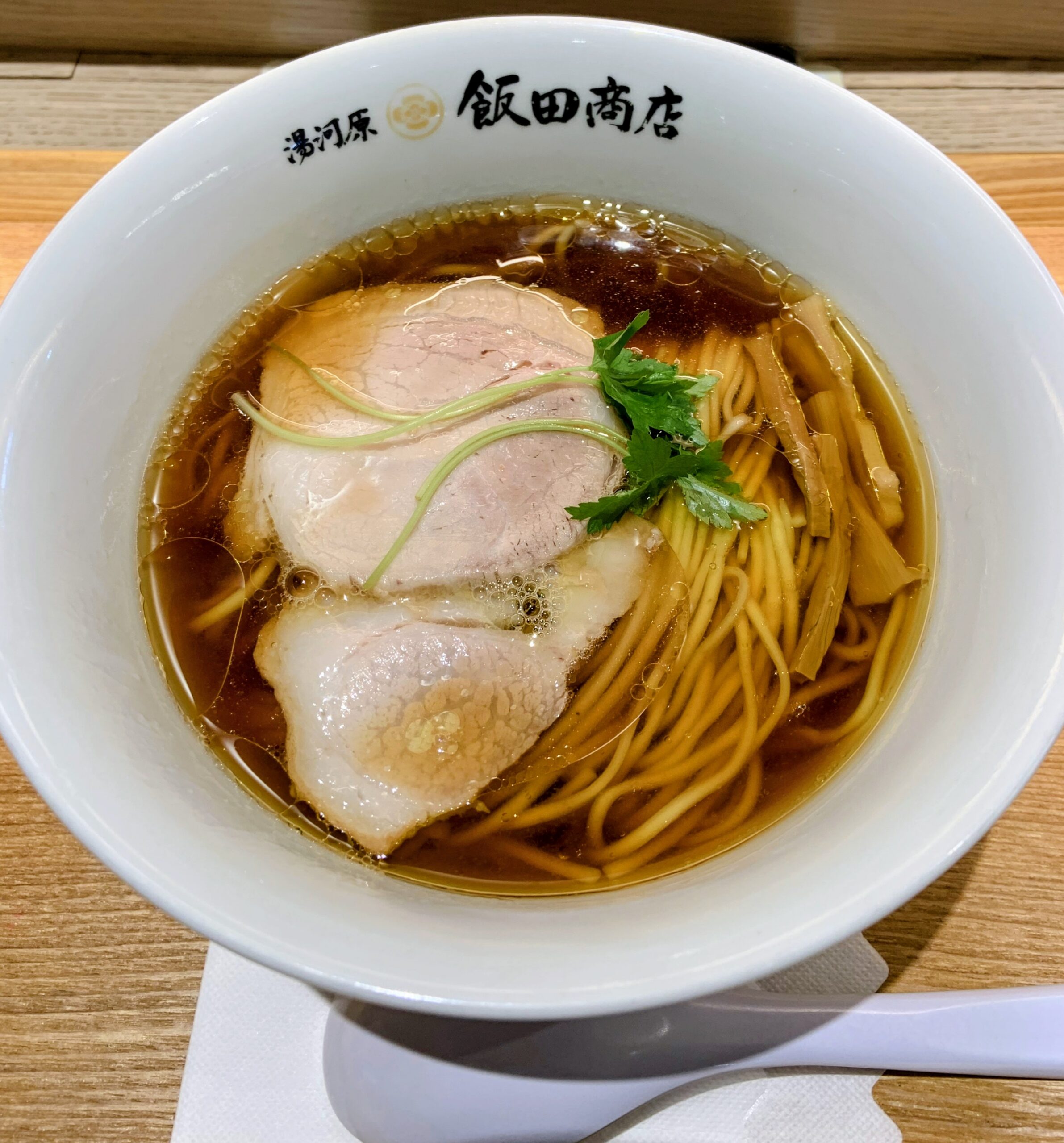
    Two shops dominate any conversation about ramen around Tokyo: Chuka Soba Tomita in Matsudo, Chiba, and Iida Shoten in Yugawara, Kanagawa.

    And both have changed in the same way. Neither is a place you can queue at and get in anymore.

    Chuka Soba Tomita (Matsudo, Chiba)

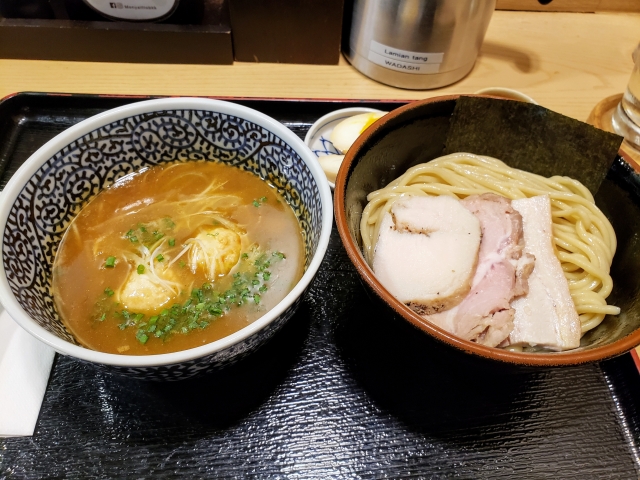
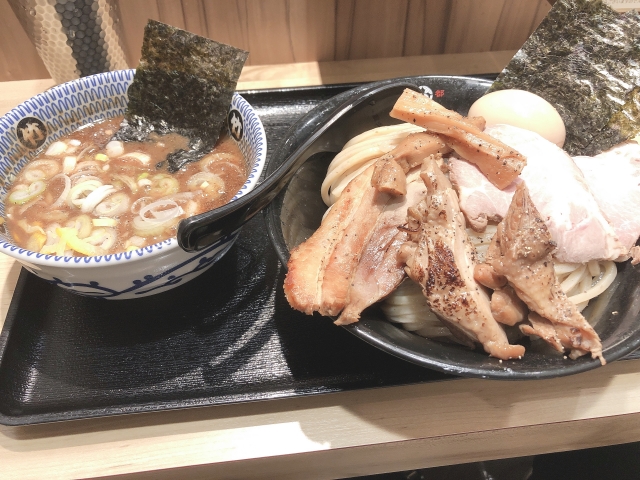
    For tsukemen, this is my favourite in Japan.

    When I went, I queued before 7am to get a numbered ticket. Up early, standing outside the shop, coming back at the time they assigned me. It was worth that.

    The system has changed since. The main shop now runs mostly on advance booking through a reservation site called OMAKASE, with new slots released around 12:30 every Tuesday. The moment they open, everyone piles in, and even if you reach the booking screen a five-minute countdown starts. It’s a scramble.

    There’s apparently still a morning ticket option from 8am, but if you want certainty, you’re going for the reservation.

    Tomita’s influence is easier to see from a distance. In Kyoto there’s a shop called Menya Takei, run by someone who trained at Tomita, using noodles from Tomita’s own noodle maker. You can eat something very close to it 500km away. That’s how much of a benchmark Tomita has become.

    Iida Shoten (Yugawara, Kanagawa)

    I’ve been to the main shop twice, and to their food court branch at LaLaport Numazu twice.

    It’s permanently near the top of Japan’s national rankings. The broth is genuinely superb — a friend I went with just said “this soup is insane,” and he was right. The house-made noodles are on the soft side though, and that part didn’t land for me. Less a fault than a texture preference that splits people.

    Here’s the practical part.

    Iida Shoten’s main shop used to mean a long queue outside. It’s now fully reservation-only online, through OMAKASE, which is a paid booking service. Slots open at a set time and if you miss them, you don’t eat. Add Yugawara’s location to that and the barrier is high.

    Which is where the food court comes in.

    There’s an Iida Shoten inside the food court at LaLaport Numazu. I went twice, both times in the evening, and there was no queue at all. As for the actual food — for the signature shoyu ramen, I couldn’t detect a meaningful difference from the main shop. (My own impression, for what it’s worth.)

    Weighed against winning a reservation lottery and travelling to Yugawara, the food court is a surprisingly reasonable answer. The main shop has its own atmosphere, obviously, so if that’s what you’re paying for, different story.


    What I’d actually send you to in Tokyo

    Menya Itto

    I’ve been back many times. For the tsukemen.

    Thick pork-and-seafood dipping broth, dead centre of what I like. There’s a sister shop nearby doing a shrimp version, which was also good.

    Slightly absurd side note: they had a branch in Bangkok. I went looking for it while travelling and got there right at opening, so no queue. Eating tsukemen at that level in Southeast Asia was a strange and excellent experience.

    Chasing tsukemen also took me out to Tsukemen no Michi in Katsushika. It’s a bit outside central Tokyo, but worth the trip if you care about the genre.

    Rokurinsha

    The headline act at TOKYO Ramen Street in Tokyo Station.

    Honestly, it’s very good. One of the few tsukemen shops you can mention in the same breath as Tomita. Holding that standard inside a train station is impressive on its own.

    Ikaruga there was also excellent — another name that comes up when people list Tokyo’s best bowls.

    I stop by Ramen Street basically every time I’m at Tokyo Station. Being able to fit it around a train connection makes it unusually practical for a traveller.

    Worth knowing: Tokyo Station has ramen outside Ramen Street too. Ebisoba Ichigen from Hokkaido is there — a Sapporo bowl built on shrimp broth, in Tokyo Station.

    Ramen Jiro

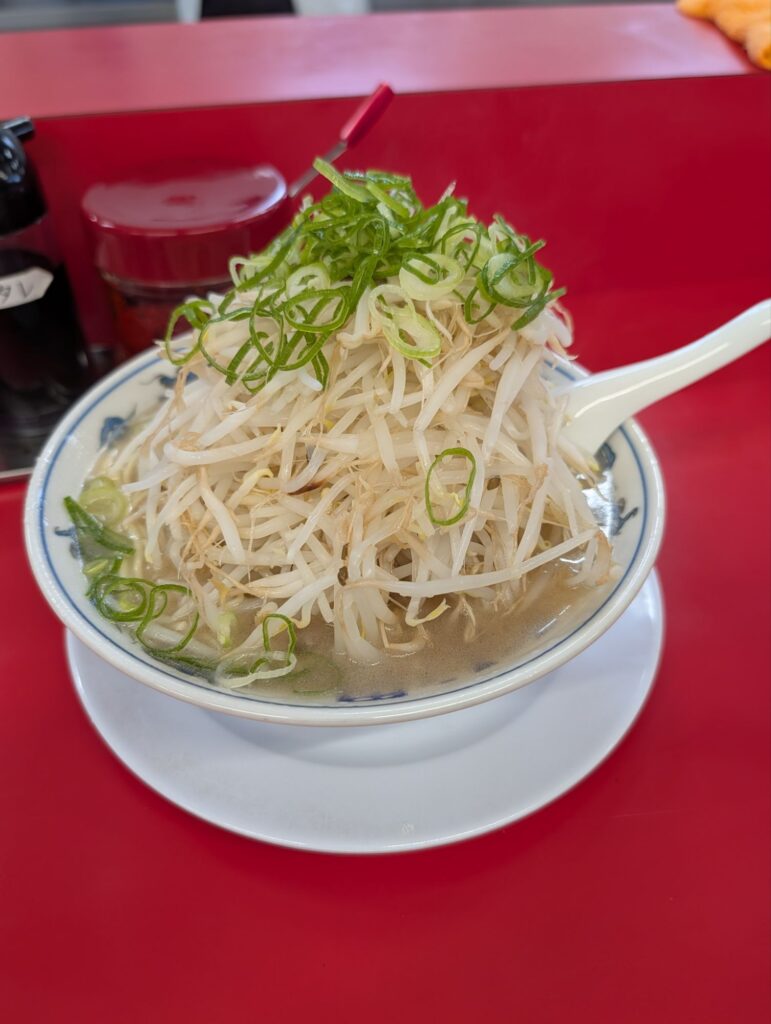
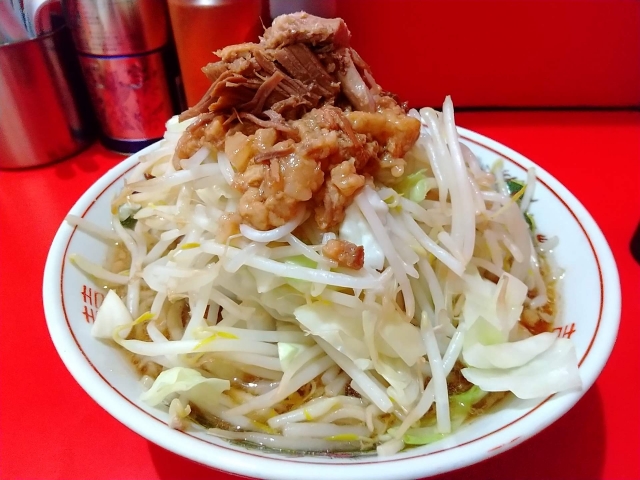
    Straight answer: I’m not really a Jiro person. The mountain of beansprouts, the slabs of pork — I don’t go for those.

    But the fat noodles in Jiro-style ramen are great. Real wheat flavour, proper chew, and they don’t get buried by a heavy broth. Ramen where the noodles are the main event is rarer than you’d think. That’s why I go.

    If you’re a first-timer, read this before you walk in. Jiro has its own ordering ritual. When your bowl is nearly ready, staff will ask something like “ninniku?” — that’s your cue to call your free toppings: garlic (ninniku), extra vegetables (yasai), back fat (abura), stronger seasoning (karame). Saying nothing usually gets you the default. Portions are enormous even at sho (small). Don’t order the large unless you’re confident, don’t leave food, and don’t linger after eating.


    Places that didn’t land for me

    Being honest about these is more useful than pretending.

    Tanaka Shoten

    A popular tonkotsu shop in Tokyo. My take: I thought Ichiran and Ippudo were better.

    Tonkotsu is my favourite genre, so I went in with high expectations, which may have worked against it. Both of those are enormous chains with branches worldwide, but on tonkotsu specifically, the chains suited my palate more. Taste is personal though, and it wouldn’t surprise me at all if Tanaka Shoten is someone’s number one.

    Mouko Tanmen Nakamoto

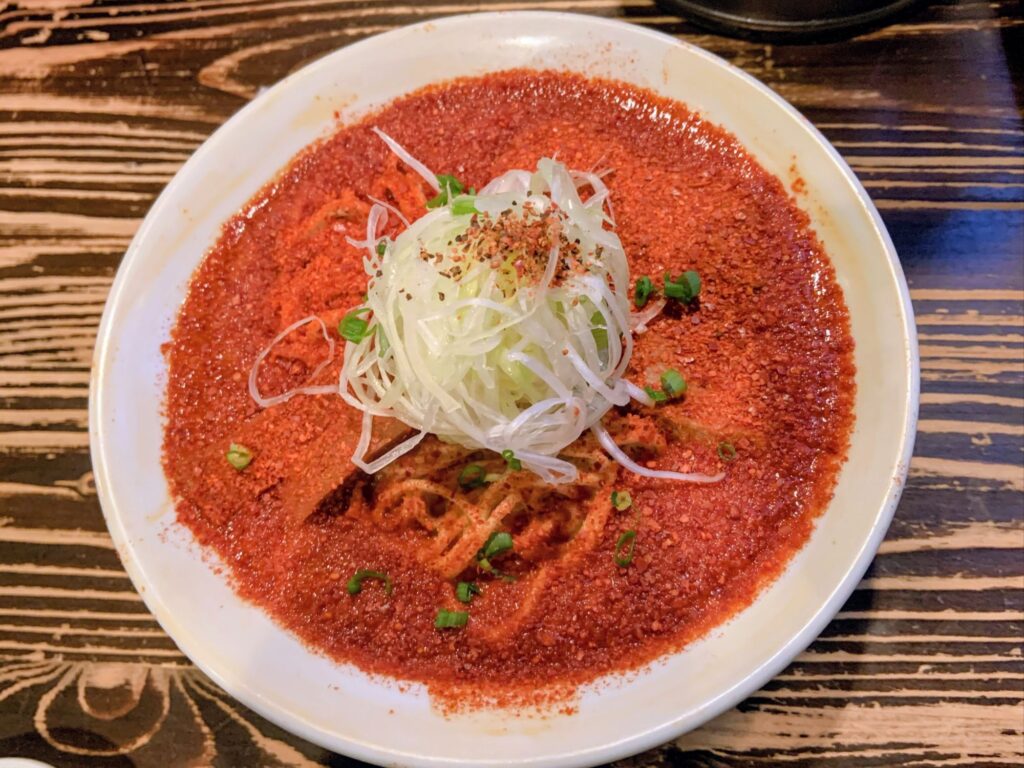
    Famous for spicy ramen.

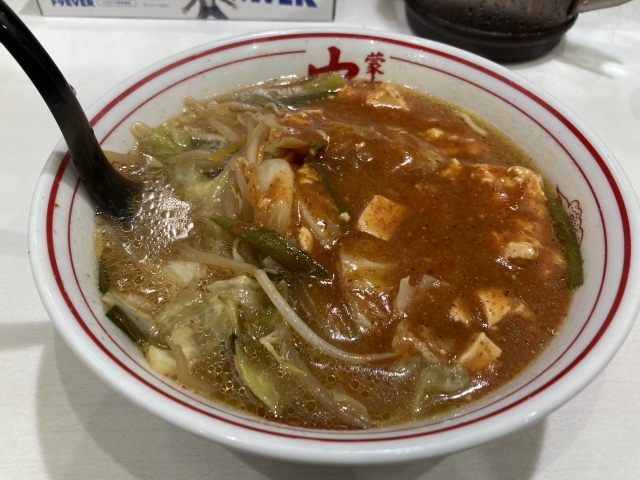
    What I found was that the heat and the temperature arrive first, and I couldn’t really taste the miso underneath. The impact is real, but I felt like I could predict the flavour just from looking at the bowl. If you love spice, you’ll probably love it.

    One thing worth saying: the 7-Eleven cup noodle version is a remarkably good reproduction. Since the shops are basically a Kanto-area thing, being able to get close to it in a convenience store is a genuine gift. Though I should admit the cup version of Hokkyoku — their hottest — beat me. Couldn’t finish it.

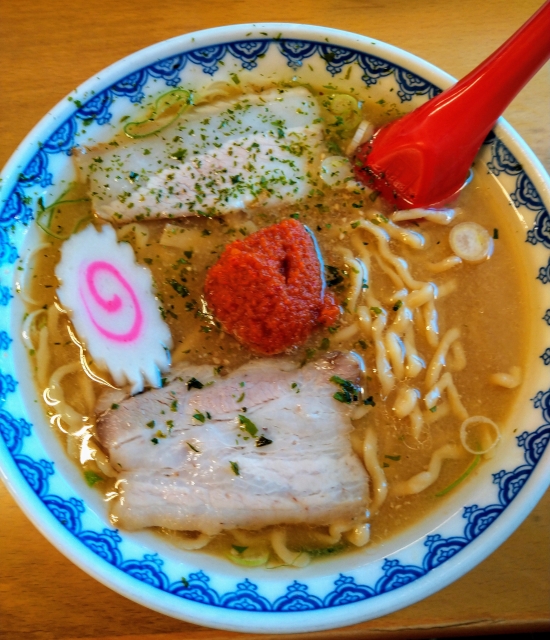
    For spicy miso I’d rather have Ryushanghai from Yamagata. The heat and the miso are balanced, so it doesn’t stop at just being hot, and that lump of special garlic miso sitting in the middle of the bowl is the whole point. More on where to find it below.

    Shibata and Torikui

    Shibata in Tokyo works with duck broth and soy sauce; Torikui in Kanagawa is also clear-style shoyu.

    Both are highly rated, and as I said at the start, this whole category goes over my head. I can tell they’re made with real care. It just never turned into anything I’d call excitement. Same as Iida Shoten — that’s on my palate, not on them.

    If clear-style shoyu is your thing, these two are probably wonderful. So I’m not dismissing them. I’m saying I’m not qualified to judge, and leaving it open.


    If you want to try several without burning three days

    Two places let you cover a lot of ground in one stop, which matters if you’re here for a week.

    TOKYO Ramen Street (Tokyo Station)

    Underground at Tokyo Station, in the Ichibangai complex. Rokurinsha and a lineup of shops that can actually hold their own.

    The value is entirely in the logistics: you can eat here between trains. It gets busy at peak times, but it’s still far easier than tracking down individual shops across the city.

    Shin-Yokohama Ramen Museum (Kanagawa)

    Two visits, four shops. Famous names from around the country, inside a space built to look like a Showa-era street.

    This is where I ate Ryushanghai from Yamagata — spicy miso done properly, and exactly my thing. Also Sumire from Sapporo, whose miso is as strong as its reputation.

    The key detail: they serve mini portions. You can do several shops in one visit. Compared to normal ramen crawling, where one bowl finishes you, the efficiency is on another level. For a visitor who wants to understand regional Japanese ramen without flying around the country, this is probably the single best place in Japan.

    📍 Book Ramen Museum tickets and food experiences


    Practical things worth knowing

    Reservation-only is spreading. Tomita and Iida Shoten both used to be queue-and-wait. Both are now booking-first. If there’s a specific shop you want, check the official site or their social media for the current entry system before you go. Turning up on the assumption you can just queue is how you end up standing outside a closed door.

    Most shops use a ticket vending machine. You buy a meal ticket at the machine by the entrance and hand it to staff. It’s confusing the first time. Many machines are Japanese-only, but they usually have photos — if you’re stuck, the top-left button or the biggest, most prominent one is almost always the signature bowl.

    Carry cash. Plenty of independent ramen shops still don’t take cards or IC payment.

    Don’t linger. At busy shops, get up when you’re done. This isn’t a place where you sit and talk for an hour, and it applies across Japan, not just here.

    A word on portions. Japanese ramen portions are heavier than they look, especially anything tonkotsu or Jiro-style. If you’re planning to try several shops in a day, order small.

    📍 Compare hotels and rates in Tokyo 📍 Set up a Japan eSIM before you go 📍 Get a travel insurance quote


    The short version

    Ramen judgment comes down to your own tongue in the end.

    I went to clear-broth shops rated above 4.0 and couldn’t work out what I was missing. Meanwhile I preferred a global chain to a celebrated independent. I thought a convenience store cup noodle got close enough to a famous shop that I’d skip the queue.

    That’s an unrefined palate, and I’ve stopped being embarrassed about it. What actually matters is knowing which style you like. Once you know that, you stop being pushed around by rankings and start eating what you actually want.

    If you like it thick and heavy: Tenkaippin, Ichiran, Ippudo. For tsukemen, Tomita, Rokurinsha, Itto. If it’s the fat noodles you’re after, anything Jiro-style. For spicy miso, Ryushanghai at the Ramen Museum. Iekei — Machida Shoten is plenty.

    If you like the clean, delicate style, then Iida Shoten and Shibata — the ones I couldn’t crack — are probably exactly your thing.

    Although, full disclosure: put enough garlic in anything and I’ll tell you it’s delicious. Which tells you most of what you need to know about my palate.

  • Kyoto Off the Beaten Path: The Ultimate Ramen Tourism & Authentic Matcha Guide

    Kyoto Off the Beaten Path: The Ultimate Ramen Tourism & Authentic Matcha Guide

    This article contains affiliate links.

    I’ve been to Kyoto more than twenty times — in autumn for the maples, in spring for the cherry blossoms, and plenty of times in between.

    After that many visits, I have no interest in writing about Kiyomizu-dera or Kinkaku-ji again. Those places have been covered exhaustively, and as of 2026 they’re crowded enough that you can’t really look at them properly anyway.

    So this guide is about a different Kyoto. Ramen and matcha.

    I’ve eaten my way around Japan, and from where I sit, Kyoto is one of the country’s serious ramen battlegrounds. Almost no foreign visitor knows this. And then there’s Uji matcha — with global demand pushing prices to levels nobody expected, drinking the real thing at the source is worth more now than it was five years ago.

    The only sightseeing spot I’ll cover is Ruriko-in. Plus one place that Japanese people, oddly, tend not to know about.


    Kyoto is one of Japan’s great ramen cities

    This surprises people. Kyoto’s reputation is kaiseki and tofu. But walk the streets and the density of ramen shops is genuinely striking.

    Several national chains were born here

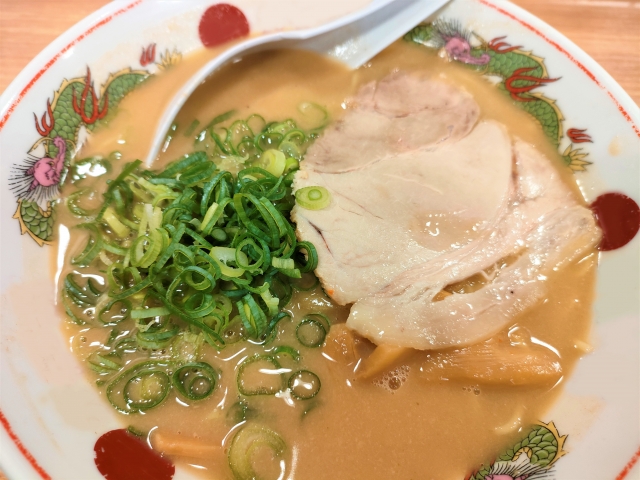
    Tenkaippin started in 1971 as a food cart near Ginkaku-ji. That famously thick, almost gravy-like kotteri broth originated in Kyoto — and the flagship shop is in Ichijoji, which I’ll get to. Ramen Yokozuna is also from Kyoto. So is Kairikiya. The style of soy-sauce ramen with a layer of pork back fat floating on top is essentially Kyoto’s contribution to Japanese ramen.

    Ichijoji Ramen Road

    If you’re eating ramen in Kyoto, start with Ichijoji.

    Along Higashioji Street, from the Takano intersection north to Kitayama, roughly 1.3 kilometres of road is lined with ramen shops. Locals call it Ichijoji Ramen Road, and it’s Kyoto’s most competitive stretch. Crucially, these aren’t branches — the flagship shops of famous names are here.

    There’s a second cluster too, along Shidan Kaido in Fukakusa. By sheer shop count it may even beat Ichijoji.

    My top pick: Menya Takei

    If I could only eat one bowl in Kyoto, this would be it — and there’s a story behind why.

    The owner of Menya Takei trained at Chuka Soba Tomita in Matsudo, Chiba. Tomita is regularly called Japan’s best tsukemen (dipping noodle) shop. To eat at the Matsudo original, you queue at dawn for a numbered ticket.

    Takei’s tsukemen carries that lineage faithfully. To my palate, the noodles and the broth are almost identical to Tomita’s. I later found out why: the noodles come from Kokoro no Aji Shokuhin, the noodle maker Tomita runs. Same noodles, same result.

    For a traveller, this matters. You can eat something extremely close to Tomita without going to Matsudo and queueing at 6am. There are several branches across Kyoto Prefecture, including one at Kyoto Station.

    One honest caveat: the tsukemen at the main shop is very rich. Too rich for me, in fact. The pork-and-fish broth is on another level of concentration, and it starts to feel heavy partway through. I’ve seen other reviewers say the same, so it isn’t just me. If you love intensely thick tsukemen you’ll be delighted; otherwise a branch may suit you better.

    That said, the main shop has a pork-and-seafood ramen you can’t get anywhere else — roughly the concentration of tsukemen broth after it’s been thinned, with thick noodles running through it. Personally, that’s the bowl I prefer.

    The main shop is in Joyo City, far from any station, lunchtime only. It’s a commitment. Nearby is Ore no Ramen Appare-ya, also lunch-only and also popular, so serious ramen people sometimes do both in one trip.

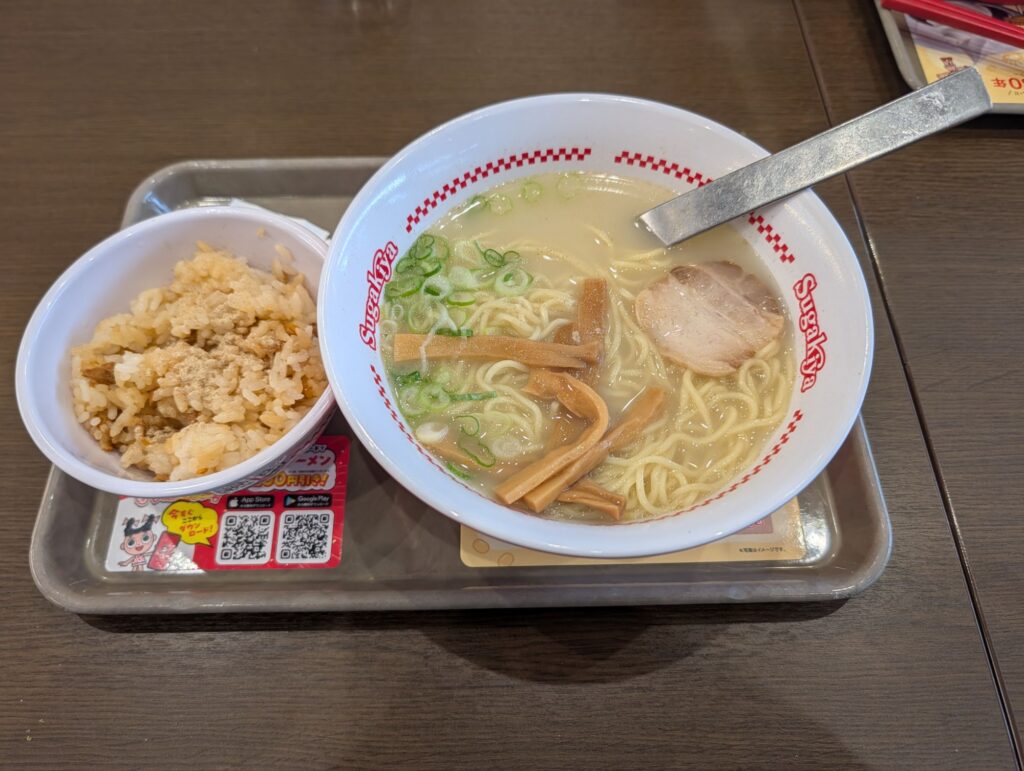
    Appare-ya had a long queue, and after eating I understood why. It reminded me of Sugakiya — a ramen chain from Japan’s Tokai region, the original wafu tonkotsu (Japanese-style pork broth) and the food I grew up on. Sugakiya occupies a permanent place in my personal hall of fame, partly for nostalgia and partly because it’s remarkably cheap. Appare-ya tasted like a refined version of that memory.

    In Ichijoji

    Menya Gokkei A chicken paitan broth so thick that people say a spoon will stand up in it. It’s closer to a solid than a soup — imagine Tenkaippin’s kotteri, then thicker still. Often called the most popular shop on Ichijoji Ramen Road right now.

    The broth clings so completely to the noodles that there’s essentially nothing left in the bowl at the end. There’s a chilli version too, though it’s far less spicy than it looks.

    Chuka Soba Takayasu A cloudy pork broth simmered for 22 hours. The ramen is good, but the real signature here is the fried chicken — and it is enormous. Order it alongside a bowl and you will be full. Consider yourself warned.

    Being honest about what didn’t move me

    Shinpuku Saikan and Daiichi Asahi sit side by side near Kyoto Station, in the area called Takabashi. Both have permanent queues.

    I ate at both, and honestly, neither impressed me much. They weren’t bad — I just wouldn’t queue for them again. If your goal is to taste the history of Kyoto ramen, there’s real value in going. As a use of one of your limited meals in Kyoto, I’d think twice.

    Muteppou I’ve also eaten. The tonkotsu is so thick it lives up to the name, which roughly translates as “reckless.” A different direction of heaviness from Gokkei. If that’s your thing, it’ll land.

    Prioritise carefully

    If you’re in Kyoto for a few days, this is worth thinking about before you go.

    The independent shops have one location each, so expect to queue. Gokkei, Takayasu, Takei’s main shop, Appare-ya — all of them. Many have short opening hours, and lunch-only is common.

    Tenkaippin and Yokozuna, by contrast, are national chains. Eating at the birthplace has a certain value, and the Tenkaippin flagship in Ichijoji is a genuine pilgrimage if you care about that. But the taste itself is available in most Japanese cities. If your Kyoto meals are limited, weigh that.

    An aside: I like Tenkaippin a great deal. Which is why, having dragged a friend all the way to the flagship shop, I was quietly devastated when he ordered the gomoku (mixed vegetable) ramen instead of the kotteri.

    Two practical notes for foreign visitors. Most ramen shops use a ticket vending machine — you buy a meal ticket at the door, then hand it to the staff. Many machines are Japanese-only, though the buttons usually have photos. And bring cash. Plenty of ramen shops still don’t take cards or IC payment at all.


    Real Uji matcha, in the middle of a global shortage

    I used to travel to Uji for work, two or three times a year. Eating matcha desserts between meetings was the part I looked forward to.

    The world is currently fighting over matcha

    The situation has shifted dramatically in the past couple of years.

    Japan’s export value of powdered tea — matcha included — reached ¥60.3 billion in 2025, more than double the ¥27.1 billion of the previous year. A tea merchant in Shizuoka described it as the whole world competing for the same supply, with prices rising three- to fourfold.

    Uji is no exception. In 2026, hand-picked Uji tencha — the leaf matcha is ground from — traded at ¥52,086 per kilogram, up 20.2% year on year. And production actually increased. Prices rose anyway, which tells you how far demand has outrun supply. There are reports of Kyoto restaurants quietly dropping “Uji tea” from their menus because they can no longer source it.

    Which makes drinking the real thing at the source more worthwhile, not less. What you get here is a different substance from the sweetened matcha latte at a café back home.

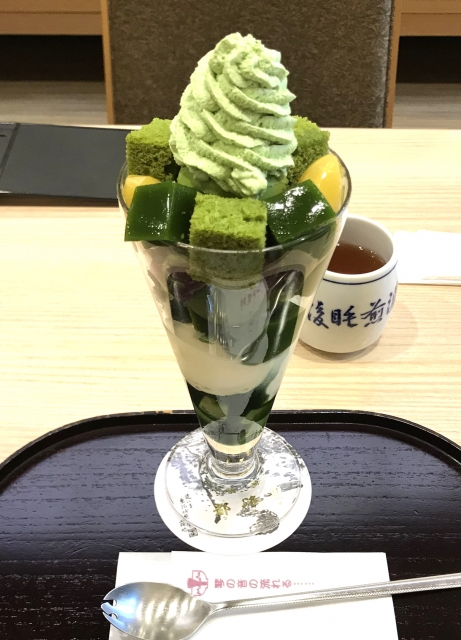
    The matcha parfait at Tsujiri

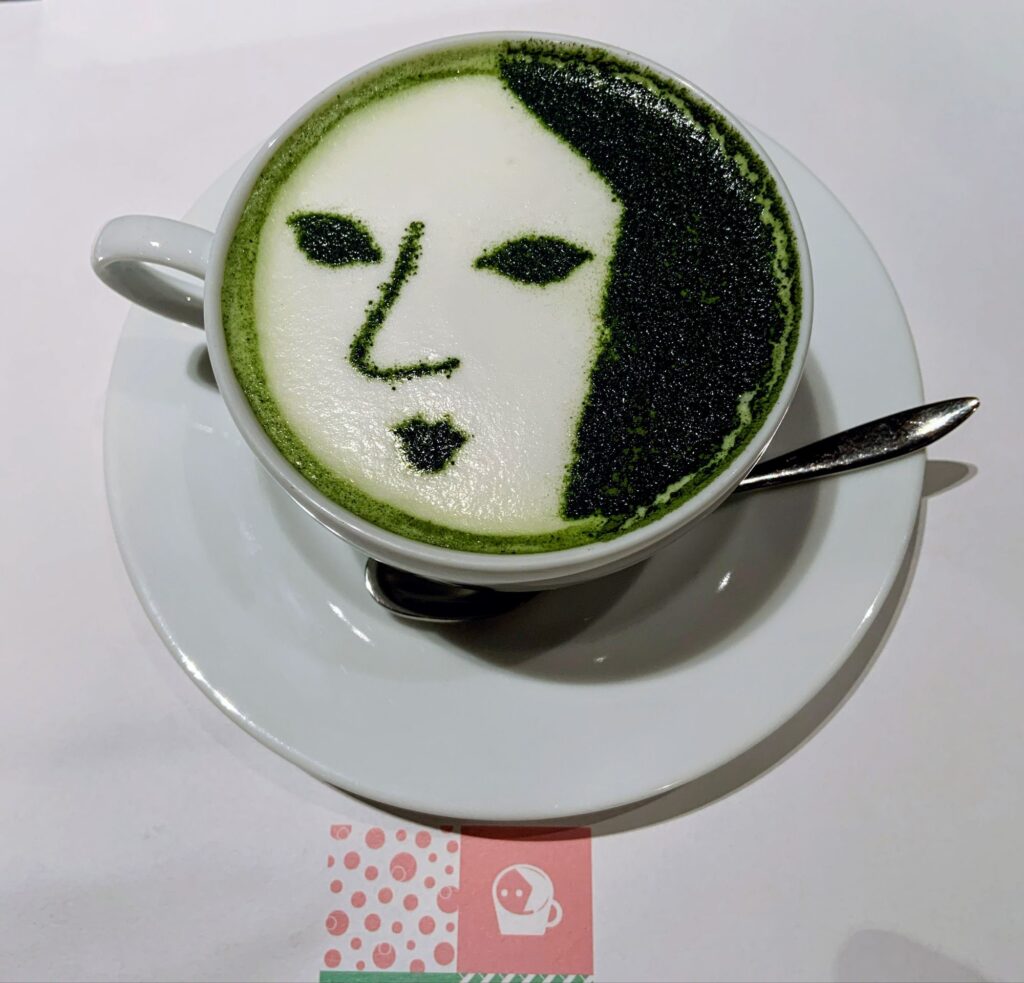
    In Uji I go to Tsujiri. Their matcha parfait is the thing I kept coming back for.

    A lot of matcha dessert stops at matcha flavour. The real thing has bitterness that stands up on its own. Beneath the sweetness there’s astringency and depth, and even in a parfait — which is sweet by design — the tea never disappears. That’s the part you can’t understand until you eat it where it’s made.

    Uji is about 20 minutes from Kyoto Station by JR. You can go and come back in half a day, which makes it a good escape when the crowds in central Kyoto get to you.

    📍 Book a matcha or tea ceremony experience

    What to take home: the matcha fondant chocolat from Kitayama

    If you’re buying something to carry back, this is my recommendation: Nama Cha no Ka from Malebranche.

    It’s a Western-style confectioner with its main shop in Kitayama, Kyoto. You may know their matcha langue de chat, “Cha no Ka,” which is a standard Kyoto souvenir. But the one I’d push is the “raw” version — a koicha (thick matcha) fondant chocolat.

    Eat it cold. An hour in the refrigerator turns the texture into something like raw chocolate ganache. The bitterness of the thick matcha and the sweetness of the white chocolate dissolve together, and it’s genuinely rich. Small, but one is enough.

    As a souvenir it’s well designed: individually wrapped, longer shelf life than you’d expect from something this soft, and boxes from three pieces up. There’s a shop at Kyoto Station, so you can pick it up on the way out.

    What about yuba and tofu?

    Kyoto is also known for yuba (tofu skin) and tofu cuisine. I’ve eaten at the formal, restaurant-style places around Gion and Nanzen-ji.

    The atmosphere is genuinely wonderful. Sitting on tatami looking out at a garden while you eat is something you can only do here.

    But honestly — I don’t think it lands for most foreign visitors. The flavours are so delicate that even Japanese diners sometimes come away thinking “refined, but not much there.” And it isn’t cheap.

    If I’m deciding how to spend a limited budget and a limited appetite in Kyoto, I’d put the money into matcha desserts. Immediately delicious, reasonably priced, and — right now — genuinely scarce.

    📍 Book a matcha or tea ceremony experience


    The one temple worth the detour: Ruriko-in

    If I name a single sightseeing spot, it’s Ruriko-in.

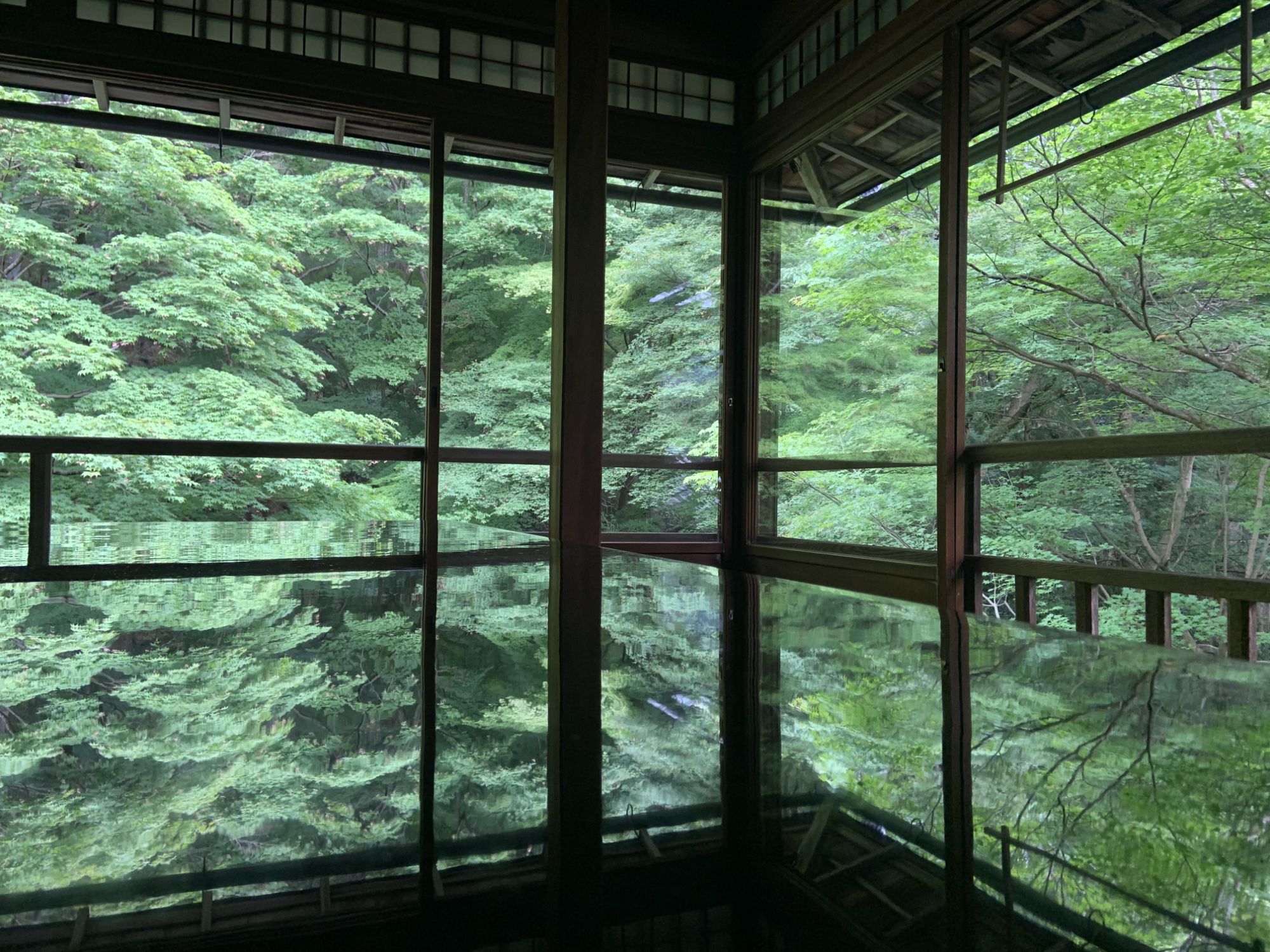
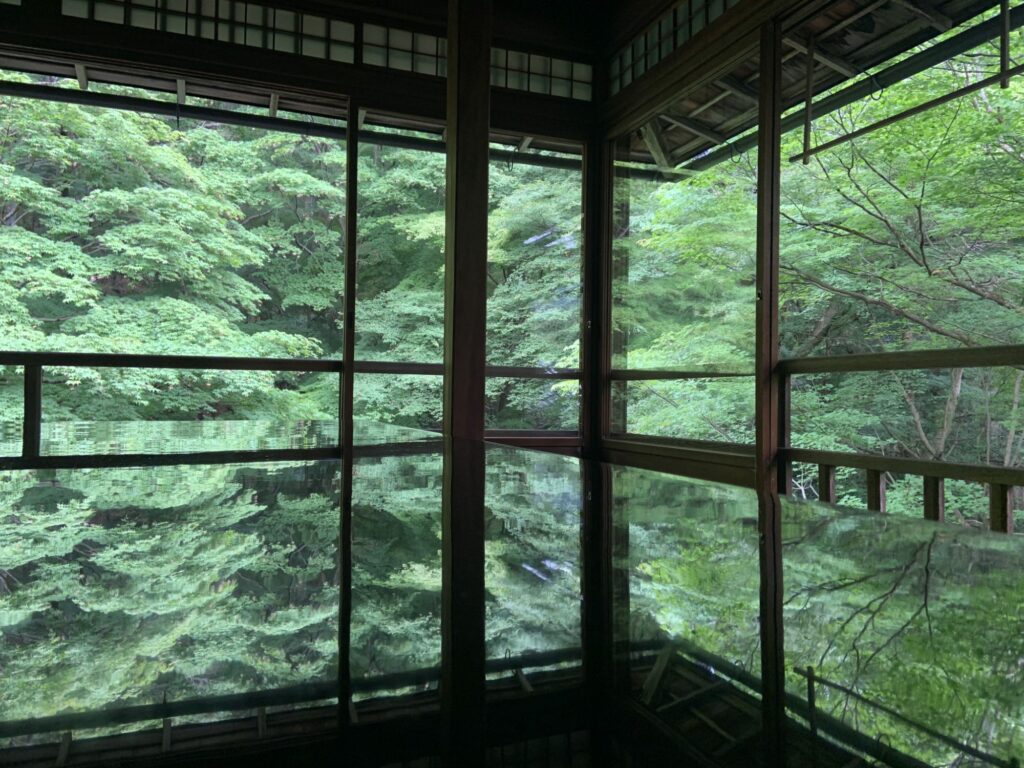
    This is the place behind the famous image of maple leaves reflected in a black lacquered table. It sits in Yase, at the foot of Mount Hiei, a little removed from the city.

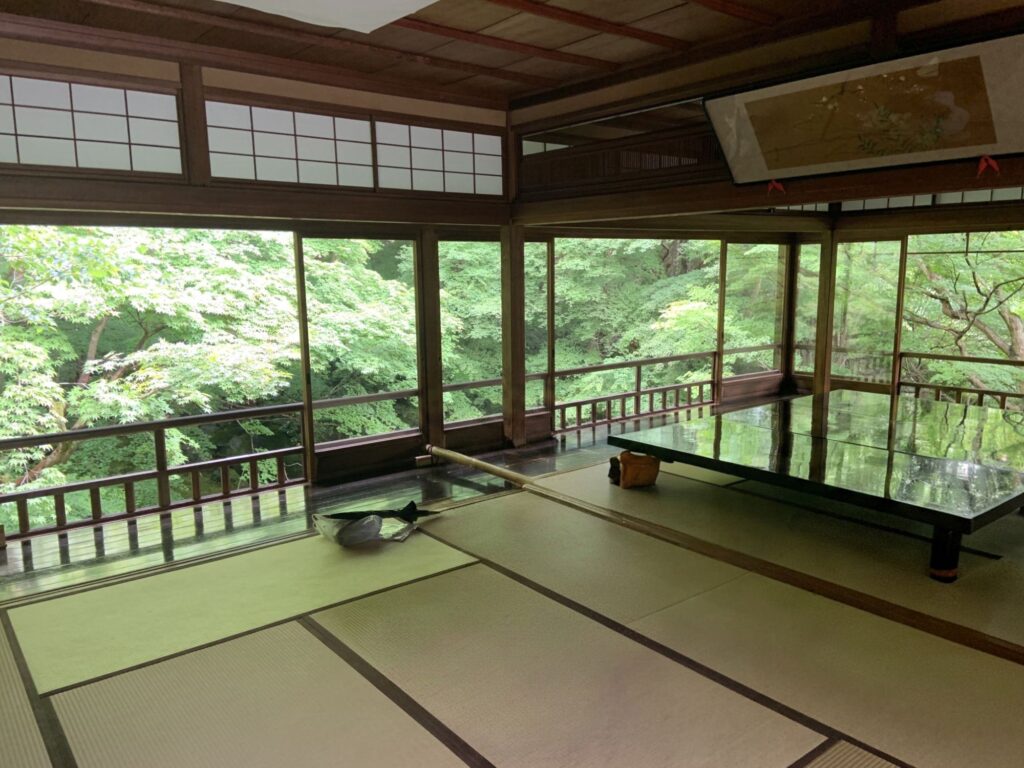
    I went during the fresh-green season. Young maples reflected in the lacquer of the table and again in the polished floor, until you genuinely lose track of where the real leaves end and the reflection begins. I took photographs, but the depth of it in person doesn’t survive the transfer.

    Autumn is spectacular, of course, and correspondingly insane. The green season is calmer and far less crowded, and I’d point you there instead. Sitting on the tatami with your legs stretched out, looking at the garden, the air feels almost charged — it was one of the more restorative hours I’ve spent in Japan.

    One important caveat: Ruriko-in is not open year-round. It opens only for special viewing periods in spring, summer, and autumn. Check the official site for dates before you build a day around it.

    Getting there: Eizan Railway from Demachiyanagi to Yase-Hieizanguchi, then about ten minutes on foot.


    The Arashiyama monkeys: what nobody tells you first

    You may already have this one on your list — it’s genuinely popular with international visitors. What’s less commonly explained is the practical side.

    Arashiyama Monkey Park Iwatayama sits on a hill above the Togetsukyo Bridge. About 120 Japanese macaques live there, with no enclosure. They wander freely.

    The detail people love: when you feed them, you go inside the wire hut and the monkeys stay outside. The cage contains the humans. It’s the reverse of a normal zoo, and it’s the reason the place is on so many itineraries.

    Roughly 80% of visitors are foreign — there are no wild monkeys in Europe, North America, or Australia, which is exactly why it registers as remarkable. Japanese tourists, by contrast, mostly haven’t heard of it.

    Three things worth knowing before you go:

    The climb is harder than it sounds. It’s about 20 minutes of stone steps and mountain path. Heels and sandals are not viable. Wear proper shoes.

    Don’t make eye contact with the monkeys. They can read it as a challenge. Aim your gaze at their chest instead.

    Buy the food inside, not outside. You feed them through the wire from within the hut. Admission is ¥550 for adults, and the feeding area doubles as a viewpoint over the whole city — worth the climb on its own.

    📍 Arashiyama tours, kimono rental and day trips


    Practical notes for 2026

    The lodging tax went up. From 1 March 2026, Kyoto City’s accommodation tax moved to a five-tier structure. Per person per night: ¥400 for rooms from ¥6,000 to under ¥20,000, ¥1,000 from ¥20,000 to under ¥50,000, ¥4,000 from ¥50,000 to under ¥100,000, and ¥10,000 above that. The top end rose sharply, so factor it in if you’re booking somewhere expensive.

    📍 Compare hotels and rates in Kyoto

    Crowds are real. Cherry blossom and autumn foliage seasons, and the main sightseeing districts generally, are more packed than you’re picturing. The places in this guide — Ichijoji, Uji — are considerably calmer than the postcard spots.

    Getting in and around. From Kansai Airport, the JR Haruka express reaches Kyoto in about 75 minutes and is the least painful option. Within the city, buses cover the most ground but seize up in peak season — use the subway where you can. An IC card or a rail pass bought before arrival saves queuing at machines.

    📍 Airport transfers, IC cards and rail passes

    Carry cash. Ramen shops and small independent businesses frequently don’t accept anything else.

    Data. Kyoto’s smaller streets and the routes to places like Ichijoji and Ruriko-in are much easier with a working map. Set up an eSIM before you fly rather than hunting for a SIM at the airport.

    📍 Set up an eSIM before you go 📍 Get a travel insurance quote


    Closing

    Kyoto isn’t a city you finish by working through the standard list.

    Its identity as a ramen battleground is almost entirely unknown to visitors from abroad. Walk Ichijoji and you’ll find the flagship shops of famous names packed into 1.3 kilometres. Go to Menya Takei and you can eat something close to Tomita without the dawn queue in Matsudo.

    Take the train out to Uji and you can eat, casually and affordably, the matcha the rest of the world is currently bidding against itself to obtain.

    Then the green maples at Ruriko-in, and a hill full of monkeys where you’re the one in the cage.

    Kiyomizu-dera and Kinkaku-ji are wonderful. But after twenty-odd visits, I’ve come to think the interesting part of Kyoto is somewhere else entirely. I hope this helps you find it.

  • Honest Hokkaido Travel Guide: Summer vs Winter, Best Areas & Hotels

    Honest Hokkaido Travel Guide: Summer vs Winter, Best Areas & Hotels

    This article contains affiliate links.

    I’ve been to Hokkaido about five times now. I don’t handle heat well, so I’ve gone mostly in summer, but I’ve been in winter too.

    What strikes me every time is that Hokkaido becomes a completely different place depending on the season.

    Summer means cool air, lavender fields, a strange blue pond, and roads that run straight to the horizon. Winter means snow, hot springs, and some of the best skiing in the world. You could be heading to the same town on the map and have almost nothing in common between the two trips — different sights, different activities, even different luggage. When you decide you want to go to Hokkaido, the first thing to settle isn’t where. It’s when.

    This guide covers the places I’ve actually been — Otaru, Sapporo, Hakodate, Niseko, Biei, Furano, Asahikawa — with honest notes on what was worth it and where to stay without overspending.


    Summer or winter: they are not the same trip

    Summer (June–September) While the rest of Japan is unbearable, Hokkaido is remarkably cool. Lavender peaks around mid-July, and Furano at that moment looks like a painting. Summer is also when driving here is at its best.

    Winter (December–March) If you’re coming from somewhere that doesn’t get snow, or if skiing is the point of the trip, this is your season. Niseko’s powder is world-famous, and the Sapporo Snow Festival runs 4–11 February 2027. But the cold and the road conditions are a different order of magnitude from what most visitors expect — your gear and your transport plan both need thought.

    I’ve ended up going in summer more often simply because I dislike heat. Neither season is better. They’re just two separate holidays that happen to share a name.


    Getting around: the answer changes with the season

    Hokkaido is enormous, and the distances between cities are nothing like the rest of Japan. Two places that look close together on a map can be a two- or three-hour drive apart.

    In summer, rent a car The distances are long, but the roads between cities are largely straight, and I found it far less tiring than I expected. It’s completely unlike grinding through mountain switchbacks in Honshu. The landscape is open and wide, so the driving itself becomes part of the trip. Sapporo alone is fine on the subway, but for anywhere beyond it, you’ll want a car.

    In winter, don’t Black ice and whiteouts are genuinely dangerous if you haven’t driven on snow before, and this isn’t a “just be careful” situation. If you have no winter driving experience, take JR trains and bus tours instead. You’ll be safer and you’ll enjoy the trip more.

    📍 Compare rental car rates

    A note on international licences: check what your own country requires before you leave. Japan recognizes the 1949 Geneva Convention International Driving Permit for many countries, but not all — a few require an official Japanese translation of the licence instead. Confirm which category applies to you before you travel; you can’t sort it out on arrival.


    Where to go, and where to stay

    Arranged in a practical order from New Chitose Airport.

    Sapporo and Jozankei

    The natural base for a Hokkaido trip. The range of food is enormous, and Susukino, the nightlife district, is genuinely fun in the evening.

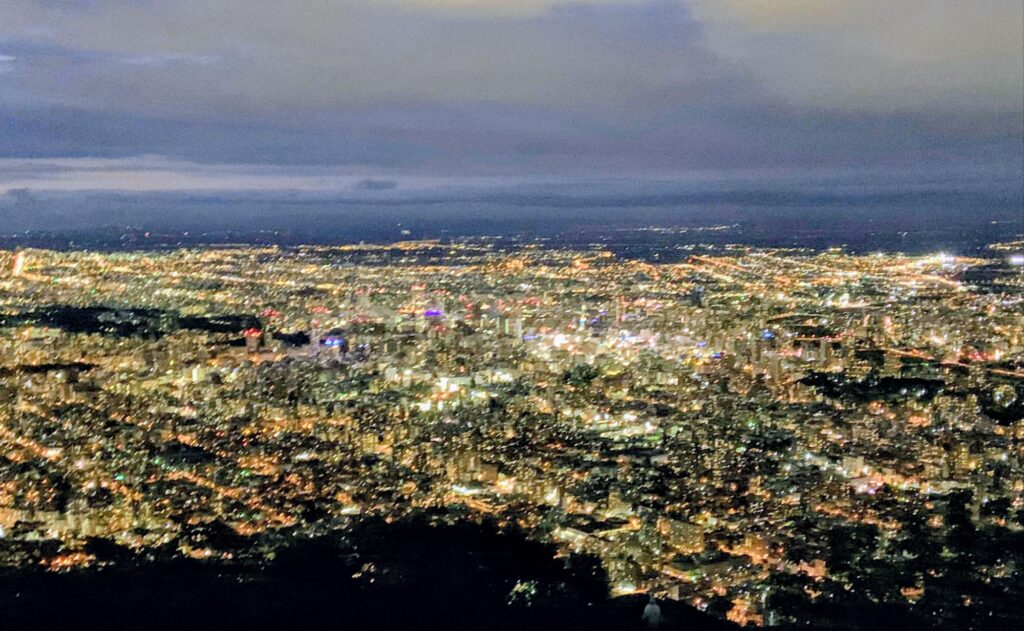
    Mount Moiwa for the night view If your schedule doesn’t stretch to Hakodate, the view from Mount Moiwa in Sapporo is beautiful in its own right. The whole spread of the city sits below you, and it holds up well on its own terms.

    ONSEN RYOKAN Yuen Sapporo A ryokan in central Sapporo where the open-air bath uses hot spring water trucked in from Noboribetsu’s Karurusu onsen. Being able to soak in a real hot spring less than ten minutes’ walk from Odori Station is not something you find often. Good if you want to combine city walking with an onsen.

    Grand Blissen Hotel Jozankei Jozankei is a hot spring town in a river gorge, about 50 minutes by car from Sapporo. This one opened in 2021, and every room faces the gorge — most of them have their own hot spring bath with a view, so you can soak while looking at the valley from your own room.

    That last detail matters for a specific reason. If you have tattoos, a room with a private onsen bath solves the problem entirely. Japanese public baths and onsen can still be conservative about visible ink, and policies vary by property. Booking a room with its own bath means you never have to ask. It’s the simplest workaround in the country, and Hokkaido has a lot of rooms like this.

    There’s also a free shuttle bus from JR Sapporo Station (advance reservation required), so you can reach it without a car — useful in winter.

    📍 Check rates for Sapporo and Jozankei

    Otaru

    Famous for its canal, though I’ll be honest: the canal isn’t my highlight.

    LeTAO cheesecake is. Otaru is where this originated, and eating it there is a different experience from buying a box at the airport. It’s a standard souvenir too, so it works either way. Otaru is a comfortable day trip from Sapporo — half a day covers it.

    Niseko

    The ski destination that made Hokkaido internationally famous. So many foreign visitors that it doesn’t feel like Japan, in a way that’s either the appeal or the drawback depending on what you came for.

    The strength here is ski-in ski-out resort hotels. Walking from your room onto the slope is hard to beat if skiing is the purpose of your trip. In summer it’s a quiet mountain retreat.

    Here’s my honest position, and I’ll flag that it may read differently to you than it does to me. Niseko’s hotels are out of my price range. International demand has pushed rates well above everything else in this article. But if you’re paying in dollars, euros, or Australian dollars, and you know what a week at Whistler, Aspen, or Zermatt costs — Niseko may look entirely reasonable to you. The weak yen has made the same room a splurge for me and a bargain for you. That gap is worth understanding before you dismiss anyone’s price opinion, including mine.

    If skiing isn’t your reason for coming, you don’t need to stay in Niseko. If it is, this is one of the most highly regarded places in the world for powder, and it earns that.

    📍 Check rates for Niseko

    Hakodate

    The night view from Mount Hakodate is called one of Japan’s three great night views, and it deserves the title. Photographs don’t prepare you for it.

    Lucky Pierrot If you make it to Hakodate, this is worth your time. It’s a local burger chain, and the interesting part is that it exists only in Hakodate and the surrounding area — 17 branches, no national expansion, not even a Sapporo location. You have to come here to eat it.

    I went to the Bay Area branch near the red brick warehouses. It’s the original location, themed as a “merry-go-round in the forest,” and there was a swing, which I ended up sitting on. Every branch has a different theme and interior, so some people make a circuit of them.

    The signature item is the Chinese Chicken Burger — a large piece of fried chicken in sweet-savoury sauce, with lettuce, and a lot of volume. Locals shorten it to “chai-chiki.”

    My honest take: I prefer a normal American-style burger. With fried chicken inside, it reads more like a Chinese sandwich than a burger to me. That’s a matter of taste rather than a criticism — it’s good, and it’s something you can only eat here, which is reason enough to try it once. There’s also curry, omurice, and yakisoba on the menu, so a group with different preferences won’t struggle.

    The catch is distance. Hakodate is a long way from Sapporo, and a tight itinerary won’t accommodate it. If you can fit it, the night view justifies the time. If you can’t, Mount Moiwa covers you.

    📍 Check rates for Hakodate

    Asahikawa

    The base for northern Hokkaido, and well positioned for Furano and Biei.

    Asahiyama Zoo The facilities are visibly old, but the design thinking is exceptional. Walkways and tanks are positioned at exactly the angle where you see the animals moving and behaving naturally. That’s what makes it feel so immediate. It holds an adult’s attention completely.

    OMO7 Asahikawa This is Hoshino Resorts’ OMO brand, about ten minutes’ walk from Asahikawa Station. Hoshino Resorts has a reputation for being expensive, but OMO sits at a far more realistic price point. It works well as a base for wandering the city, and the zoo is easy to reach from there.

    📍 Check rates for Asahikawa

    Biei and Furano

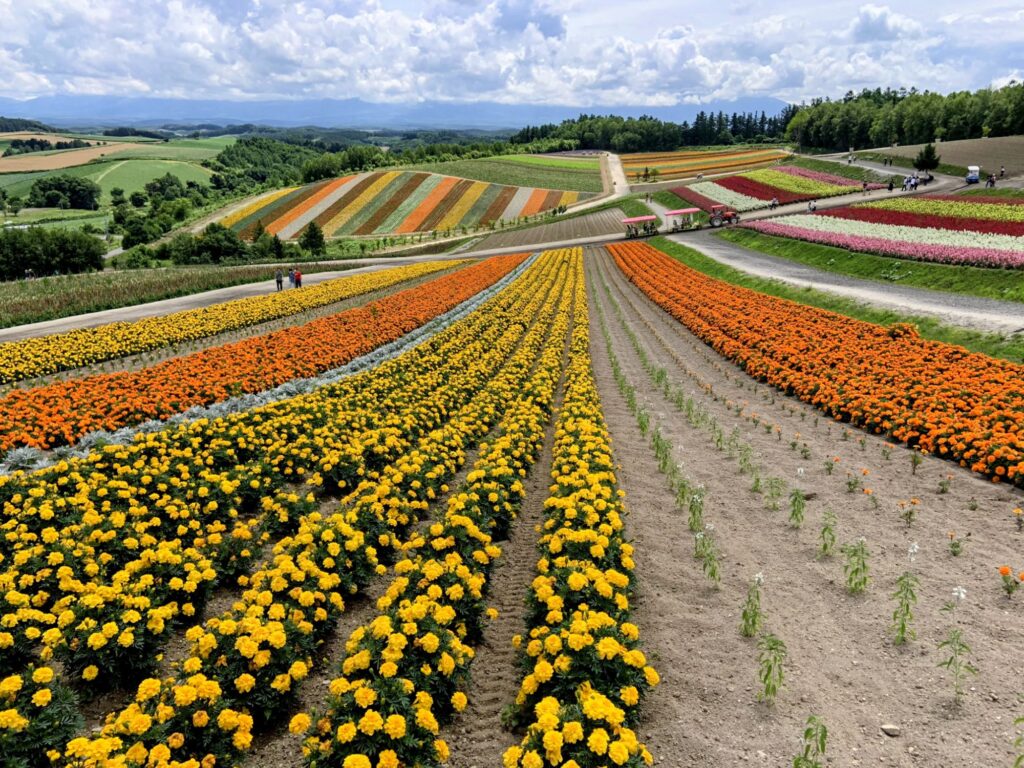
    The landscapes that define summer in Hokkaido are concentrated here.

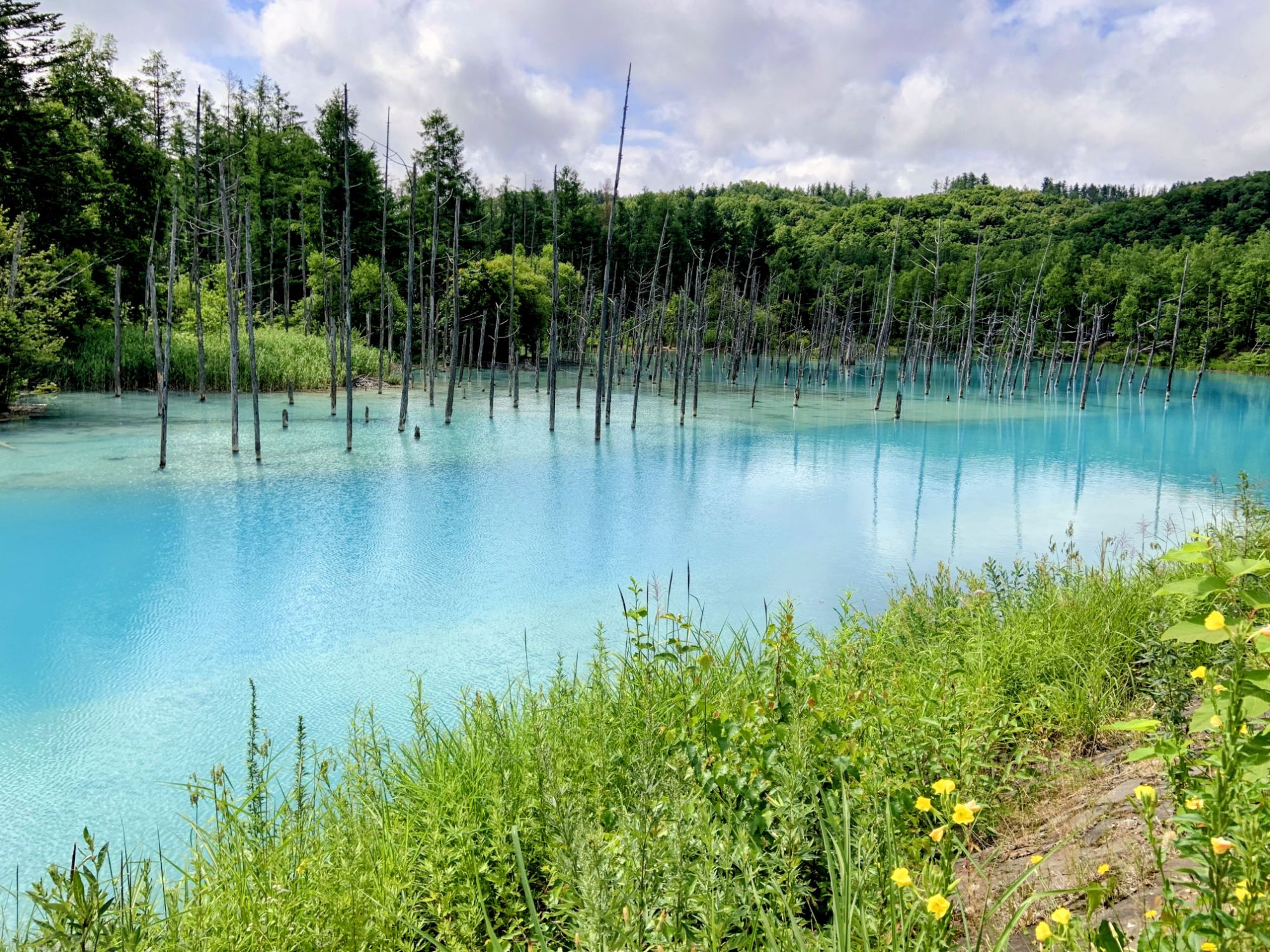
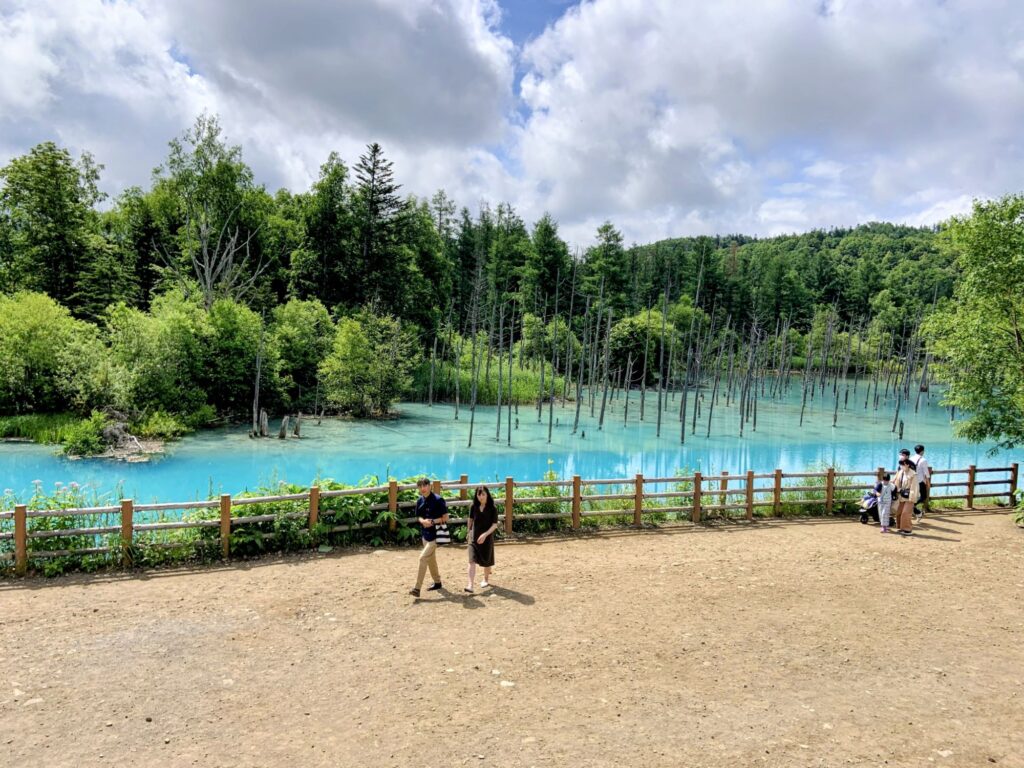
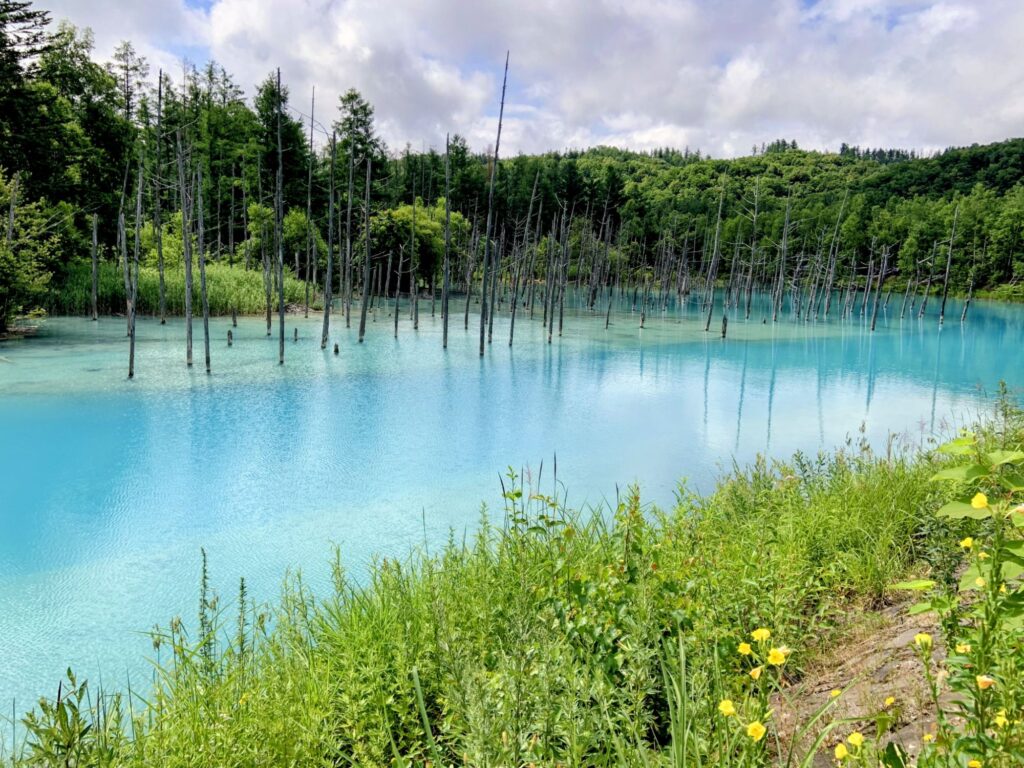
    The Blue Pond (Biei) A pond of an almost unreal blue. “Blue” undersells it — the colour isn’t quite like anything I’d seen. It shifts with the weather and time of day, so photographers get a lot out of it.

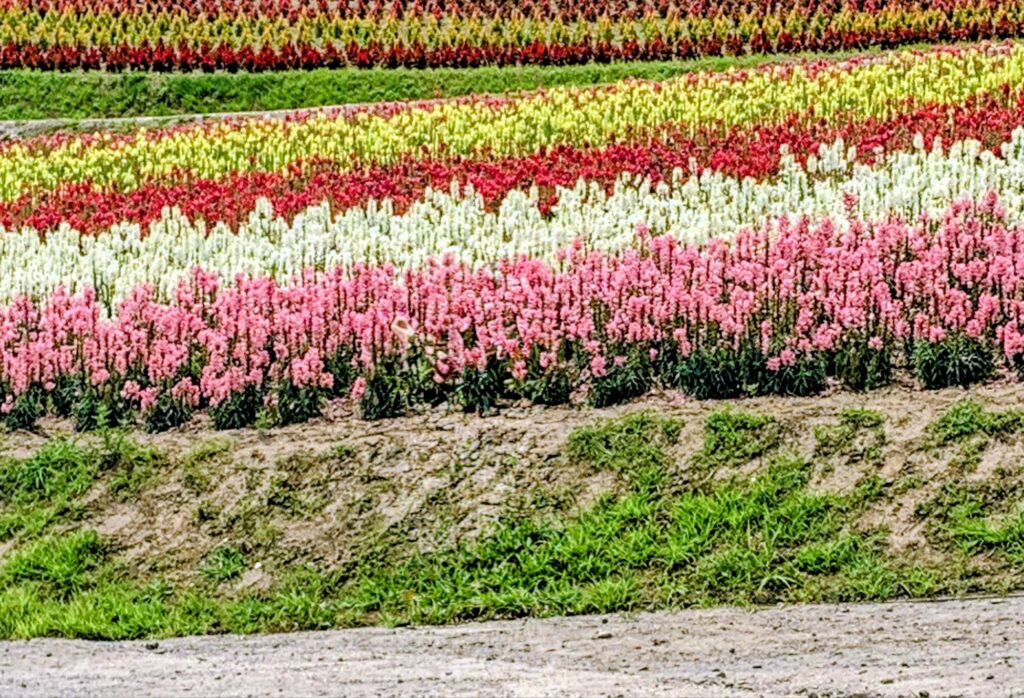
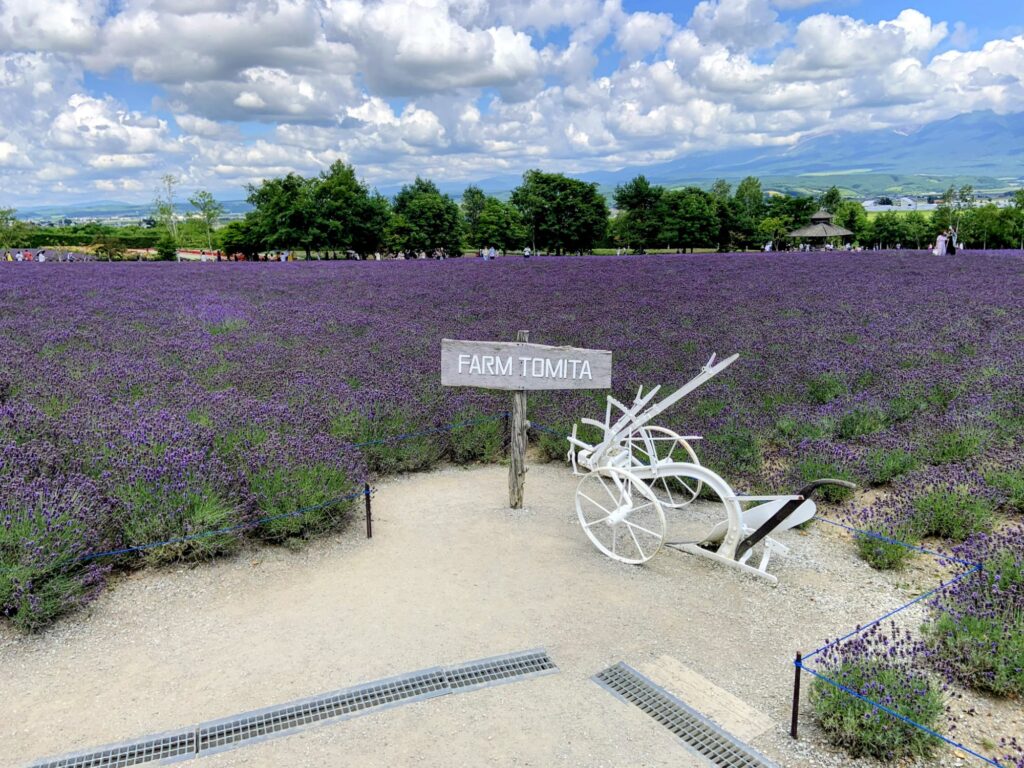
    Furano’s lavender In July the hillsides turn purple and it is genuinely beautiful. But expect traffic. Around the well-known farms the roads seize up, so build slack into your schedule.

    The best thing I did here was the buggy There’s an activity where you drive a buggy yourself through the flower fields and open country. It was far more fun than I expected. Looking at scenery is one thing; steering through it yourself leaves a much stronger memory. It also completely cured my irritation about the traffic.

    📍 Book buggy tours and activities

    Hoshino Resorts Tomamu

    A large resort in the mountains of central Hokkaido.

    I went in summer, and there was enough on the property to keep children happily occupied all day — a water park, outdoor activities, the lot. You don’t have to leave the grounds for the trip to work.

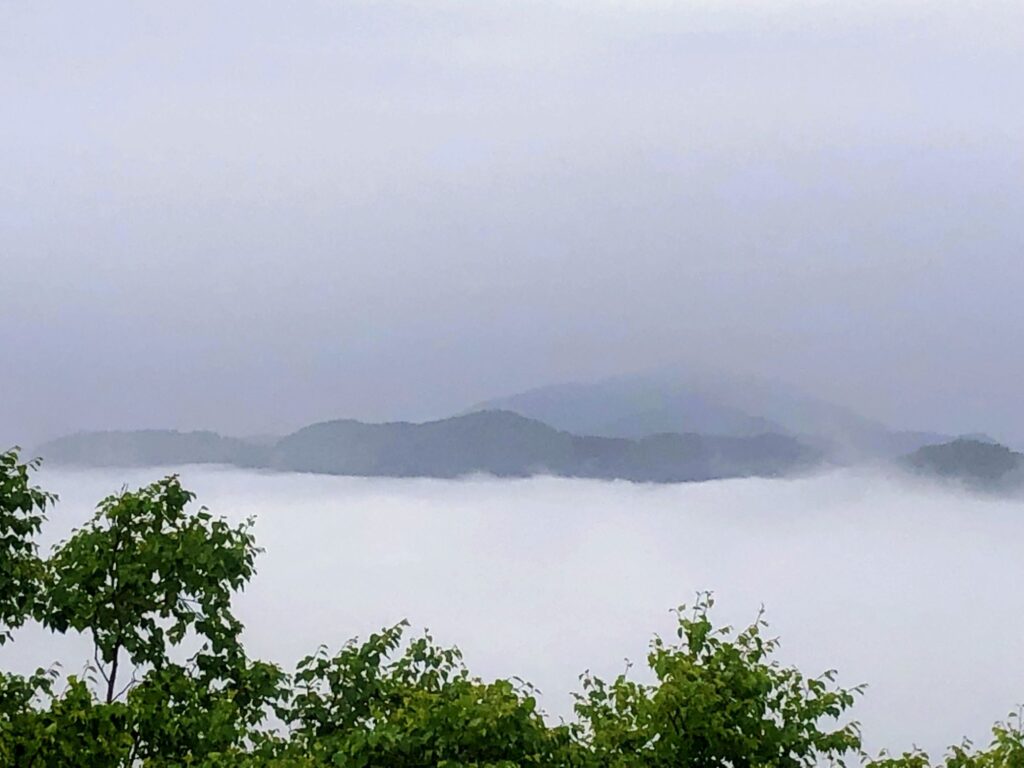
    And then there’s the Unkai Terrace. You take a gondola up the mountain early in the morning to look out over a sea of clouds. It’s a natural phenomenon, so there’s no guarantee it appears on any given day, but the view is worth the alarm clock.

    📍 Check rates for Tomamu


    The food does not miss

    Ramen

    Hokkaido means miso ramen. Sumire, Saimi from the same lineage, Ebisoba Ichigen with its shrimp-based broth, and Shingen are the names people cite. Each has real character and you’ll want to work through several.

    Asahikawa breaks the pattern: Santouka there is tonkotsu-based. The fact that ramen style shifts by region within one prefecture is part of what makes eating here interesting.

    Soup curry

    Soup curry originated in Sapporo and is worth seeking out. GARAKU, SUAGE, and Okushiba Shoten are the standards. Chunks of deep-fried vegetables sit in a heavily spiced broth — it’s not quite like anything else.

    Check the hotel breakfast buffet

    This matters more in Hokkaido than almost anywhere. A lot of hotels include all-you-can-eat seafood at breakfast — salmon roe, fresh fish, as much as you want, first thing in the morning. Given that a seafood rice bowl at a restaurant will cost you a few thousand yen, a room rate that includes that breakfast changes the maths considerably. Compare breakfasts, not just room prices.


    One rule for choosing accommodation

    Hokkaido is cool even in summer — comfortable during the day, but cool enough at night that you’ll want a layer. So whatever the season, stay somewhere with an onsen.

    Every place I stayed had one. After a day of walking or a long drive, whether you can soak makes a real difference to how your body feels the next morning. That holds in August as much as in February.

    On price: Hoshino Resorts’ “Hoshinoya” tier is the aspirational one, and honestly it isn’t a casual purchase. But the same company’s OMO and Tomamu properties sit at realistic prices and still deliver a proper resort experience. Within reach of a modest stretch, there are plenty of good options.

    📍 Compare hotels across Hokkaido


    Practical notes

    Cash. Cities and hotels take cards without issue. Smaller restaurants and rural areas often still don’t. Carry some yen, especially outside Sapporo.

    Winter disruption. Snow causes flight delays and cancellations at New Chitose more than most Japanese airports. If you’re flying in winter, don’t schedule a tight connection on your departure day, and check the cancellation terms on your bookings.

    Cold-weather gear. Winter in Hokkaido is colder than most visitors anticipate. Proper boots with grip matter more than a heavier coat — icy pavement is what actually causes problems.

    📍 Get a travel insurance quote 📍 Set up an eSIM before you go


    Closing

    Hokkaido has shown me something different every time.

    In summer: cool air through open windows, lavender and the blue pond, a buggy across the hills. In winter: snow, powder, and hot springs. Either way, the food does not let you down.

    The distances are long, but the roads are straight. Pick a few areas instead of trying to cover everything, and book somewhere with an onsen. That alone gets you most of the way to a very good trip.

  • [Okinawa Resort Hotels] The Ultimate Guide & Comparison by Travel Style

    [Okinawa Resort Hotels] The Ultimate Guide & Comparison by Travel Style

    This article contains affiliate links.

    Okinawa has more resort hotels than you could ever work through. They all look beautiful on their websites, and they all cost real money. That’s exactly what makes choosing hard.

    Over the years I’ve stayed at a lot of them, across the main island and the outer islands — most years I end up back there, sometimes with family, sometimes with friends, sometimes as a couple. Some trips were loud and full of kids in the pool; others were quiet. What I’ve come to think is that “which hotel is best” is the wrong question. “Who am I going with, and what kind of trip do I want” is the right one.

    One more thing worth saying up front, especially if you’re reading this from abroad. Japan’s ultra-luxury tier — Hoshinoya, Rosewood Miyakojima, and the rest — is genuinely out of reach for most Japanese travelers. At the other end, Japan’s business-hotel brands are efficient but they won’t give you a resort holiday. This article is about the space in between: hotels that feel like a proper luxury resort, at a price you can actually stretch to. And here’s the part foreign visitors often don’t realize — with the yen where it is, that in-between tier costs a fraction of what an equivalent resort would run you in Hawaii, the Maldives, or the Mediterranean. Rooms that feel like a splurge to me may look like a bargain to you.

    What follows is arranged by area, north to south and then out to the islands, with my honest impressions of the ones I’ve stayed at and my reasons for wanting to try the ones I haven’t.


    Three things worth checking before you book

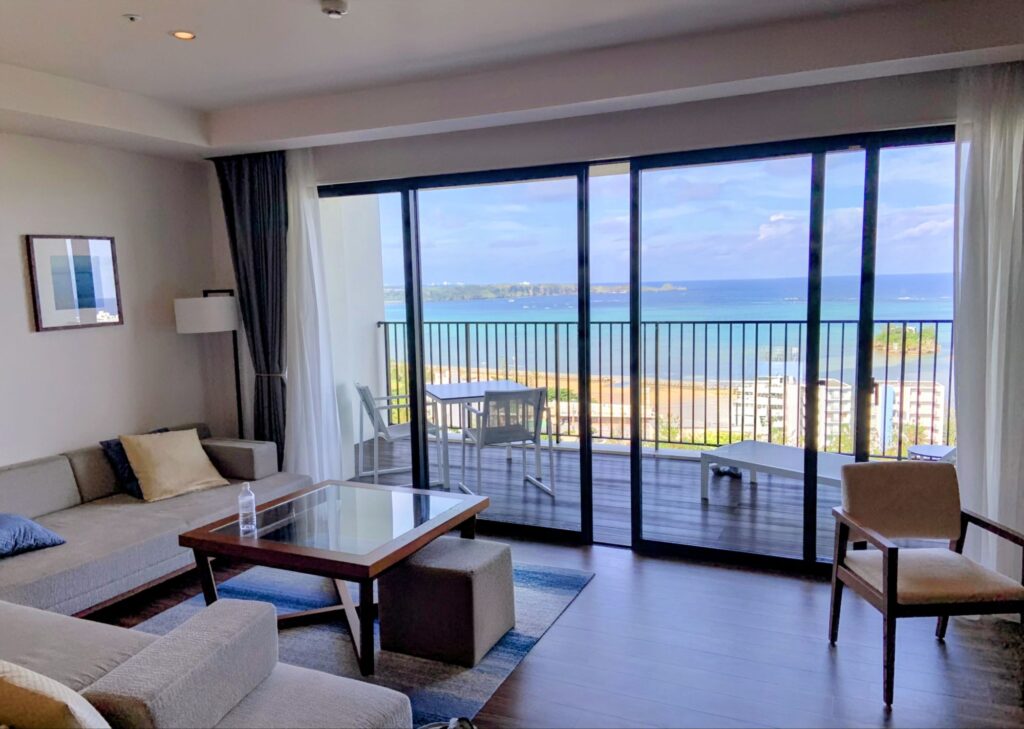
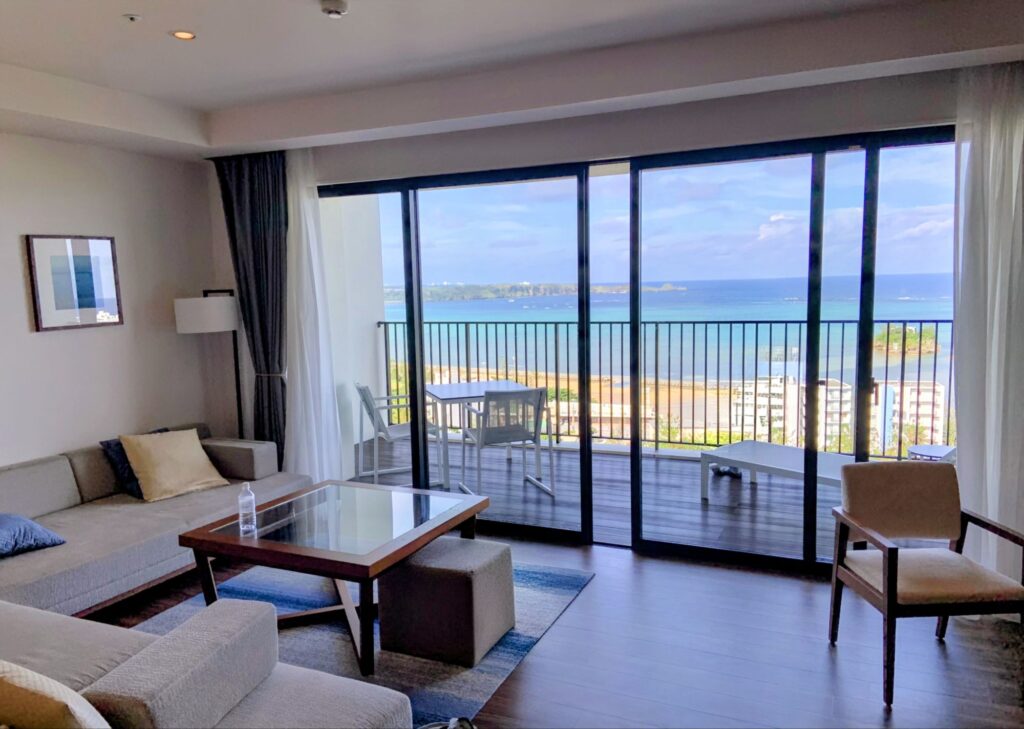
    1. How the ocean actually looks from the room “Ocean view” covers a lot of ground. Distance from the water, whether anything blocks the sightline, whether you get sunrise or sunset — these change the experience completely. If you can feel the sea from anywhere in the room, satisfaction goes way up.

    2. Whether the hotel matches how you want to spend the day A family that wants to be in the pool from morning to night and a couple who want to sit and look at the water need opposite hotels. Lively resort with lots of activities, or somewhere calm? Get this wrong and the whole stay feels off.

    3. How far it is from Naha Airport Okinawa’s main island is longer than people expect. The best hotel in the world isn’t much good if you arrive exhausted. For the outer islands, the question shifts: can you get there and back on hotel shuttles alone?

    A note on tattoos. Japan can still be conservative about visible tattoos at pools, public baths, and onsen. Resort pools are generally more relaxed than traditional bathhouses, and a rash guard solves it in most cases, but if you have visible ink it’s worth emailing the specific hotel before you book. Beaches and the ocean are never an issue.


    Okinawa’s resorts, area by area

    Northern main island — Onna, Nago, Motobu

    This stretch of west coast has the highest concentration of resort hotels in Okinawa, and most of my stays have been here. Figure 60–90 minutes by car from Naha Airport.

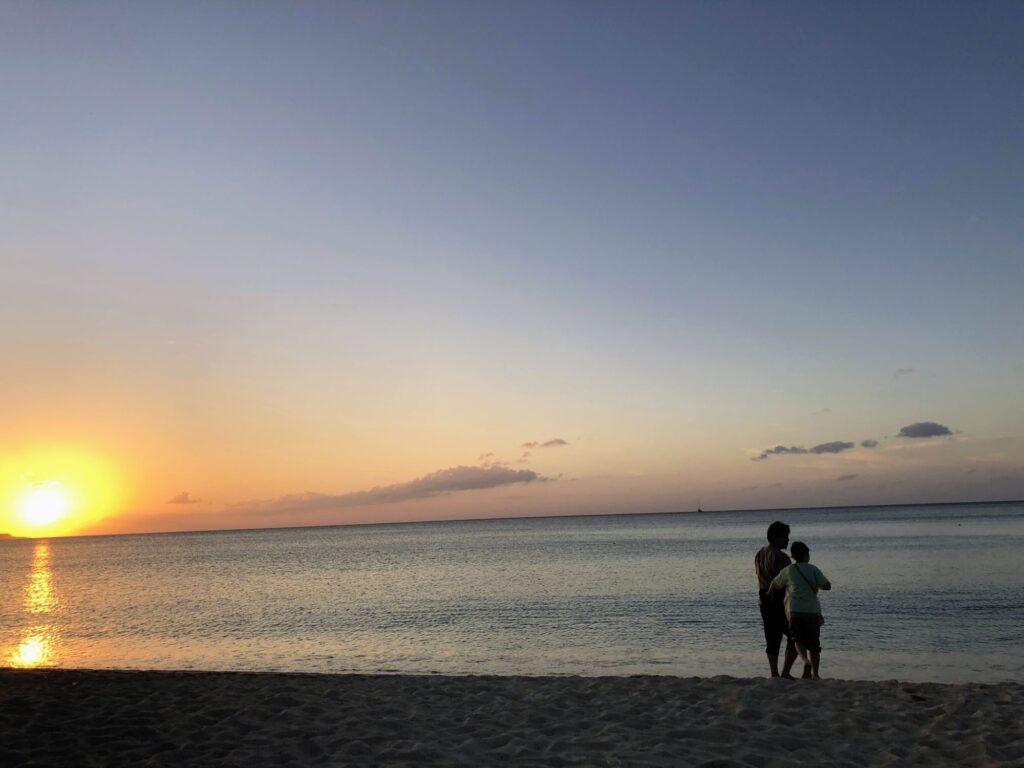
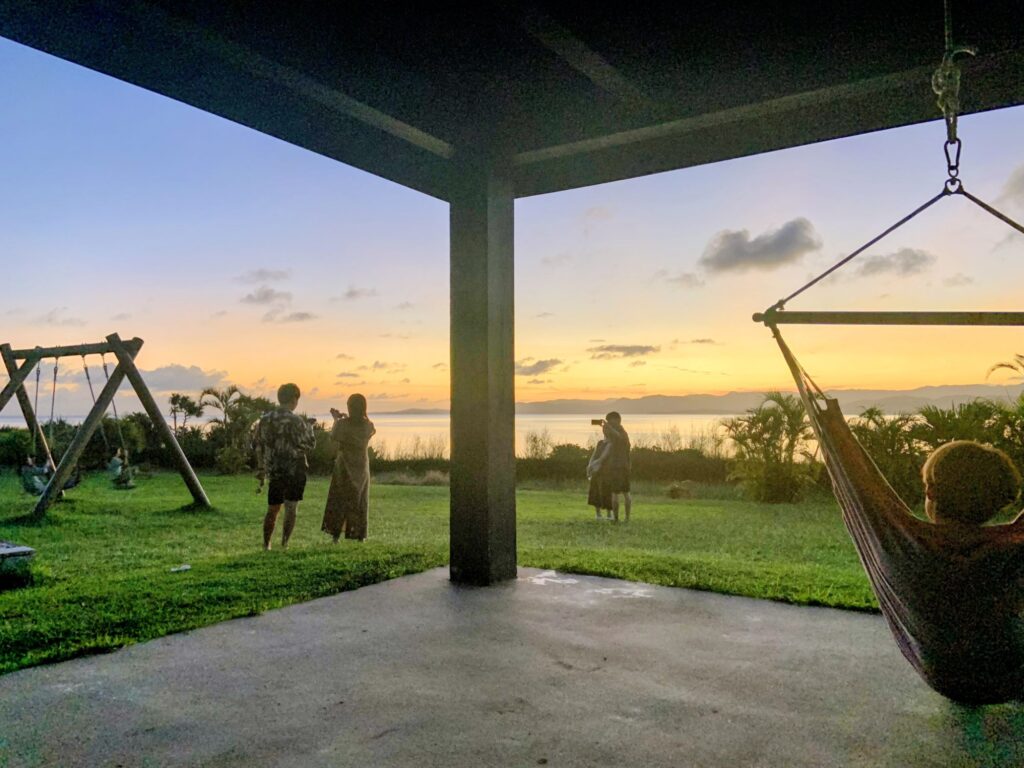
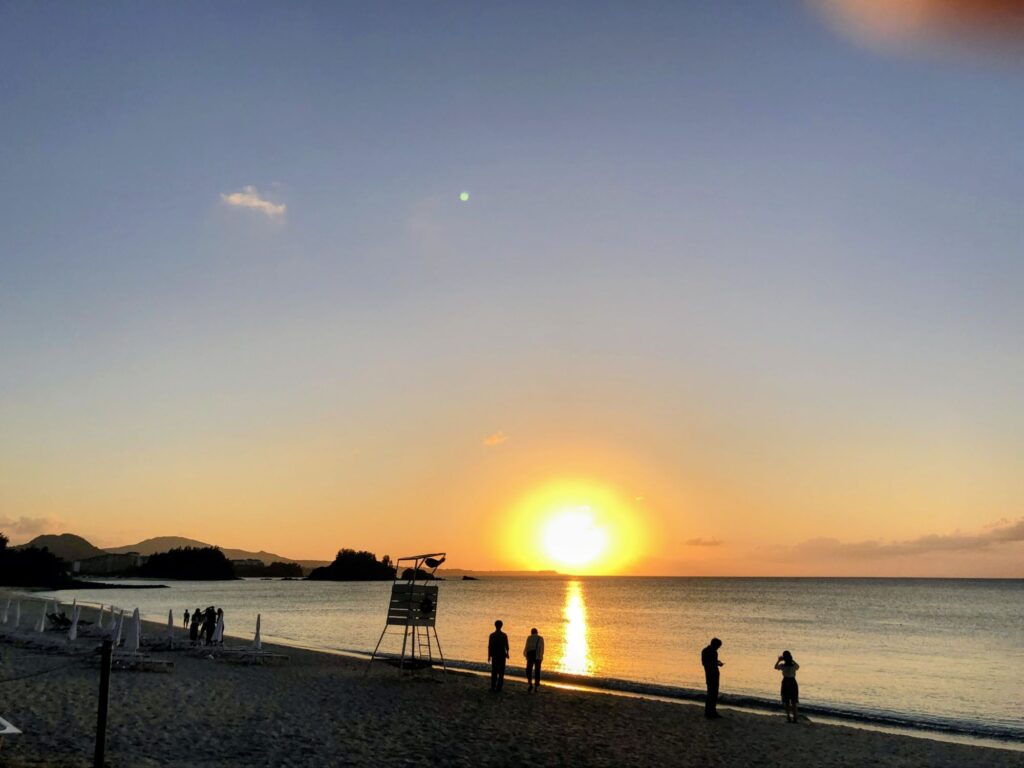
    The Busena Terrace (Nago) A calm, established feel — the kind of atmosphere you’d find at an older Hawaiian resort. What stayed with me was the evening at the adjacent Busena Beach: live saxophone drifting over from the hotel, heard in the light of the sunset. It’s not something you get in many places. Suits anniversaries and couples.

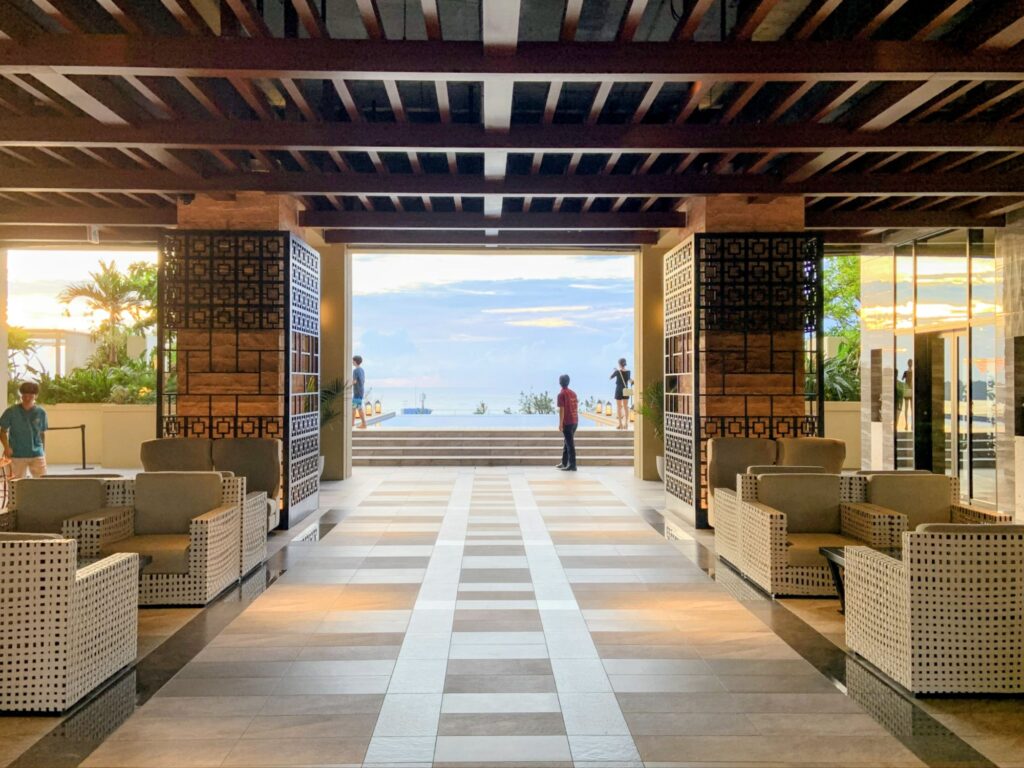
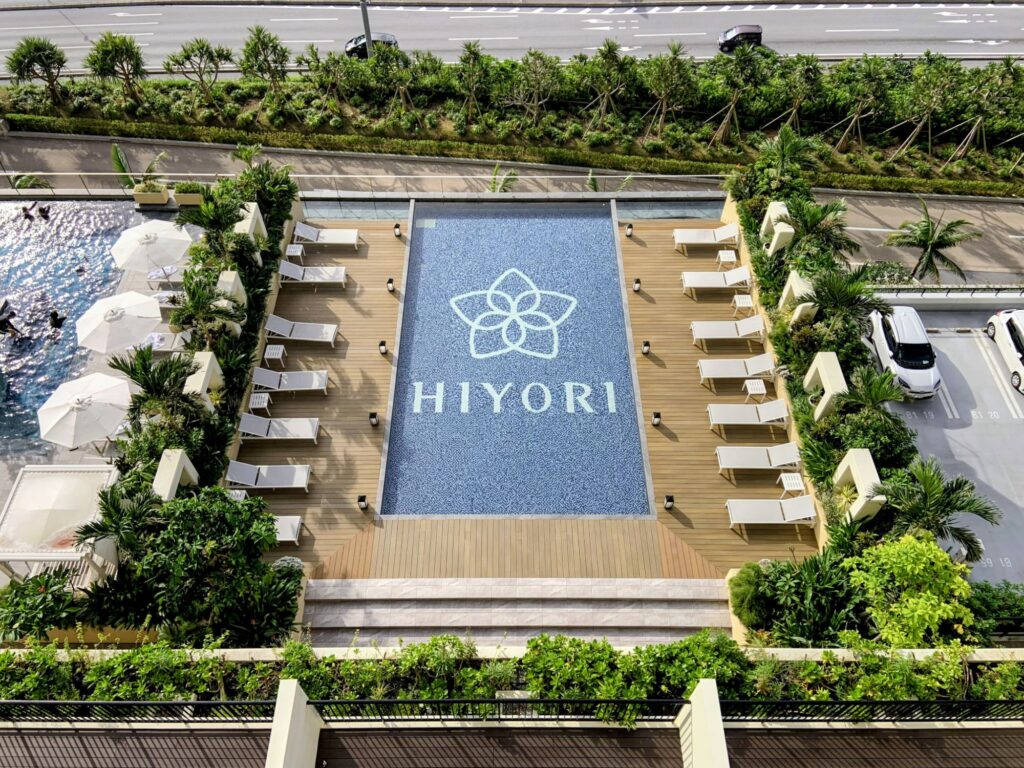
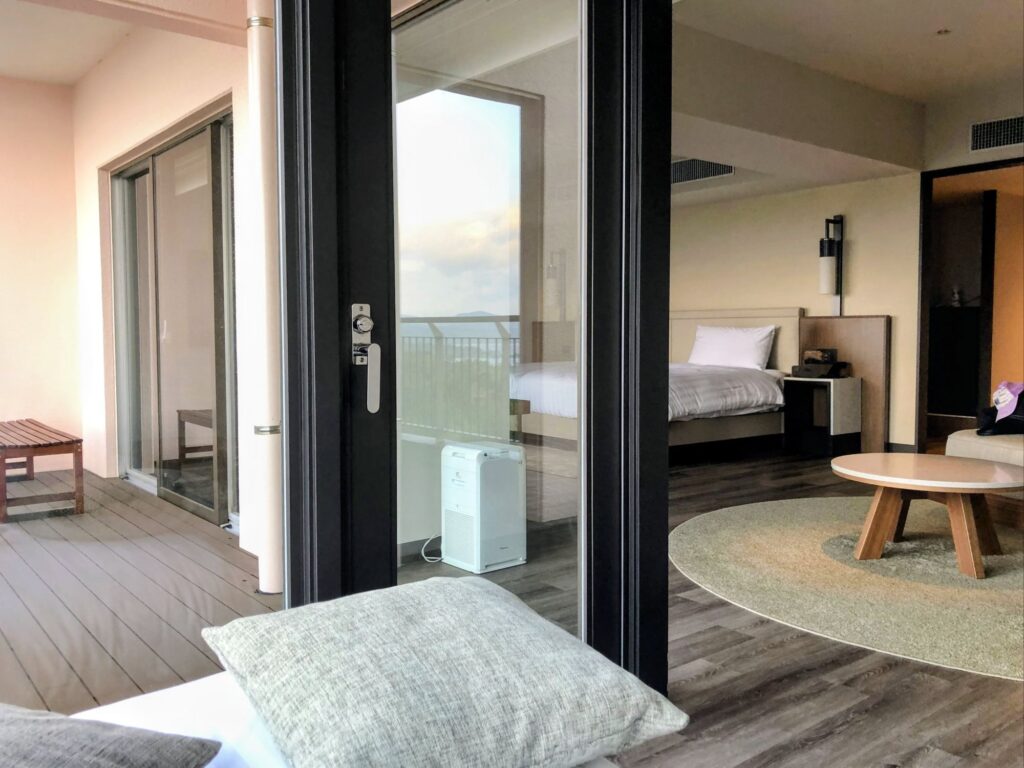
    HIYORI Ocean Resort Okinawa (Onna) Every room faces the ocean, and the layout is closer to a condominium than a hotel. Less “special occasion,” more “living in Okinawa for a few days.” Some rooms have kitchens, which makes it practical for families or longer stays — and if you’re coming from overseas and staying a week, that matters more than you’d think.

    ANA InterContinental Manza Beach Resort (Onna) Positioned looking out at Cape Manzamo, with a good beach and plenty of water sports. Easy with kids, easy as a couple. It’s the one I’d call reliably solid whoever you bring — and the international-brand familiarity helps if it’s your first time navigating a Japanese resort.

    Oriental Hotel Okinawa Resort & Spa (Nago) Open and airy, surrounded by the Yanbaru forest and the sea. The club lounge is comfortable. Not flashy, but genuinely pleasant if you want a slow few days.

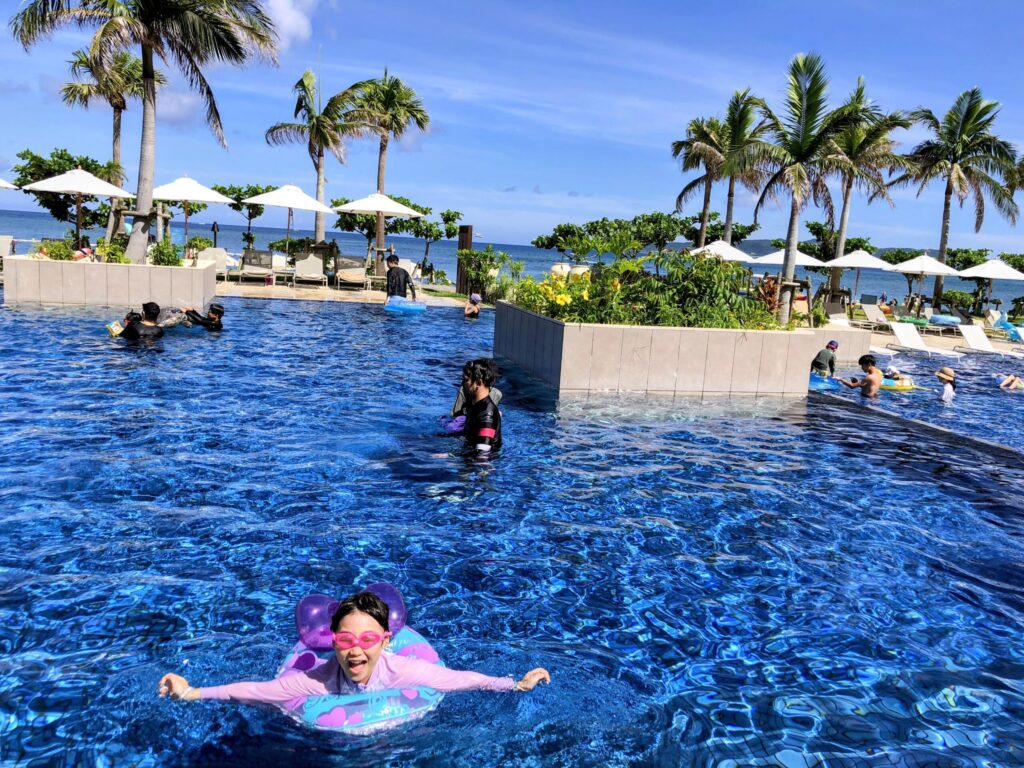
    Hyatt Regency Seragaki Island Okinawa (Onna) An entire small island, reached by bridge, turned into a resort — the setting alone feels removed from ordinary life. The pool area reads as continuous with the ocean, and it works for both kids and adults.

    Halekulani Okinawa (Onna) I haven’t stayed here yet, but I want to. It sits near the top of Japanese booking-site rankings consistently. For Japanese travelers it’s become “Hawaii, without the flight to Hawaii” — and with the exchange rate, that comparison has only sharpened. It isn’t cheap by Japanese standards, but if you’re paying in dollars or euros and you know what a night at the Halekulani in Waikiki costs, the Okinawa property may read very differently to you than it does to me.

    (An aside: Kahala, the other grand Hawaiian name, opened in Yokohama rather than Okinawa. I’ve stayed at the Yokohama one and still can’t quite work out the logic. The two big Hawaiian brands landing in completely different parts of Japan is a strange piece of trivia.)

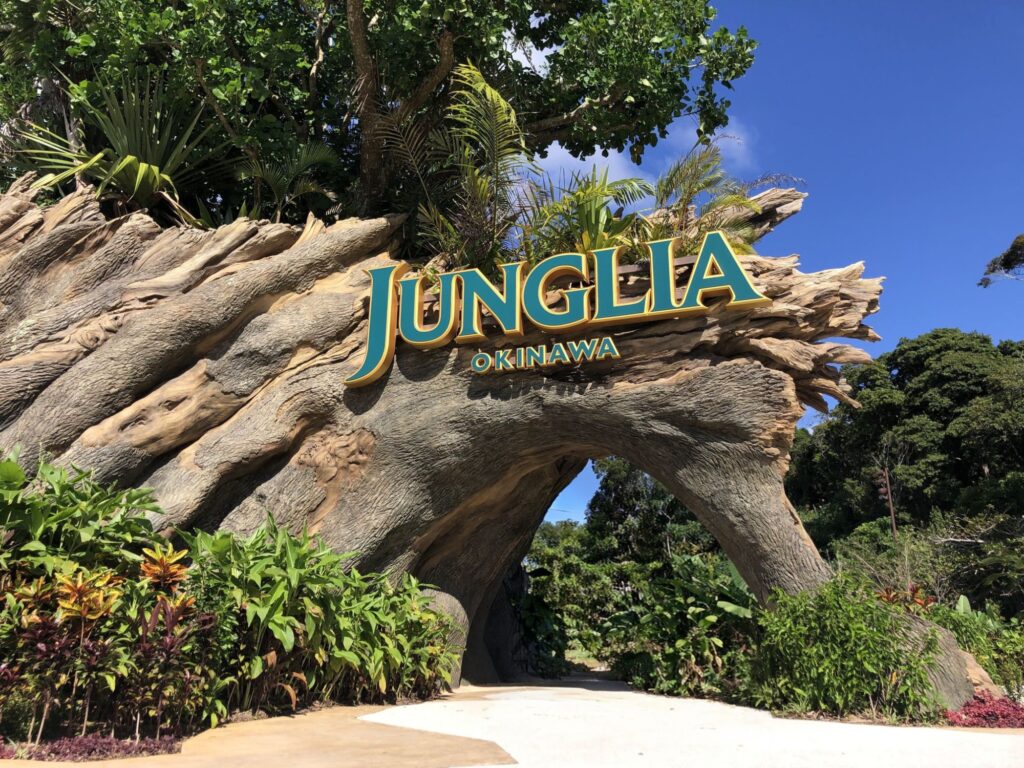
    Orion Hotel Motobu Resort & Spa (Motobu) Another one on my list. A seven-minute walk from the Churaumi Aquarium — which is the single best-located hotel in Okinawa if the aquarium is high on your list. Every room is over 50 m² with an ocean view, Emerald Beach is right there, and Ie Island sits on the horizon. There’s a natural hot spring and a bar serving Orion beer. It also has a reputation for restaurant and vending prices that aren’t inflated the way resort prices often are. It’s the official hotel of JUNGLIA Okinawa, so it works if you’re combining the two.

    Central main island — Yomitan, Chatan

    Grand Mercure Okinawa Cape Zanpa Resort (Yomitan) Renovated in 2024, and now one of the more interesting value propositions in Okinawa: a large lazy river, serious water slides, one of the biggest pool complexes in the prefecture, and an all-inclusive setup — at a price that hasn’t caught up with the facilities.

    The only reason I haven’t gone is my kids’ ages. Slides that ambitious are too much for them right now, so we’re waiting. If your children are around primary-school age, this is the one to look at first. And “all-inclusive” removes a lot of daily friction if you’re visiting from abroad and don’t want to think about every meal.

    The Chatan resorts Chatan puts the buzz of Mihama American Village and the ocean within easy reach of each other. I’ve stayed at two hotels here. It’s the opposite of Onna’s big-nature resorts — you can walk out to shops and restaurants, which is a real advantage if you want the trip to include some browsing and eating out. If your plan is to stay in and go quiet, Onna or the islands suit better.

    Southern main island — Itoman

    Ryukyu Hotel & Resort Nashiro Beach (Itoman) Haven’t stayed yet, but it’s high on my list. Opened in 2022, the largest resort in the island’s south. All 443 rooms are ocean-view, there are six pool types, and 1.8 km of white sand sits directly in front. The real draw is the location: roughly 20 minutes by car from Naha Airport. No long drive north — you land and you’re basically there. There’s also a direct limousine bus from the airport, which makes it one of the few genuinely car-free-friendly resorts on the main island. The south used to be thin on resorts; this one changed that.

    Ishigaki and Kohama

    Getting here means a second flight — about an hour from Naha, or direct from Taipei and Hong Kong if you’re routing through Asia.

    ANA InterContinental Ishigaki Resort (Ishigaki) Consistently good service and an easy place to be. Close to the airport, and a sensible base if you plan to island-hop out to Taketomi or Kohama.

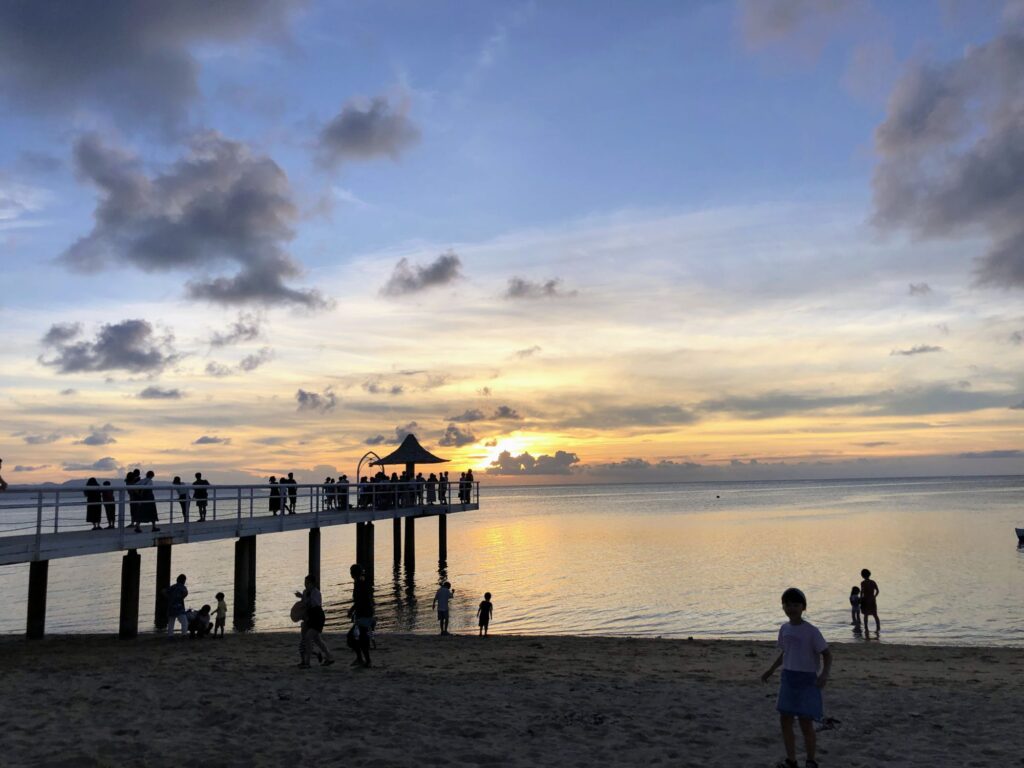
    Fusaki Beach Resort Hotel & Villas (Ishigaki) Red-tiled Ryukyu-style villas across a large property. It’s one of Ishigaki’s known sunset spots, and the sunsets earned it. The space is lovely, though there’s a fair bit of walking within the grounds — some people love that, some don’t.

    Haimurubushi (Kohama Island) A quiet resort on Kohama. There’s very little light at night, so the stars are extraordinary. If you want to be completely away from noise, this is it — and the ferry ride over from Ishigaki is part of what makes it feel that way. Be aware there’s almost nothing on the island in the way of shops or restaurants; the stay is designed to happen entirely within the resort.

    Miyako Island

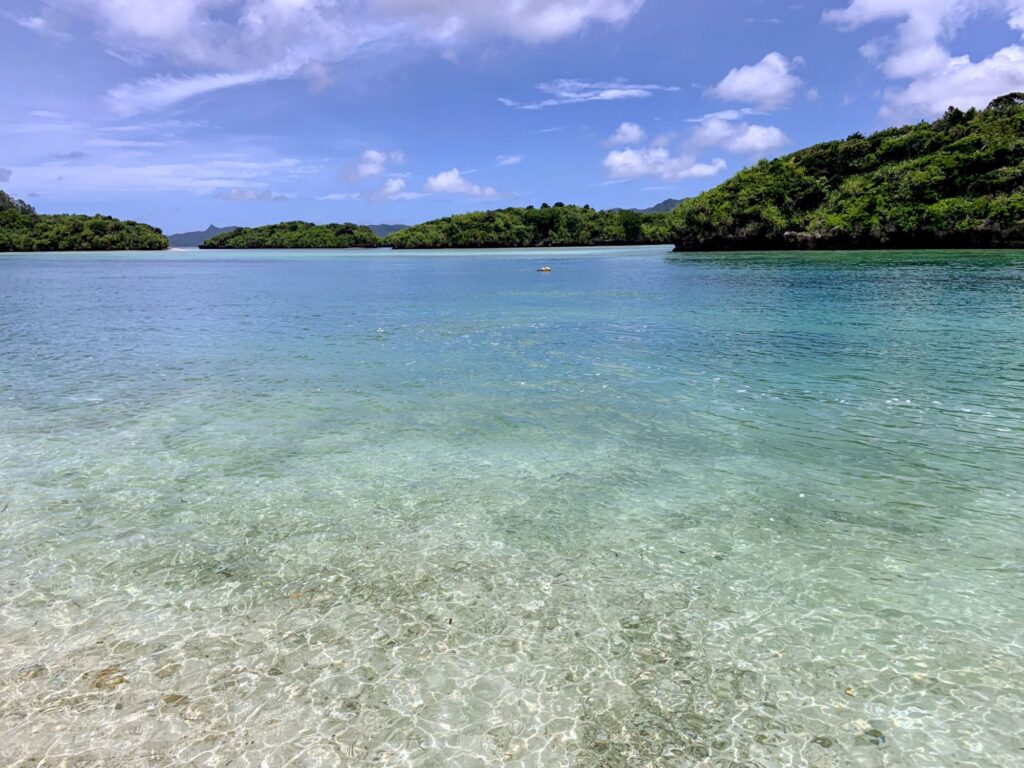
    Miyako has the most beautiful water I’ve seen anywhere in Okinawa. I stayed in cottage-style lodging once, and because there are so few restaurants on the island, I ended up driving somewhere every time I wanted to eat. Next time I’ll book a resort and stay put — which is the right way to do Miyako.

    Hotel Shigira Mirage A modern property inside the Shigira resort area on Miyako’s south coast. The upper-floor ocean views are the draw — the blue of Miyako’s water and the sky in one panorama. The in-house dining, including teppanyaki and seafood, is well regarded. With hot springs and activities inside the resort area, you could reasonably never leave.

    Shigira Bayside Suite Allamanda An all-suite property in the same resort area, with sea turtles swimming in the lagoon on site. Built for staying in — a good fit for anniversaries or honeymoons where you want quiet and privacy. On the more indulgent end, but worth considering if the plan is simply to slow down on Miyako.

    Miyakojima Kurima Resort Seawood Hotel (Kurima Island) On Kurima Island, connected to Miyako by bridge. Villas and a hotel wing spread across a big site, laid out like a village, with “living here for a while” as the theme. Kurima has fewer lights than Miyako proper, so the night sky is reportedly exceptional. Some villas have private pools.

    Canopy by Hilton Okinawa Miyako Island Hilton’s lifestyle brand, and its first resort in Asia-Pacific. The design draws on Miyako’s landscape and local culture, and the feel is deliberately casual rather than formal — good for younger travelers, friends traveling together, or anyone planning to be out and active. Access to Irabu Bridge and the town is convenient, and being brand new, everything is still fresh.


    Compare photos and rates across Booking.com

    Choosing by what you want out of the trip

    Kids, pools, things to do Hyatt Regency Seragaki, ANA InterContinental Manza Beach, Grand Mercure Cape Zanpa. Pools and ocean activities that will keep children busy. Just check the Grand Mercure slides against your kids’ ages.

    A couple, an anniversary, somewhere quiet The Busena Terrace, Oriental Hotel Okinawa, Haimurubushi, Shigira Bayside Suite Allamanda. The sunset and saxophone at Busena in particular suit a trip for two.

    Town and beach in the same day The Chatan resorts. Shopping and restaurants are all walkable.

    If Churaumi Aquarium is a priority Orion Hotel Motobu. A seven-minute walk is a location nowhere else can match.

    If you don’t want a long transfer after landing Ryukyu Hotel & Resort Nashiro Beach. Twenty minutes from Naha Airport, with an airport bus.

    Complete quiet Haimurubushi on Kohama, or Kurima Resort Seawood. The stillness and the stars on the outer islands aren’t available on the main island.

    The best water Miyako Island, without hesitation. Nothing else I’ve seen in Okinawa comes close on clarity.

    Best value for the facilities Grand Mercure Cape Zanpa and Orion Hotel Motobu. Both deliver more than the price suggests.


    Can you do this without renting a car?

    Mostly, yes — but it depends heavily on which hotel you pick, and this is worth thinking through before you book rather than after.

    Genuinely car-free: Nashiro Beach runs a direct limousine bus from Naha Airport. Orion Motobu has an express bus from Naha Airport too. On the outer islands — Haimurubushi, Fusaki, ANA InterContinental Ishigaki, and the Miyako resorts — port and airport transfers are organized, so if your plan is to be at the resort, you don’t need a car at all.

    Better with a car: the Onna and Nago resorts. Staying put is fine on shuttles, but the moment you want to reach a restaurant, a beach, or Churaumi, you’ll want your own wheels.

    A middle option: book a private airport transfer for the arrival and departure legs, and skip the rental entirely. For a resort-based trip this often works out simpler than dealing with a rental counter after a long-haul flight.

    📍 Book a private airport transfer 📍 Compare rental car rates

    If you do drive, check what your own country’s licence requires before you leave. Japan recognizes the 1949 Geneva Convention International Driving Permit for many countries, but not all — a few require an official Japanese translation of the licence instead. Confirm which category applies to you before you travel, because you cannot sort it out on arrival.


    A few practical notes

    Cash. Resort hotels and major attractions take cards without any trouble. Local diners, markets, and small soba shops often still don’t. Carry some yen.

    Typhoons. July through September is peak season, peak pricing, and typhoon season all at once. March–April and October–November are the better windows — beaches are open, the risk is far lower, and rates are calmer. If you must travel in summer, read the cancellation terms on both your flights and your hotel before you book.

    Staying connected: rather than hunting for a local SIM at the airport, an eSIM lets you land with data already working — Airalo is the easiest way to set one up before you fly.

    📍 Set up a Japan eSIM before you go

    Insurance. Worth having for a trip that involves flights, ferries, and water activities, particularly if a typhoon could disrupt your dates.

    📍 Get a travel insurance quote


    In closing

    Choosing an Okinawa resort isn’t really a specs comparison. In the end it comes down to who you’re going with and what you want the trip to feel like.

    Pools and noise and children having a great time: Grand Mercure or Hyatt Regency Seragaki. Sunset and a saxophone: Busena Terrace. Total quiet: Haimurubushi. The clearest water you’ll see in Japan: Miyako. Straight off the plane and into a resort: Nashiro Beach.

    The same island produces completely different holidays depending on where you sleep. I hope this helps you land on the right one.

    Compare photos and rates across Booking.com

  • Okinawa Travel Guide 2026: The “Grown-Up” Way to Do Japan’s Tropical Islands

    Okinawa Travel Guide 2026: The “Grown-Up” Way to Do Japan’s Tropical Islands

    This article contains affiliate links.

    I’ve been to Okinawa many times now — almost every year. Each time, I rent a car and go with family, or with friends, or as a couple. And every time, I arrive at the same conclusion:

    Okinawa isn’t a place to cram your itinerary. It’s a place to subtract.

    If you’re coming from elsewhere in Asia, the access is hard to beat — roughly two and a half hours by air from Tokyo or Taipei, easier than flying to Phuket or Bali. A long weekend, or two days plus one day off, and you’re standing in front of clear water and a genuinely luxurious resort. You don’t have to fly to some far-flung tropical country. Okinawa sits within two hours — and that alone is a kind of luxury.

    In this guide: which island has the most beautiful water, when to go and when to avoid, and what I remember from the resorts I’ve actually stayed in.


    Okinawa vs Thailand & Bali: Why the Grown-Ups Choose Japan

    Having seen a fair number of tropical resorts, I’ve come to believe Okinawa’s real value is its quietness.

    The beach towns of Thailand and Bali develop a certain energy after dark — day and night are two completely different worlds there. That’s part of the fun of travel, but when you’re there with family, there are moments you find yourself on guard. Okinawa’s resort areas don’t have that. You can walk out of your hotel at night holding your child’s hand and not feel tense. That sense of ease shapes the quality of a trip more than you’d expect.

    That said, it isn’t an island of only quiet. Come with friends and you can spend the hours until sunset at a beachside barbecue spot overlooking the ocean — places like Cozy Beach Club or Resort Magic. At night, head to Kokusai-dori, where the izakaya are endless and some feature live sanshin (the Okinawan three-stringed lute) performances.

    The same island wears a different face depending on who you bring. That’s what makes it interesting.

    A note for visitors from the West

    Two things worth knowing up front:

    • Tattoos. Japan can be conservative about tattoos at pools and public baths, and some resorts ask that they be covered. In practice, a rash guard solves this at most hotel pools and beaches, and the ocean itself is never a problem. If you have visible tattoos, it’s worth checking your specific hotel’s policy in advance.
    • Getting around. Okinawa is more car-dependent than mainland Japan. It’s very doable without a car if you stay resort-based (more on that below), but a self-drive trip opens up far more of the islands.

    The Best Season Is Not Summer

    This is the point I most want to stress.

    July through September is peak season. But prices at resort hotels comfortably double or more — and it coincides exactly with typhoon season.

    An Okinawa trip hit by a typhoon and one under clear skies are worlds apart. You can’t get in the water, can’t reach the islands, and end up watching a grey sky from your hotel room — after paying peak rates for the privilege.

    I’ve been fortunate never to take a direct hit. That’s not luck; it’s because I’ve always shifted my timing.

    What I recommend: March–April and October–November. The beaches are open, typhoon risk is low, and prices are calm. Early May through late June is Okinawa’s rainy season, so I avoid it. In March and April the water is still on the cool side, so it suits a trip built around scenery and comfortable weather rather than swimming.

    I know the harshness of summer firsthand. The time I cycled around Taketomi Island in July, I nearly collapsed, drenched in sweat. That island, that season, by bicycle — I truly can’t recommend it for anyone traveling with kids.


    The Classic Route: Three Days, Two Nights Is Plenty

    After all these trips, I have a set formula.

    Night 1: Naha City sightseeing and shopping. Kokusai-dori, DFS, and Shuri Castle.

    Night 2: A resort in the central or northern region This is where the trip finally shifts into “rest” mode.

    That’s it. Try to cram Okinawa and you only add transit time. Three days, two nights — one in Naha, one at a resort. That balance delivers the most satisfaction.

    If you’re adding an outer island, make it one night on the main island plus two on the island, giving the island the leading role.

    On Shuri Castle in 2026 After the 2019 fire, restoration has progressed, and in October 2025 the scaffolding structure covering the work was removed. You can now see the vivid main hall (Seiden) exterior for the first time in about six years. Interior public access is scheduled for autumn 2026. In other words, right now is a window unique to this moment — a completed exterior with an interior you still can’t enter. Right beside the castle is Suri Soba, a spot famous for its Okinawa soba.


    For the Water, Go to the Islands — and to Miyako

    Let me be honest.

    Okinawa’s main island has beautiful water compared to mainland Japan. But once you’ve seen the outer islands, the story changes.

    The most beautiful water I’ve found is Miyako Island.

    Ishigaki is the liveliest of the outer islands. But for transparency and depth of blue, Miyako wins by a wide margin. Ishigaki’s famous Kabira Bay is a genuine spectacle — but swimming is prohibited there. A sea you can only look at, versus a sea you can dive into. What healed me was the latter.

    The whiteness of Maehama Beach. And the Irabu Bridge — driving across it, layers of blue spread out on both sides, so beautiful you almost don’t want to reach the other side. It’s the kind of thing you can’t understand until you go.

    When I dove in, the water was so clear I felt like I’d jumped into an enormous swimming pool — the fish plainly visible. I hold an Advanced diving certification, but when it comes to Miyako, even without any license a trial dive is more than enough — the transparency itself is the main attraction. Weather matters a great deal, of course. Even if you don’t dive, snorkeling alone rewards the trip.

    If you’re staying overnight on Miyako, choose a resort hotel. Compared to Ishigaki, Miyako has surprisingly few restaurants. I once stayed three nights in cottage-style lodging and found myself bored unless I drove out somewhere. Checking into an ocean-view resort from the start and simply staying put — that’s the right way to do Miyako, as I realized only afterward. Next time, that’s what I’ll do.

    To see beautiful water on a day trip from the main island I recommend a day trip to the Kerama Islands. Minna Island is also a quick boat ride away.

    There are other beautiful outer islands like Hateruma, but when it comes to islands with genuinely good resort hotels, the options narrow considerably.

    📍 Miyako trial diving & snorkeling (Klook) 📍 Kerama Islands day trip (Klook)


    The Resorts I’ve Stayed In — and the Ones I Still Want To

    So far I’ve stayed at: two resorts in Chatan, HIYORI Ocean Resort Okinawa, ANA InterContinental Manza Beach Resort, The Busena Terrace, Oriental Hotel Okinawa Resort & Spa, Hyatt Regency Seragaki Island Okinawa, and on Ishigaki both Fusaki Beach Resort and ANA InterContinental Ishigaki Resort, plus Haimurubushi on Kohama Island.

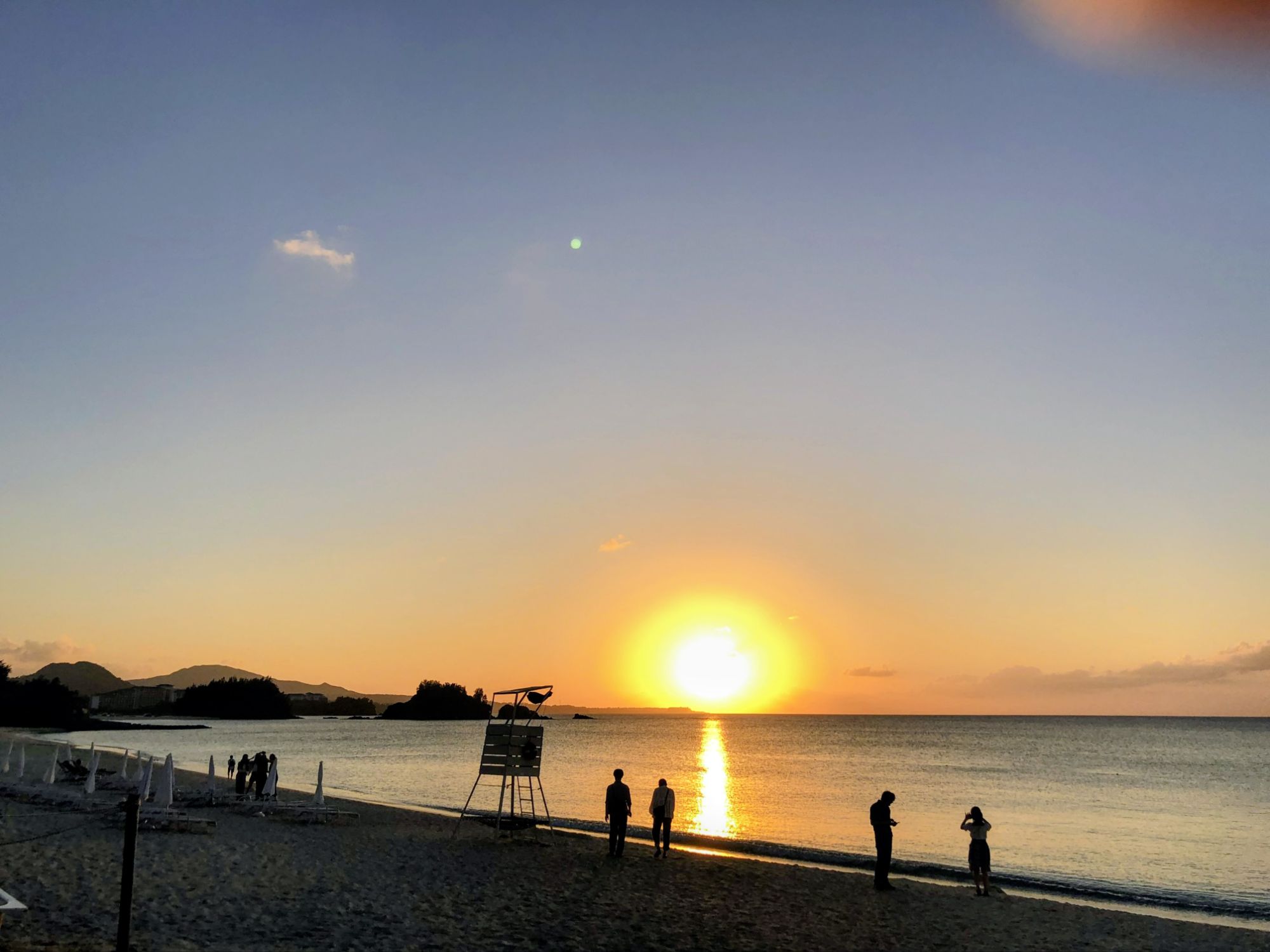
    The one that stays with me most is the evening at Busena Beach.

    From the adjacent Busena Terrace, live saxophone drifts across the sand every day. Standing on the beach in the light of the sunset, that sound is all you hear. If you’re there with someone, it becomes a moment that’s hard to beat.

    Two I haven’t stayed at yet, but keep eyeing

    Halekulani Okinawa consistently ranks at the top on Japanese booking sites. With the weak yen and rising prices making Hawaii harder to reach, Halekulani stands almost alone in its class. Even off-season, a night won’t dip below ¥50,000 — but set against the cost of a Hawaii trip, it starts to look reasonable.

    (As an aside: Kahala, the other grand Hawaiian name, came not to Okinawa but to Yokohama. I’ve stayed at Kahala Yokohama too, and I still can’t quite figure out why it was Yokohama.)

    Ryukyu Hotel & Resort Nashiro Beach opened in July 2022 in Itoman and is the largest resort in the main island’s south. All 443 rooms are ocean-view, it has one of the prefecture’s largest lineups of six pool types, and a 1.8-kilometer stretch of natural white-sand beach lies right in front. It’s about 20 minutes by car from Naha Airport — a distance that matters, because you can sink into resort mode without the long drive north. It also runs a direct limousine bus from the airport, so you can reach it without a car.

    📍 Compare and book Okinawa resorts


    Food, Fun, and Honest Takes

    Okinawa Soba Is Good Wherever You Eat It

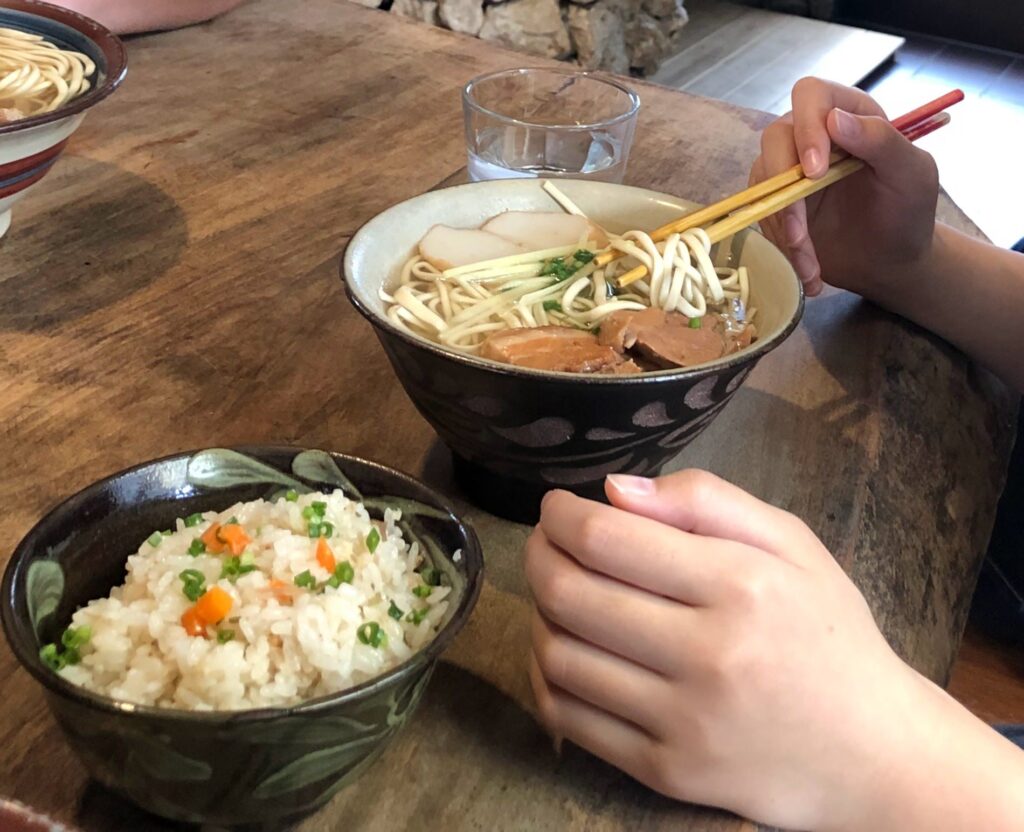
    I have opinions about ramen, and I’ve worked my way through about ten well-known Okinawa soba shops on the main island. My conclusion: the base is essentially pork-and-bonito broth, topped with thick sanmai-niku (three-layer pork belly, braised soft like kakuni) and fish cake, accented with red pickled ginger and chopped scallion. That’s the template, and there’s no dramatic gap from shop to shop. It reminds me, oddly, of Sugakiya — the ramen chain that was the soul food of my Tokai-region childhood, and which I still visit often.

    That’s not a criticism — it’s good news. No need to queue; walk into whatever place catches your eye and it’ll generally be good. Halfway through, I like adding kōrēgūsu (island chili peppers in awamori) to blow the whole flavor apart. That’s how I enjoy it.

    A&W, and the Taste of Medicated Patches

    Okinawa is the only place in Japan where you can eat at A&W. Whenever I go, I order a root beer without fail. If I had to describe the taste, it’s like Salonpas — a medicated pain-relief patch. And yet I order it anyway. That’s the strange magic of A&W.

    Steak, burgers, tacos, taco rice. Okinawa’s American side lives on, vividly, in its food.

    JUNGLIA — Once Is Enough

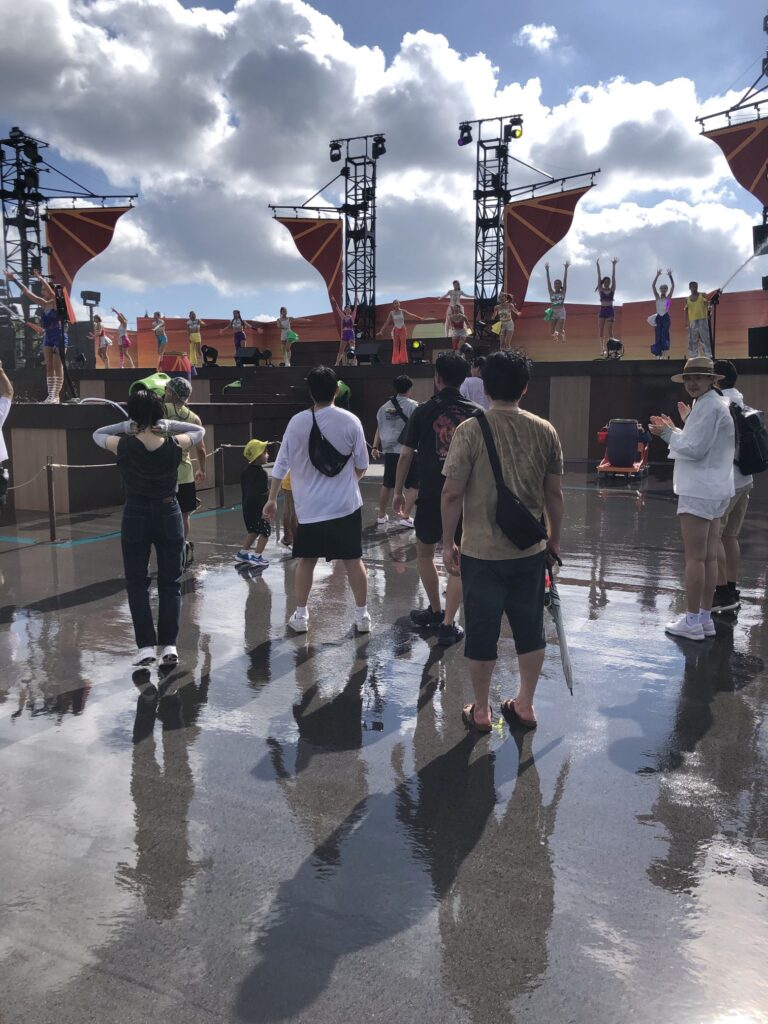
    This is a theme park that opened in the north in 2025. My honest impression after going: once is enough. Even my kid said, “Once is fine.”

    If you do go, avoid the hot months. And if a typhoon rolls in, there’s nothing to be done.

    📍 JUNGLIA tickets (Klook)

    Miyako’s Summer Festival

    On Miyako, I went to the island’s rock festival, the MIYAKO ISLAND ROCK FESTIVAL (locals call it “Miya-Rock”). Ketsumeishi, MONGOL800, HY, ORANGE RANGE, BEGIN — in the height of summer, Okinawan artists sharing a stage with mainland acts, a scene that only holds together here. The stage is close enough that you can get swept up in it, beer in hand.


    Practical Info: Driving, Payment, Typhoons

    Getting to Okinawa: most international routes connect through Tokyo, Osaka, or Taipei, and the final leg into Naha is often on a different carrier than your international flight — sometimes a domestic airline like ANA or JAL, sometimes an LCC like Peach or Jetstar. Airline websites generally won’t search across carriers like that, which is where a flight search tool that combines multiple airlines comes in handy.

    📍 Search multi-airline flight routes to Okinawa (Kiwi.com)

    On getting around: on both the main island and the outer islands, having a car is generally more convenient. But there’s an exception — if you’re simply nesting in an outer-island resort, the airport limousine bus, hotel shuttles, and taxis are enough. Some hotels, like Nashiro Beach, run a direct limousine bus from Naha Airport, so a fully car-free stay works.

    📍 Compare rental car rates (GetRentacar.com) 📍 Book a private airport transfer (GetTransfer.com)

    International driving in Japan: if you plan to drive, check the rules for your own country’s license before you go. Japan recognizes the 1949 Geneva Convention International Driving Permit for many countries — but not all, and a few countries require an official Japanese translation of their license instead. Confirm which category yours falls into before you travel.

    The essence of typhoon strategy is choosing a season that won’t get one. Before you think about insurance and refunds, pick March–April or October–November. That’s the most reliable move. If you’re going in summer anyway, always confirm the cancellation policies of your flights and hotel before booking — especially with low-cost carriers, where change and refund terms tend to be strict.

    📍 Get a travel insurance quote (World Nomads)

    Payment: resort hotels and major attractions take cards without issue, but local diners, markets, and some soba shops still run on cash. Keep some yen on hand.

    Staying connected: rather than hunting for a local SIM at the airport, an eSIM lets you land with data already working — Airalo is the easiest way to set one up before you fly.

    📍 Set up a Japan eSIM before you go


    Closing: Practicing Subtraction in Okinawa

    Okinawa is a place that gets simpler the more you go.

    One night in Naha, one at a resort — that’s enough. Want the water? Go to Miyako. Short on time? Day-trip to Kerama. Avoid summer; choose spring or autumn.

    Having seen so many resorts around the world, the reason I keep returning to Okinawa is that the island carries an air that permits you to do nothing — and it’s only two hours away by plane. The sunset falling on Busena Beach, and the saxophone drifting in from somewhere. Every time I remember those, I find myself booking again.

    Next time: Halekulani, Nashiro Beach — or maybe, just maybe, doing nothing at all at a resort on Miyako.

  • 2026 Taipei Travel Guide: Local Insider Tips for Food & Wellness

    This article contains affiliate links.

    Having lived in Taipei while studying there, I’ve learned which spots are genuinely worth your time. Out of 30+ countries I’ve traveled, Taipei stands out for its unbeatable combination of food and relaxation culture. Here’s my honest, experience-based guide to help you make the most of a limited trip.

    photo by Clement Souchet on Unsplash

    1. Trip Prep: What You Need to Know Before You Go

    Taipei is easy to reach and easy to navigate, but a few practical details make a real difference.

    eSIM is now the standard. In 2026, most travelers to Taiwan use eSIM instead of physical SIM cards. Setting it up before you land means you skip the SIM counter line entirely at Taoyuan Airport.

    Skip the SIM counter — set up your Taiwan eSIM in minutes with Airalo >>

    Cash still matters. Despite growing cashless adoption, night market stalls, local eateries, and traditional markets often accept cash only. Carry both a card and cash.

    Chinese New Year changes everything. This surprised me the most while living there: during the week-long Chinese New Year period, most shops, restaurants, and night markets close. Convenience stores are often the only thing open. If your dates are flexible, avoiding this period (mid-February in 2026) will save you a lot of frustration.

    A no-annual-fee travel card with built-in insurance is worth having before you go.

    Travel with peace of mind — get flexible travel insurance from World Nomads >>

    2. Taipei’s Most Memorable Spots

    Having explored the area extensively while living there, my take is: be selective.

    Jiufen: still worth it despite the crowds

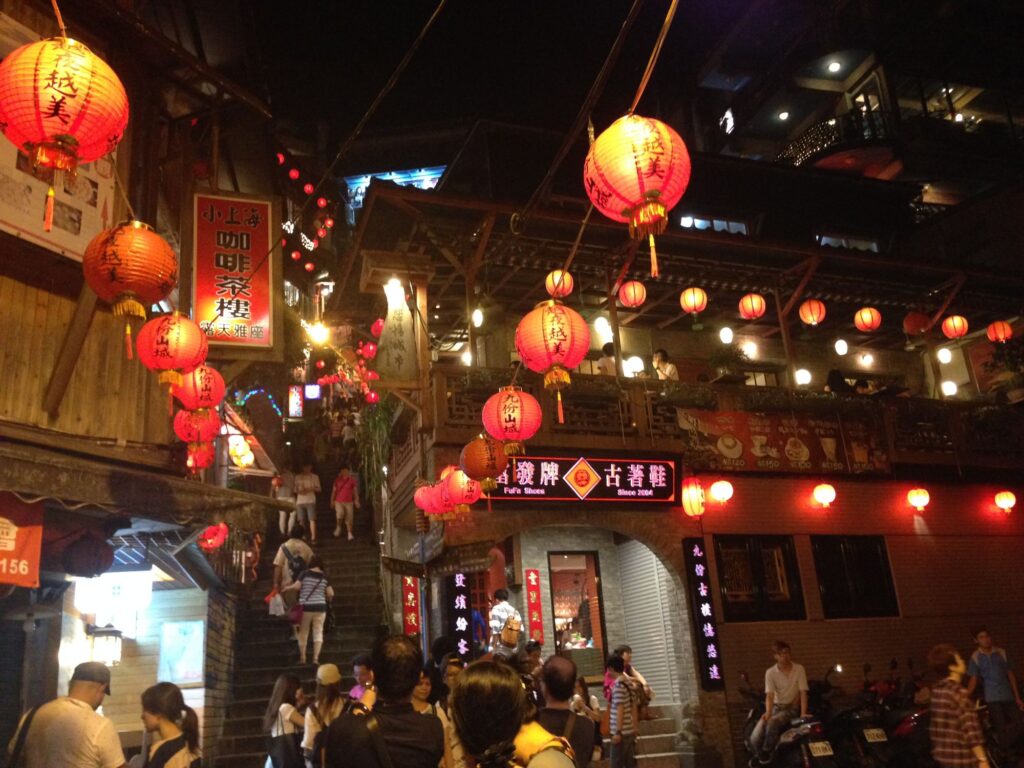
    If you only add one day trip, make it Jiufen. The lantern-lit stone stairways at dusk are genuinely striking, even with the crowds. Tea houses overlooking the mountains and coast offer a quiet contrast to Taipei’s city energy. It does suffer from overtourism, but a weekday evening visit helps.

    Getting there independently involves bus transfers and long queues on the way back, so a shuttle tour can save time and hassle.

    Skip the bus queues — book a Jiufen shuttle tour on Klook >>

    Taipei 101: the New Year’s fireworks are unforgettable

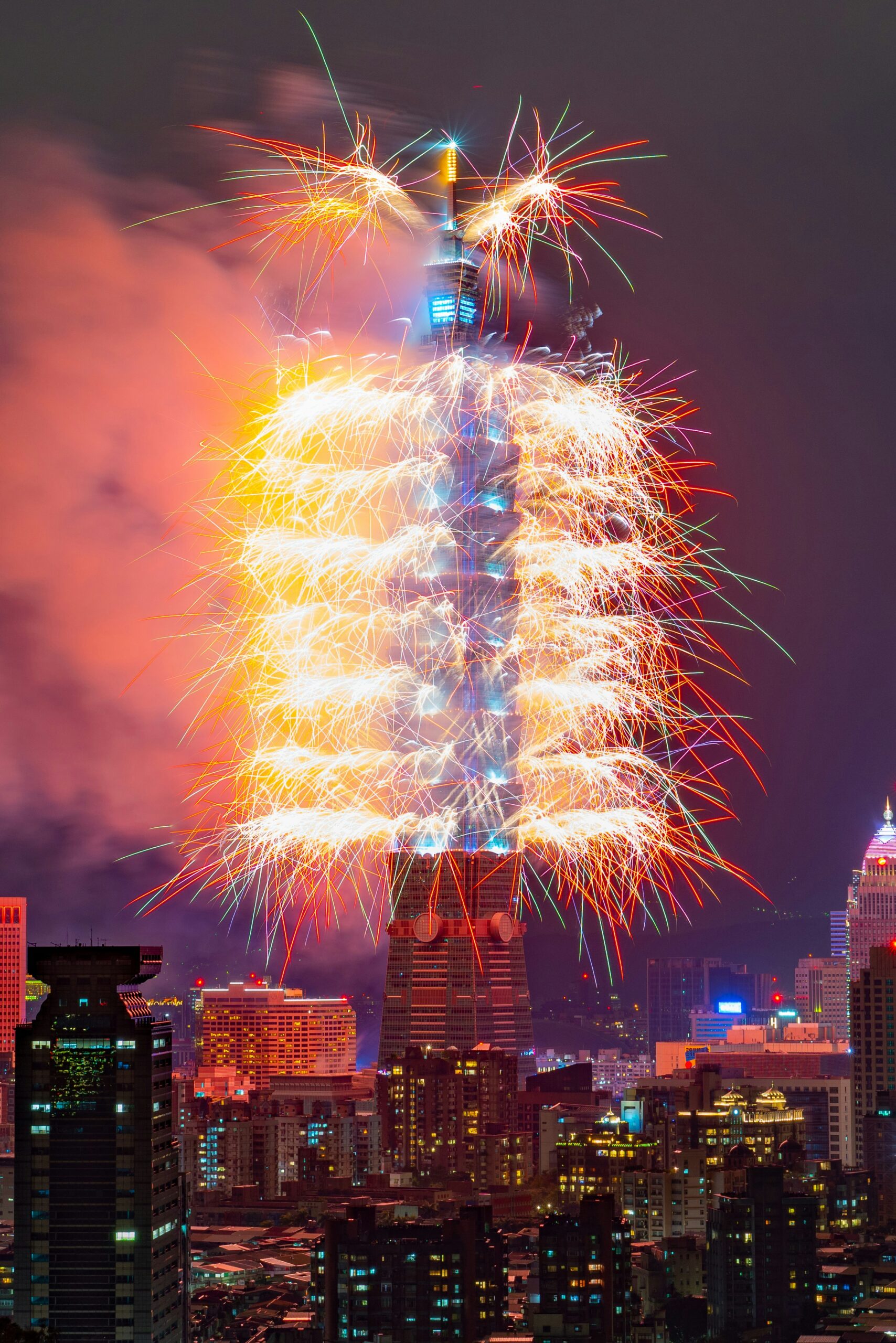
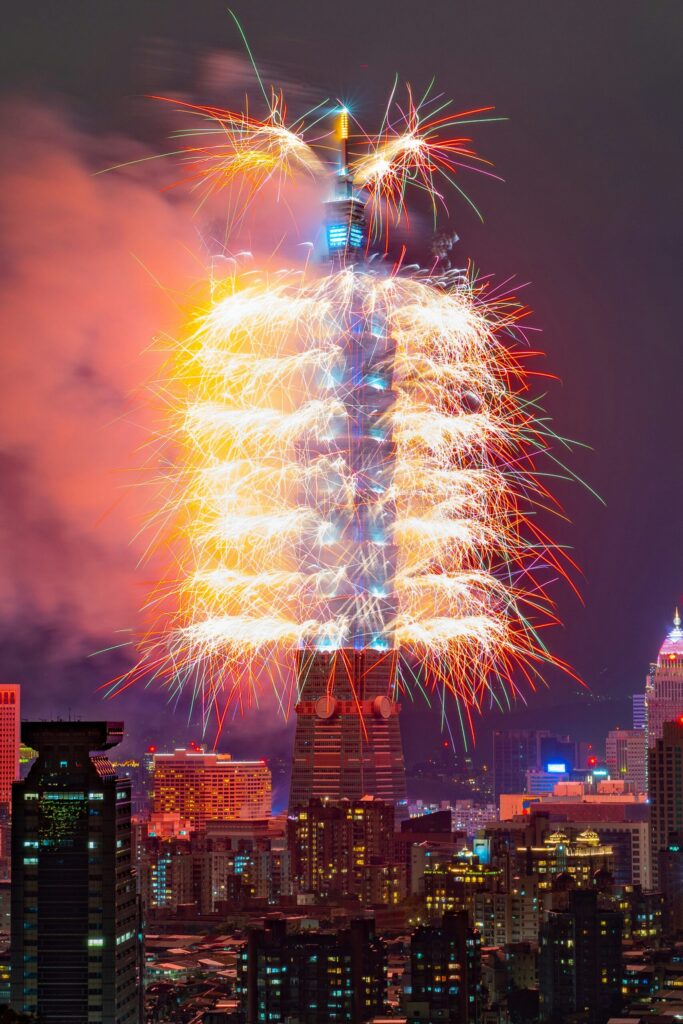
    I watched the New Year’s Eve countdown fireworks launch directly from Taipei 101 itself, and it’s genuinely spectacular. Buildings like the Burj Khalifa in Dubai do similar fireworks displays, but at 508 meters, Taipei 101 holds its own. If you’re in Taipei around New Year’s, it’s worth planning around. Expect heavy crowds, so claim your spot early.

    photo by Timo Volz on Unsplash

    Dihua Street: the herbal medicine district

    Lined with dried goods and traditional Chinese medicine wholesalers, Dihua Street preserves an older side of Taipei you won’t find elsewhere in the city. I once bought traditional herbal tonics and a qipao dress here as gifts for friends — a bit unconventional, but memorable. It’s a great alternative to the usual pineapple cake souvenirs.

    Tamsui: a film memory I still carry with me

    Walking the old street, trying ah-gei and iron eggs, and watching the sunset from a bench along the river offers a quieter contrast to central Taipei. Tamsui also holds a memory I won’t forget. During my time studying there, a teacher once showed our class her favorite film: “Secret,” starring Jay Chou. It was entirely in Mandarin, and I didn’t understand every line, but I got completely pulled into the story anyway — and found myself in tears by the end. The film was shot at Tamkang High School, right here in Tamsui, and visiting it in person carried real weight for me. It later got a Japanese remake starring Taiga Kyomoto. If you’re a fan of Taiwanese cinema, it’s worth the pilgrimage.

    The zoo is well-maintained but not meaningfully different from zoos back home — if your time is limited, that’s an easy one to trade for more food and relaxation time.

    3. Taipei Food: What I Kept Coming Back For

    Taipei’s food scene ranges from street-level classics to all-you-can-eat culture.

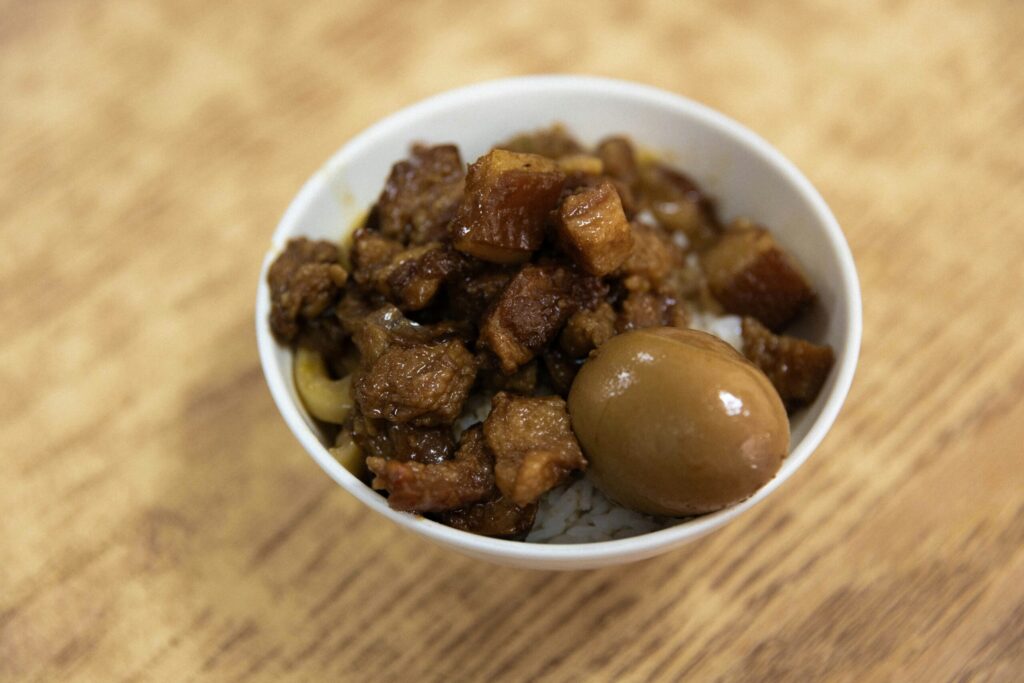
    Start with braised pork rice at Formosa Chang. Lu rou fan (braised pork rice) varies from shop to shop, but the long-running chain Formosa Chang (鬍鬚張) is a solid benchmark. The sweet-savory braised pork over rice is a perfect quick bite between sightseeing stops.

    photo by Lee Milo on Unsplash

    Beef noodle soup and soup dumplings are non-negotiable. Beef noodle soup varies significantly in broth style from shop to shop. Xiaolongbao (soup dumplings) are worth queuing for at famous spots, but neighborhood dumpling shops are often just as good.

    Stinky tofu is better than it smells. The infamous stinky tofu smells intense at night markets, but fried and served with sweet chili sauce and pickled cabbage, it’s far more approachable than the smell suggests. Consider it a rite of passage.

    Solo hot pot and all-you-can-eat culture. Taipei has plenty of individual-portion hot pot restaurants, ideal for solo travelers. All-you-can-eat hot pot, shabu-shabu, and yakiniku restaurants are also everywhere and generally more affordable than in Japan.

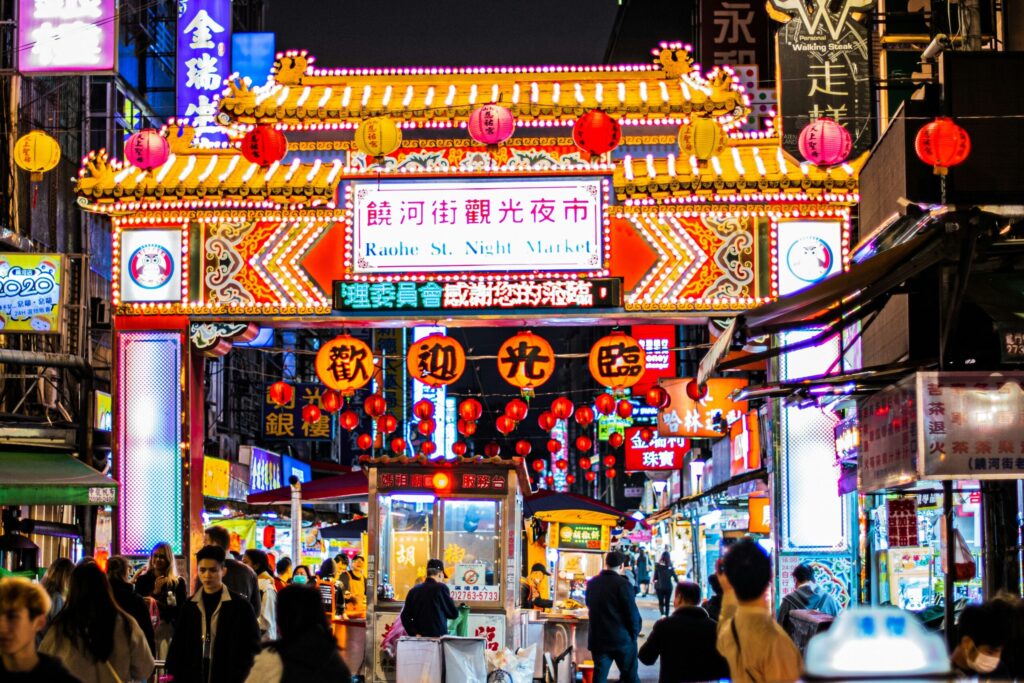
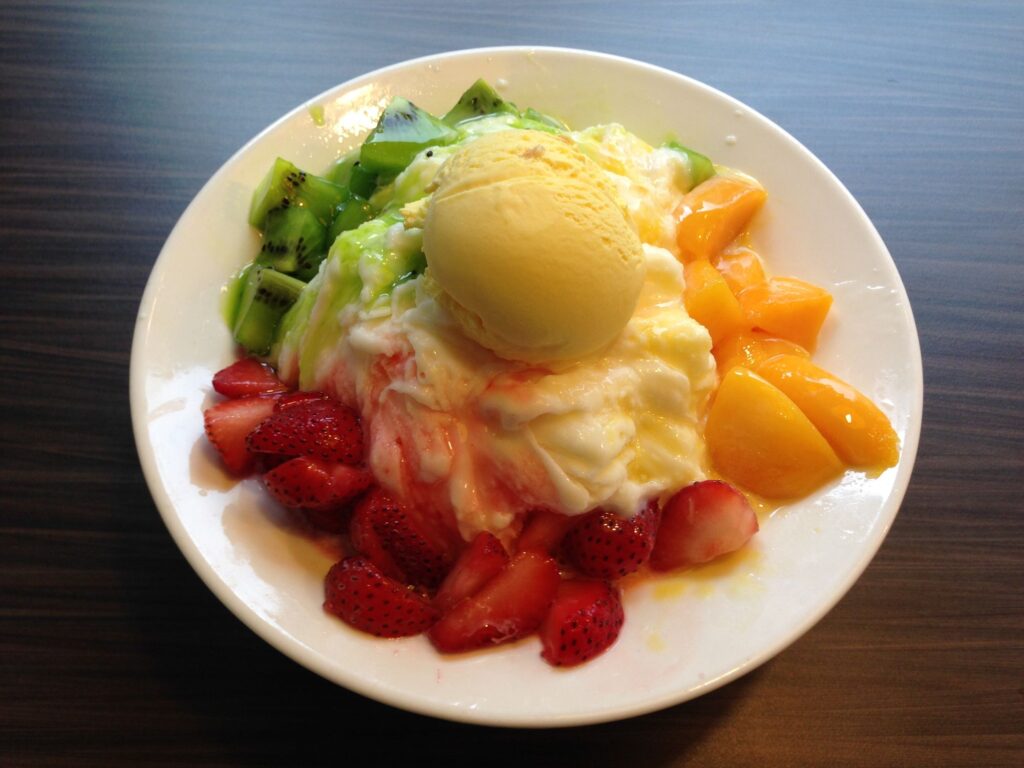
    Shilin or Ningxia — pick your night market. Taipei has many night markets, but Shilin wins on scale and variety, while Ningxia is more food-focused and manageable. Finish with a mountain of shaved ice or douhua (tofu pudding) for the full experience.

    Japanese-style ramen and maid cafes exist too. Taipei has a surprising number of Japanese-style ramen shops with genuinely high quality, plus maid cafes — an interesting look at how Japanese pop culture has taken root locally.

    Pineapple cake remains the classic souvenir — buttery, tangy, and easy to eat far more of than you planned.

    4. Taiwanese-Style Relaxation: Hair Washing, Massage, and Hot Springs

    Recovery culture in Taipei is a real highlight.

    Try a Taiwanese-style hair wash at a barbershop. One of my regular routines while living there was getting a Taiwanese-style shampoo at a barbershop — a seated scalp wash and massage that’s both affordable and deeply relaxing.

    Massage quality is consistently high. From foot reflexology to full-body massage, Taipei’s massage scene is technically excellent and widely available, including near night markets.

    Beitou hot springs are a swimsuit-style tradition all their own. The public open-air pools at Beitou (Millennium Hot Spring) require swimwear, distinct from the private nude-bathing style found at Taiwan’s traditional hot spring hotels. It’s a relaxed, sociable way to enjoy the springs with friends or family, and it’s been a beloved local tradition for decades.

    As of 2026, the Millennium Hot Spring is closed for renovation, with reopening expected around late July 2026, reportedly including a new Japanese-style cherry blossom bathing area. Check current status before visiting. If you’d prefer a private, quieter nude-bathing experience, book a day-use private bath at one of Beitou’s hot spring hotels instead.

    From 101-view rooms to Zhongshan stays — compare Taipei hotels on Booking.com >>

    5. Where to Stay and How to Fly

    Taipei’s hotels range from five-star properties near Taipei 101 and Zhongshan to affordable options near MRT stations. For New Year’s fireworks, book a room with a 101 view; for food and nightlife, Zhongshan/Shuanglian is convenient. I lived in the Zhongshan area myself, and it offered easy MRT access to everywhere along with plenty of food options.

    Compare flights to Taipei — search fares on Trip.com >>

    Final Thoughts: Go Deep, Not Wide

    My takeaway from living in Taipei: don’t try to see everything. Cover Jiufen, Taipei 101, Dihua Street, and Tamsui, then spend the rest of your time eating your way through night markets and treating yourself to massages and hair washes. That’s the combination that captures what makes Taipei special. Just plan around Chinese New Year, and you’ll have a great trip.

    From night market food tours to Jiufen day trips — book Taipei experiences on Klook >>

  • Adult Guide to Studying Mandarin in Taipei, Taiwan

    Adult Guide to Studying Mandarin in Taipei, Taiwan

    *This article contains affiliate links.

    I had it all planned out: a cheap, sun-soaked stretch of English study in Cebu, the Philippines, with the sea in view. I threw that plan away and went to Taipei to study Mandarin instead. The reason was simple. The smiles of the Taiwanese travelers I kept meeting all over the world, and the sheer intensity of the month I’d just spent in mainland China, had quietly fused together in my mind.

    Weekdays melting into the local backstreets; weekends soaking in the kind of polish you’d find at a Mandarin Oriental. That swing between two worlds is what makes studying abroad as an adult such a luxury. I arrived with a backpacker’s blood and the eye of someone who has seen more than a few beautiful resorts — and Taipei let me keep both while becoming a student all over again.

    Why Taipei Is the Perfect Place for a Grown-Up to Study Mandarin

    It comes down to the Taiwanese travelers I met on the road. Across Asia and the Middle East, the ones I ran into knew Japanese culture inside out, were easy and fun to talk to, and always seemed to be smiling. Until then I’d lazily assumed the entire Chinese-speaking world was one and the same, and never bothered to look closer. They gently proved me wrong.

    Just before Taiwan, I’d spent about a month traveling in mainland China. It was intense. I rarely crossed paths with other foreign travelers, I didn’t always feel welcome, and in a tourist district in Xi’an I even saw a restaurant with a sign turning Japanese customers away. I understand the weight of history behind that. There were heated street arguments, facilities I wasn’t prepared for, the occasional scam — a lot to take in, yet in hindsight thrillingly raw. And it was precisely that rawness that made the gentleness of the Taiwanese stand out so sharply. The same language, and yet a completely different air.

    Before I knew it, I’d traded the beaches of Cebu for the tones of Mandarin. More and more adults are studying a language abroad now, and the goal is rarely just the language. It’s reskilling — adding a second axis to a career — and it’s a chance to rethink how you want to live. Friendly, safe, and stocked with ever more beautiful cafés and hotels, Taipei has quietly become a favorite among adults worldwide for a “soft relocation” stay of just a few months.

    Where Local Soul Meets Polished Modernity

    What makes Taipei so compelling is that two opposite faces live in the same city. Dive into a night market or a traditional market and you’re swept up in steam, aromas, and good-natured haggling. Walk a few minutes and a hushed teahouse, a well-equipped coworking space, or a hotel with a glittering night view is waiting. The backpacker who wants to wander down an alley and the adult who craves a refined quiet — Taipei has room for both. Safe, easy to live in, and warm-hearted: in terms of quality of life, it is one of the most comfortable cities in Asia.

    What Makes Taiwan’s Mandarin Worth Learning

    The Mandarin we study is the standard Chinese spoken in both China and Taiwan. China has many regional languages, Cantonese among them, and Taiwan has Taiwanese, but Mandarin is the common tongue that ties it all together. Carrying one language that connects you to well over a billion people changes both travel and business more than you would expect. Study in Taiwan and you also learn the traditional characters, which puts the history and depth of the written language right at your fingertips.

    Here is a small trick for telling a Taiwanese speaker from a mainland one: the number forty-four, sì-shí-sì. In standard Mandarin the shí carries a curled, retroflex sound. In the Taiwanese accent that curl softens, and it comes out closer to sì sì sì. Asking someone to read “44” out of nowhere is a tall order, of course — but it is a charming reminder that a language lives and shifts from place to place.

    The Reality of Adult Mandarin Study-Abroad Life in Taipei

    I’d traveled a little too long and my wallet was thin, so I researched universities that accept language students myself and applied to one with a dormitory. If the back-and-forth in English feels like a hassle, handing it to a study-abroad agency makes the whole thing dramatically easier. Tuition ran roughly US$950–1,250 for a single three-month term, and the student dorm was under US$320 for the term. Food around town is cheap; the cafeteria is cheaper still, generous in portion and genuinely good. For someone who loves Chinese food, it was paradise — and after years in the working world, I felt like a student again.

    When I took the placement test at National Chengchi University, the characters I knew counted for little against pronunciation that was nothing like my own. I started, predictably, in the very lowest beginner class.

    Studying at a University “Language Center”: A Quality Mandarin Curriculum

    Taipei is home to several renowned language centers where learners gather from all over the world. The best known is the Mandarin Training Center (MTC) at National Taiwan Normal University; National Taiwan University is the place for serious, academic rigor; and National Chengchi University, where I studied, runs a strong center of its own. Classes are typically around fifteen hours a week, in small groups that push you. Evening and weekend courses aimed at working adults are increasingly common, which makes everything from a few months of immersion to a longer stay easier to arrange.

    My classmates were astonishingly international: Korean, Filipino, Vietnamese, American, German, Russian, Slovak, Uzbek, Thai, and even someone from the Marshall Islands. I’d been a little smug about being able to read the characters — and was promptly overtaken in every test. A single syllable like ma has four tones, and the meaning flips entirely with the rise and fall of your voice. Far more than the characters, it is the ear and the pronunciation that matter, and Mandarin is full of sounds that do not exist in Japanese. I went back and drilled, one by one, the distinctions I’d been quietly avoiding — like n versus ng. Knowing the characters, it turned out, may have been a handicap at the start.

    Backstreet Soul and the Grown-Up’s Art of the Reset

    When class let out, some days I plunged into the din of a night market, and others I lingered in a quiet teahouse or a favorite café, buried in homework. That back-and-forth between grit and calm suited me.

    I felt Taipei’s warmth on my very first day. On the way from the airport to the dorm, a stranger at the station offered to help with my heavy luggage. As I dragged my suitcase up a slope, a car that had already passed turned back to offer me a ride to the top. Years of travel across Asia, the Middle East, and Africa had made me wary, so I suspected a catch and turned every offer down. It took more than six months to understand that they had simply been kind. No one brawling in the street, no one spitting on the pavement. The Chinese diaspora is scattered across the globe, and this gentleness, I came to see, is not about ethnicity — it is what a place and an upbringing quietly build.

    As I grew able to talk with my classmates in Mandarin, I started to see who they really were. Exchange students from prestigious universities abroad; someone whose parent was a professor and who ran a company themselves; a business analyst; a war photographer. People I would almost never have met in the ordinary run of life back home. Change your surroundings, or start something new, and a world you didn’t know suddenly opens up. The conversations themselves were a second education.

    Lifestyle and the Scenery That Stirs the Senses

    The richness of studying abroad turns on what you do with your weekends and afternoons, once the weekday hours of study are behind you.

    What Takes a Well-Traveled Adult’s Breath Away: Taipei’s Night Views and Nature

    Part of Taipei’s magic is how close the city sits to the wild. A short trip out and you can sink into the hot springs of Yangmingshan; the sloping lanes of Jiufen and Jinguashi pull at something nostalgic; go as far as Keelung and the smell of the sea and an ocean view are waiting. The campus I attended sat near the tea hills of Maokong, green pressing in around it. Even to eyes that have seen oceans and vistas the world over, a city where mountains and sea sit this close together is rare. By night, the views toward Taipei 101 and refined culture spots like Songshan Cultural and Creative Park show you another face entirely.

    photo by Melanie Magdalena on unsplash

    Taiwanese Food and the Everyday Third Place

    What carried me through daily life, without question, was the food. The cheap and generous cafeteria, the steaming stalls of the night markets, the buzz of the traditional markets — for someone who loves Chinese food, every meal was a small journey. And as a third place, neither work nor study nor home, I had the teahouse. Opening a textbook over a cup of fragrant tea was a modest luxury, a quiet way to close out a busy day.

    Getting Ready: What Actually Matters for Studying Abroad in Taipei

    A few things are worth arranging before you go. The quality of your preparation tends to set the quality of your time on the ground.

    A Study-Abroad Agency to Smooth the Paperwork

    I researched and applied to a dormitory-equipped university myself, but the English inquiries and document handling were more of a chore than I expected. A study-abroad agency that takes care of everything from application to dorm arrangements removes that friction in one stroke. The time and energy you save are better spent preparing for life once you arrive.

    Booking Flights Smartly and Getting Around Taipei

    Choose your flights with more than just the round trip in mind — leave room for a trip home or a weekend away. Taipei has excellent access to Hong Kong and Southeast Asia, which makes it a surprisingly strong hub for weekend escapes. Lock in a good fare through a comparison site and your range during the stay widens at once. Around the city, the easy rhythm is an EasyCard with the MRT, plus a rideshare app when you need it.

    ▶ Book flights to Taipei with Trip.com >>

    Studying abroad for months means anything can happen. I recommend World Nomads for its flexible coverage that works whether you’re staying a week or six months.

    ▶Get travel insurance with World Nomads >>

    Conclusion: A New Self, and a More Refined Everyday

    In the end, one term wasn’t enough and I extended. For the next three months I left the university dorm and moved into a residence where students from various universities gathered, around US$200 a month, with a shuttle to each campus thrown in. Half a year, all told. And still, I met friends from all over the world and learned to share what was in my heart in Mandarin.

    When the term ended and everyone headed home to their own countries, I cried — I, who had never cried even at a graduation. Six months won’t make you fluent, but it was enough to travel Taiwan and China on my own without much trouble. More than anything, it was time that changed the very way I see life — something an ordinary trip could never have given me.

    Studying in Taipei is about far more than the language. It is a retreat for grown-ups, soothed by local character and stirred by a polished city. Get your preparations in order, and all that’s left is to give yourself over to the place. Weekdays in the local lanes, weekends in the thick of the refinement. Somewhere in that back-and-forth, you’ll meet a new language — and a slightly new version of yourself.

  • Hong Kong & Macau Travel Guide: Top Attractions & Hidden Gems

    Hong Kong & Macau Travel Guide: Top Attractions & Hidden Gems

    *This article contains affiliate links.

    I’ve visited Hong Kong about five times now. It’s a city with a curious magnetism that never gets old, no matter how many times I go.

    World-class night views, authentic Cantonese cuisine, the deep and chaotic Chungking Mansions, and the casino city of Macau just a ferry ride away. This time I want to write honestly about the Hong Kong I keep returning to, and the Macau you’ll want to pair it with.

    photo by The Transport Enthusiast DC on Unsplash

    Cantonese Cuisine Lives Up to Its Home Turf

    Among Chinese cuisine, counted as one of the world’s great culinary traditions, Cantonese food truly lives up to its Guangzhou roots.

    When you travel the world, you’ll find Chinese and Indian food just about everywhere. That’s exactly why they’ve always saved me when nothing else suited my palate. For a world traveler, Chinese and Indian food are like a lifeline.

    The Cantonese food I ate at its source was, as expected, in a class of its own.

    Book Hong Kong & Macau tours with Klook >>

    photo by Fernando Santos on Unsplash

    Trying Tang Mian, the Ancestor of Ramen

    I’ve actually been a Japanese ramen enthusiast for years, eating my way across the country.

    So I tried tang mian, the original noodle soup that could be called the ancestor of ramen. My honest impression? With apologies, I think Japanese ramen, which evolved on its own path, is better, at least to my taste.

    Of course the authentic tang mian was delicious too. But it made me realize that Japanese ramen has evolved into a different food entirely. With full respect for its roots, that’s my honest take.


    Hong Kong’s Night View Is World-Class

    I love natural scenery and night views alike. And Hong Kong’s night view is counted among the world’s three greatest.

    The night view of Hakodate in Hokkaido is beautiful too, but every time I come to Hong Kong, I head up to Victoria Peak without fail. The sea of light called the million-dollar view never fails to overwhelm me, no matter how many times I see it.

    Hong Kong night view spots
    └ Victoria Peak
      One of the world's three great night views
      Reach the summit by Peak Tram
    └ Victoria Harbour
      The "Symphony of Lights" sound and
      light show every night at 8pm

    For the record, the remaining one of the world’s three great night views, Naples, I have yet to see. That’s homework for another day.

    photo by Henry Lai on Unsplash

    Chungking Mansions, a Sanctuary for Deep Travelers

    Hong Kong has modern hotels and hotels steeped in history. But for the deeper kind of traveler, I want to introduce “Chungking Mansions.”

    Inside this jumbled complex, restaurants and shops of every ethnicity and dirt-cheap hotels are packed in tight. People of African, Indian, and Middle Eastern descent mingle together, creating a uniquely chaotic world.

    The appeal of Chungking Mansions
    └ Rooms are quite small
    └ But being singles, calmer than dorms
    └ Cheap above all
    └ Authentic cuisine from many countries

    The hotel rooms are quite small, but since they’re singles, they’re calmer than a dormitory. And above all, they’re cheap. Tasting authentic dishes from various countries is also an experience unique to this place. Clean hotels are nice, but this kind of deep, chaotic world is part of the joy of travel too.

    photo by Florian Wehde on Unsplash

    A Day Trip to Shenzhen from Hong Kong

    From Hong Kong, you can take a day trip by train to the modern Chinese city of Shenzhen.

    But caution is needed. On mainland China, foreign apps don’t work. Without preparation, your usual Google Maps and other apps will stop working. Set up a VPN before you go.

    Hong Kong itself has a history as a British colony, so English works and the people are kind. It has a distinct culture, different from mainland China.


    Macau Is Just a Ferry Ride Away

    Once you’re in Hong Kong, you’ll want to visit Macau as a set. It’s just a ferry ride away.

    From Hong Kong to Macau
    └ Ferry: about 1 hour
    └ HZMB bridge bus: about 40 min, 24-hour service
    └ The bus is cheaper than the ferry

    Macau is the only place in mainland China where casinos are legalized. As a result, the city had a glittering atmosphere like Las Vegas.

    photo by Simon Zhu on Unsplash

    My USD 500 Doubled at the Macau Casino

    Macau has luxury casino resort hotels like Las Vegas. But they were expensive, far beyond what I could afford to stay in. As for hotels, I felt Las Vegas offers more reasonable prices even for luxury options.

    Now, about the casino.

    I don’t have the courage for person-to-person table games like blackjack. So I tried roulette. A near 50-50 bet on red or black, excluding zero.

    Just once, I put USD 500 on a single bet. And luckily it hit, doubling my stake.

    And I quit immediately. For someone who had kept losing at the casinos in Singapore and Manila, this was a miraculous victory. I had finally learned that knowing when to walk away is everything.

    photo by ün LIU on Unsplash

    Macau Is Also a City of World Heritage

    Macau isn’t only a casino city. It’s actually a historic city dense with World Heritage sites.

    Macau's World Heritage
    └ Ruins of St. Paul's (Senado façade)
      The symbol of Macau, only the front wall
      remains after a fire
    └ Senado Square
      A European-style plaza with wave-patterned
      mosaic cobblestones and colonial architecture

    A remnant of Portuguese colonial rule, the streetscape is somehow European. The glamour of the casinos and the old streets of World Heritage. Having these two faces is what makes Macau fascinating.


    Macau Cuisine Shows Portuguese Influence

    Macau specialties
    └ Portuguese cuisine
      Bacalhau (salted cod), African chicken
    └ Macau-style egg tart
      Pastel de nata, with browned custard
      on a pastry crust

    Where Hong Kong egg tarts have a crisp cookie crust, Macau’s use a pastry crust. Comparing the two is fun in itself.


    Hong Kong Airport Is an Asian Hub

    Hong Kong International Airport is also a hub for Asia.

    If you’re traveling with Cathay Pacific or similar, stopping by on a transit is a good option. You can structure a trip to enjoy a bit of Hong Kong on a layover. That ease of access is another great appeal of Hong Kong.

    photo by Al Reile Dela Torre on Unsplash

    Travel Basics

    Best season
    └ October to December (clear skies, comfortable)
    └ Avoid: May to September
      (hot and humid, typhoon season July-Sept)
    
    Cost guide
    └ Local eatery: 50-80 HKD
    └ Subway base fare: around 5 HKD
    
    Currency
    └ Hong Kong Dollar and Macau Pataca
    └ Hong Kong Dollars work as-is in Macau

    Cautions: Hong Kong’s Current Situation

    In recent years, Hong Kong’s political situation has affected travel as well.

    What to know
    └ Refusing to give authorities your phone
      password when asked is a criminal offense
    └ Stay away from demonstrations and gatherings
    └ Avoid clothing with political slogans
    └ TikTok is unavailable
      (other foreign apps work without a VPN)

    Hong Kong is a safe city, but it’s good to be aware of these current realities. There’s no problem with ordinary sightseeing, but keep them in mind just in case.


    Final Thoughts

    Hong Kong, which I’ve visited five times, is a city where I find something new every single time. Authentic Cantonese cuisine, a world-class night view, the deep chaos of Chungking Mansions. The modern and the historic, the refined and the chaotic, all coexist here.

    And in Macau, just a ferry ride away, you can enjoy two faces: the glamour of the casinos and the old streets of World Heritage. Winning miraculously at roulette is a good memory too.

    Hong Kong and Macau bring out each other’s appeal when visited as a set. Starting from an Asian hub airport, I encourage you to tour these two cities. Next time, I’ll definitely go see the night view of Naples too.

    Get travel insurance with World Nomads >>

  • Cheap Sushi in the Philippines? How to Enjoy Manila and Cebu

    Cheap Sushi in the Philippines? How to Enjoy Manila and Cebu

    *This article contains affiliate links.

    The Philippines holds a unique appeal among Southeast Asian countries. English is an official language, the beach resorts are excellent, and the prices are low.

    I visited Manila and Cebu. This time I want to write honestly about everything, from losing at the Manila casino, to the strangely cheap sushi and sea urchin bowls, to the taxi negotiation troubles.


    photo by Sean Yoro on Unsplash

    Manila Is Urban, Cebu Is Resort

    Manila
    └ The political and economic center
    └ Few tourist attractions
    └ Casino resorts increasing in recent years
    └ Caution needed at night
    
    Cebu
    └ A resort famous for its beautiful sea
    └ Diving and snorkeling
    └ Relatively safer than Manila
    └ Nightlife to enjoy too

    Book Philippines tours and activities with Klook >>

    photo by Denys Nevozhai on Unsplash

    English as an Official Language Brings Many Students

    English is an official language in the Philippines. Thanks to this, the country is known for offering affordable English-language study.

    When I visited, I noticed a striking number of Koreans. Drawn by the chance to learn English cheaply, language students gather here from across Asia. Hearing Korean so often around the city left an impression on me.


    At the Manila Casino, I Lost (Of Course)

    Manila is a city without many tourist attractions, but casino resorts have been popping up in recent years.

    Since I was there, I gave one a try. The result? I lost, of course. Following my defeat at Marina Bay Sands in Singapore, it seems I’m genuinely incompatible with casinos. A man who never learns.

    Still, Manila’s casino resorts are large in scale and fun just to soak in the atmosphere. There are huge casinos like Okada Manila. If you play, please set a budget before you go in.

    photo by Kaysha on Unsplash

    Sushi and Sea Urchin Bowls Are Astonishingly Cheap

    This was the biggest surprise in the Philippines.

    Filipinos don’t have a custom of eating raw fish. Perhaps that’s why, even when sea urchin is harvested, they may not eat it. Whatever the reason, when I went to Japanese restaurants, sushi and sea urchin bowls were astonishingly cheap.

    What’s more, even at places with a proper sushi chef, prices were very reasonable. And the taste was excellent. Being surrounded by the sea, the seafood is fresh. A sea urchin bowl that would be out of reach price-wise at home was something I could eat casually here. That was an unexpected discovery.

    photo by Buddy AN on Unsplash

    Taxi Negotiation Troubles and Grab as the Savior

    On a past visit to the Philippines, I had some unpleasant taxi experiences.

    Riding in a taxi with another person, we got into a serious dispute after getting out over whether the fare was per person or per vehicle. This happened about twice. When negotiation is the premise, these troubles are unavoidable.

    But things are different now. The Philippines has Grab, so I’ve become free of these troubles. The fare is confirmed in advance, so there’s no arguing after you get out.

    Manila in particular is a little dangerous to walk at night, so Grab is a huge help for nightlife at casinos, pubs, and bars. For safety too, Grab is an essential app.


    Even Shisha, Banned in Thailand, Is Available

    A small aside, but shisha (water pipe), which is banned in Thailand, could be smoked freely in the Philippines.

    It’s interesting how rules differ by country. Having gotten used to Thailand’s strictness, I felt a little liberated here.


    Cebu Is the Island of Diving and Nightlife

    Cebu is a resort famous for its beautiful sea.

    You can enjoy diving and snorkeling, and it’s also reassuringly safer than Manila. Enjoy the sea by day and the nightlife by night. It’s a well-balanced resort destination.
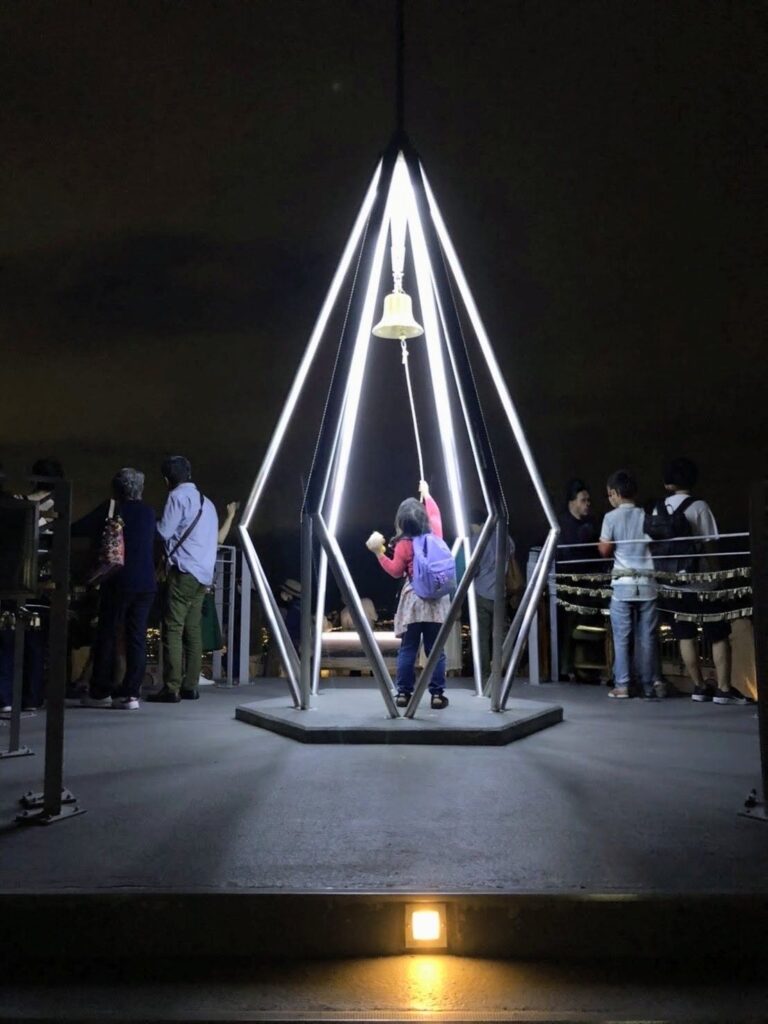
    photo by Olga ga on Unsplash
    Popular spots around Cebu
    └ Oslob
      Swim alongside whale sharks
    └ Sumilon Island
      Island hopping with high water clarity

    Next Time, I Want to Visit Boracay

    Actually, there were about five Filipinos at the same school during my language study in Taiwan.

    When I asked them, they all said the same thing: “Boracay is more beautiful than Cebu and highly recommended.” If the locals say so, it must be true.

    Boracay is said to have White Beach, boasting some of the finest beauty in the world. After an island-wide renewal for environmental protection, the sands have apparently become even more beautiful. That’s homework for next time. I definitely want to go someday.

    photo by Karl Joshua Bernal on Unsplash

    You Must Have a Return Ticket on Entry

    I want to strongly emphasize this point.
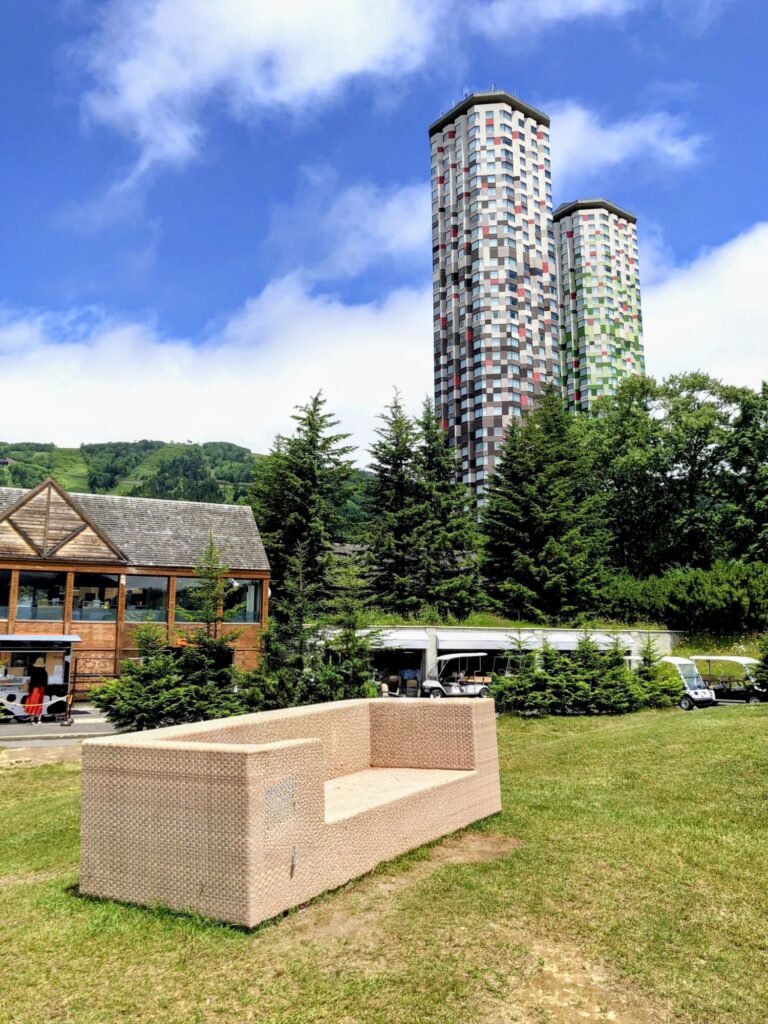
    On entering the Philippines, my return ticket was checked. Not only that, my ticket was strictly checked again even when entering the airport for the return journey.
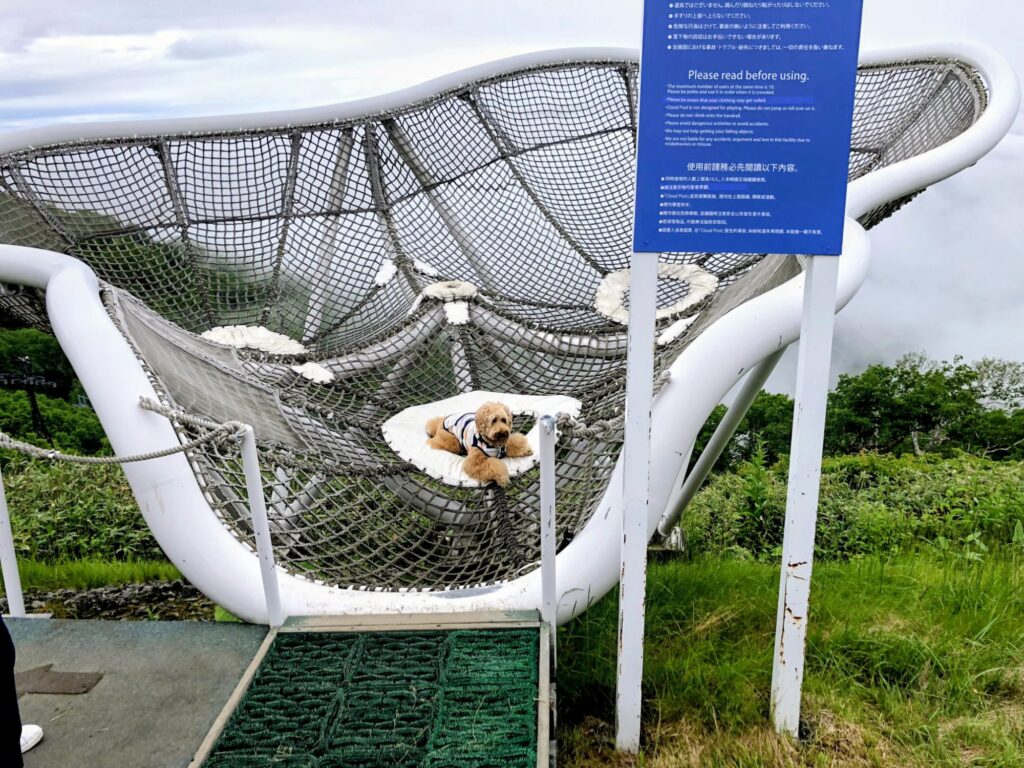
    Philippines entry cautions
    └ An onward/return ticket is required
    └ Without it, you're highly likely
      to be denied boarding
    └ Checked at the point of entering the airport
    └ Keep it readily accessible

    eTravel registration is also required. Register on the official site (etravel.gov.ph) up to 72 hours before departure and save the QR code on your phone. Registration is free.


    Don’t Worry If the Food Doesn’t Suit You

    Even if Filipino food doesn’t suit your taste, there’s no need to worry. Fast food restaurants are everywhere.

    The most common is the Filipino-born fast food chain “Jollibee.” It’s the national fast food of the Philippines, said to be even more popular than McDonald’s. Fried chicken and spaghetti are the signature menu items, an easy way to try a local flavor.

    And the perfect sweet for a hot country is “Halo-Halo.” It’s the Filipino version of shaved ice, piled high with purple yam ice cream, beans, jelly, and fruit. For a body overheated by the sun, this cold and sweet Halo-Halo is the ultimate refreshment.


    Travel Basics

    Best season
    └ Dry season (December-May) is ideal
    └ January-March especially has little rain
      and calm seas
    └ Rainy season (June-November) is typhoon season
    
    Cost guide (USD)
    └ Local eatery: USD 3-5 per meal
    └ Island hopping tour: USD 25-50
    └ Mid-range hotel: USD 50-120/night
    
    Cautions
    └ Don't drink tap water
    └ Toilets often have no paper
    └ Watch for pickpockets in busy areas

    Filipino Food Is Delicious Too

    Recommended dishes
    └ Adobo
      The national dish of pork or chicken
      simmered in soy sauce, vinegar and garlic
      Goes great with rice
    └ Lechon
      Roast suckling pig, Cebu's is the most famous
    └ Sinigang
      A soup with the sourness of tamarind

    The balance of sour and sweet is characteristic, and it suits the Japanese palate well.


    photo by Karl Joshua Bernal on Unsplash

    Final Thoughts

    The Philippines is a surprising hidden gem where English works, prices are low, and you can even eat sushi dirt cheap. Enjoy the casino and urban nights in Manila, and soak up the sea and resort life in Cebu.

    I lost at the casino and once argued over taxis, but now, thanks to Grab, travel is comfortable. Next time I want to see the world-class White Beach at Boracay, recommended by my Filipino friends.

    Just watch out for the return ticket check on entry. Get that right, and the Philippines is a top-value resort paradise.

    Get travel insurance with World Nomads >>

  • Bali Family Travel Guide: Mother-Daughter Resort Vacation & Jet Ski Adventure

    Bali Family Travel Guide: Mother-Daughter Resort Vacation & Jet Ski Adventure

    *This article contains affiliate links.

    Bali is a paradise where travelers from Asia and Oceania gather. Close to Australia, it draws surfers and resort lovers from all over the world.

    Partying with friends at a beach club. That was the dream I carried with me to Bali. But this time, for some reason, I was traveling with my mother. The nightlife I’d dreamed of was put on hold, but in its place I witnessed something unforgettable.


    Bali, the Crossroads of Asia and Oceania

    Bali draws a huge number of travelers from Asia and Oceania, partly thanks to its proximity to Australia.

    Resort hotels, diving, surfing, and a vibrant club scene. Every way of traveling is here. The Kuta area in particular has a huge concentration of clubs and a thriving nightlife.

    What’s interesting is that, unlike mainland Indonesia, Bali is predominantly Hindu. Perhaps that’s why the island feels relatively relaxed about alcohol. Within a country where Islam is the majority, Bali holds onto its own distinct “Balinese Hinduism,” deeply rooted in daily life.

    Book Bali tours and water activities with Klook >>

    photo by Guillaume Marques on Unsplash

    What to Do Before You Leave (2026 Update)

    Before getting carried away, Bali now requires a few things to be arranged before arrival. To avoid airport queues, it’s best to complete everything online in advance.

    Things to prepare in advance
    └ Bali Tourist Tax
      About USD 10 per person
      Pay by credit card in advance via the
      official "Love Bali" app or site, get a QR code
    └ Visa on Arrival (e-VOA)
      About USD 35, 30-day stay (extendable once)
      Getting it in advance lets you use
      the airport e-gates
    └ All Indonesia e-Arrival Card
      Register online from 72 hours before arrival

    The rules are more developed than when I went, so check the latest information and prepare ahead.


    Access: 2.5 Hours from Singapore

    From Singapore
    └ Direct flights from Changi Airport
    └ About 2.5 hours
    └ Popular as a weekend short trip
    
    From other Asian cities
    └ Direct flights or budget carriers
    └ Around 7 hours

    If you’re touring Southeast Asia, it’s easy to slot in as a detour from Singapore.


    The Beach Club Dream, Postponed

    When you think of Bali, you think of beach clubs. To gather with friends, a whole group of us, and party to our hearts’ content. I’d held onto that dream for a long time.

    But this time, for some reason, I was on a two-person trip with my mother.

    I obviously couldn’t dance until dawn at a beach club with my mom, so the nightlife I’d dreamed of was postponed. That’s homework for next time.

    Places like Potato Head Beach Club in Seminyak and FINNS Beach Club in Canggu are famous worldwide. Sipping drinks on a poolside daybed while a DJ plays and the sun sets is apparently the classic style. Someday I will let loose at one of those beach clubs with my friends.

    photo by Cassie Gallegos on Unsplash

    Mom Floored the Jet Ski and Left Me Stunned

    I gave up on the nightlife, but I could enjoy water sports with my mother.

    We each rented a jet ski, and this is where the incident happened.

    When I sped up, the jet ski bounced over the water and scared me, so I couldn’t really open the throttle. But when I glanced over, my mother was tearing across the water at incredible speed, bouncing wildly the whole way.

    I was genuinely stunned. My normally gentle mother had transformed into a different person, racing across the sea. Seeing an unexpected side of a parent might just be one of the great joys of travel.


    My Surfing Ended with Just Paddling

    Bali is a world-famous surf destination. Since I was there, I rented a board and gave surfing a try.

    I’ll be honest. I’ve tried surfing a few times before. But I have never once managed to stand up when a wave came.

    This day was no different. I spent the whole time just paddling, bobbing around on top of the water. There was zero sign of me ever standing.

    So in the end, I laid the surfboard down on the beach and settled for just looking the part of a surfer. I think I pulled it off reasonably well.

    That said, as a world-class surf spot, Bali has plenty of beginner-friendly waves, and there were many people enjoying surfing. I think even beginners like me can have fun here. There are lots of surf schools too, so with proper lessons, you’d surely manage to stand up.


    An Island with Completely Different Faces by Area

    Bali shows a completely different character depending on the area. The key is choosing where to stay based on your purpose.

    Main area characteristics
    └ Kuta
      Lively surfer town near the airport
    └ Seminyak
      Stylish cafes and upscale beach clubs
    └ Ubud
      Inland village of art and culture,
      rice terraces and yoga
    └ Canggu
      The hottest surf-and-cafe town right now
    └ Sanur
      Calm east coast, family-friendly
    └ Nusa Dua
      Government-developed luxury resort area
    photo by Geio Tischler on Unsplash

    Luxury Resorts at Surprisingly Good Prices

    Bali has a wealth of luxury resort hotels. They’re concentrated mostly along the coast, but high-end villas are also scattered in quiet spots like Ubud where you can see rice terraces.

    This time I stayed at a coastal resort hotel. What surprised me was how reasonable the prices were for a luxury resort. For the same quality, Bali is clearly cheaper than other resort destinations.

    Accommodation guide (USD)
    └ Budget: USD 10-30/night
    └ Mid-range: USD 50-150/night
    └ Luxury: from USD 250/night

    Thanks to that, I could indulge in a relaxed, luxurious resort experience. Bali is an excellent resort destination in terms of value for money too.

    photo by Ern Gan on Unsplash

    Diving with Manta Rays

    I skipped it this time, but Bali is also famous for diving.

    There are even spots where you can encounter manta rays. Nusa Penida (where you can meet mantas) and Tulamben in the east (with a famous shipwreck dive) are especially renowned. As a diving enthusiast, I really wanted to, but since this was a trip with my mother, I passed this time. That’s more homework for next time.


    Plenty of Delicious Food

    The food in Bali is wonderfully varied.

    Recommended dishes
    └ Nasi Goreng (Indonesian fried rice)
    └ Babi Guling (roast suckling pig,
      a festive dish)
    └ Sate (grilled skewers with peanut sauce)
    └ Ubud and Canggu are packed with
      world-class vegan cafes

    From the classic nasi goreng to fresh seafood, you can find anything. As a resort destination, there are also many restaurants serving international cuisine, so I never struggled to find something to eat.


    Culture and Cautions Worth Knowing

    Bali's unique culture
    └ Canang
      Small palm-leaf offerings placed on
      roadsides and shopfronts; take care not
      to step on them
    └ Nyepi (Balinese New Year, around March)
      Fire, electricity and going outside are
      banned, even the airport closes
      The whole island falls silent
    
    Cautions
    └ Use Grab or Gojek for safe transport
    └ Many accidents happen renting bikes
      without an international license; ride carefully
    └ Tap water is not drinkable
    └ Using your phone while walking in busy
      areas makes you a target for bag snatchers

    Best Season

    Dry season (April-October)
    └ Best season
    └ Low humidity, crisp air
    └ Ideal for surfing and sightseeing
    
    Rainy season (November-March)
    └ Mostly short squalls
    └ Fruit is delicious
    └ Flights and hotels are cheaper
    photo by Tom Bixler on Unsplash

    Final Thoughts

    My trip to Bali, which turned into a two-person journey with my mother, may have postponed the beach club dream, but it became an unforgettable trip all the same.

    My mother flooring the jet ski, settling for just looking like a surfer on the beach, the reasonably priced luxury resort. All of it is a good memory now.

    Bali is a deep, versatile island where you can enjoy resorts, surfing, diving, and nightlife alike. Next time I’ll definitely party with friends at a beach club and swim with manta rays. This trip gave me those goals too.

    Solo, with friends, or as a trip to treat a parent. The fact that it works in any style is, I think, the real charm of Bali.

    Get travel insurance with World Nomads >>