This article contains affiliate links.
I’ve been to Okinawa many times now — almost every year. Each time, I rent a car and go with family, or with friends, or as a couple. And every time, I arrive at the same conclusion:
Okinawa isn’t a place to cram your itinerary. It’s a place to subtract.
If you’re coming from elsewhere in Asia, the access is hard to beat — roughly two and a half hours by air from Tokyo or Taipei, easier than flying to Phuket or Bali. A long weekend, or two days plus one day off, and you’re standing in front of clear water and a genuinely luxurious resort. You don’t have to fly to some far-flung tropical country. Okinawa sits within two hours — and that alone is a kind of luxury.
In this guide: which island has the most beautiful water, when to go and when to avoid, and what I remember from the resorts I’ve actually stayed in.
Okinawa vs Thailand & Bali: Why the Grown-Ups Choose Japan
Having seen a fair number of tropical resorts, I’ve come to believe Okinawa’s real value is its quietness.
The beach towns of Thailand and Bali develop a certain energy after dark — day and night are two completely different worlds there. That’s part of the fun of travel, but when you’re there with family, there are moments you find yourself on guard. Okinawa’s resort areas don’t have that. You can walk out of your hotel at night holding your child’s hand and not feel tense. That sense of ease shapes the quality of a trip more than you’d expect.
That said, it isn’t an island of only quiet. Come with friends and you can spend the hours until sunset at a beachside barbecue spot overlooking the ocean — places like Cozy Beach Club or Resort Magic. At night, head to Kokusai-dori, where the izakaya are endless and some feature live sanshin (the Okinawan three-stringed lute) performances.
The same island wears a different face depending on who you bring. That’s what makes it interesting.
A note for visitors from the West
Two things worth knowing up front:
- Tattoos. Japan can be conservative about tattoos at pools and public baths, and some resorts ask that they be covered. In practice, a rash guard solves this at most hotel pools and beaches, and the ocean itself is never a problem. If you have visible tattoos, it’s worth checking your specific hotel’s policy in advance.
- Getting around. Okinawa is more car-dependent than mainland Japan. It’s very doable without a car if you stay resort-based (more on that below), but a self-drive trip opens up far more of the islands.
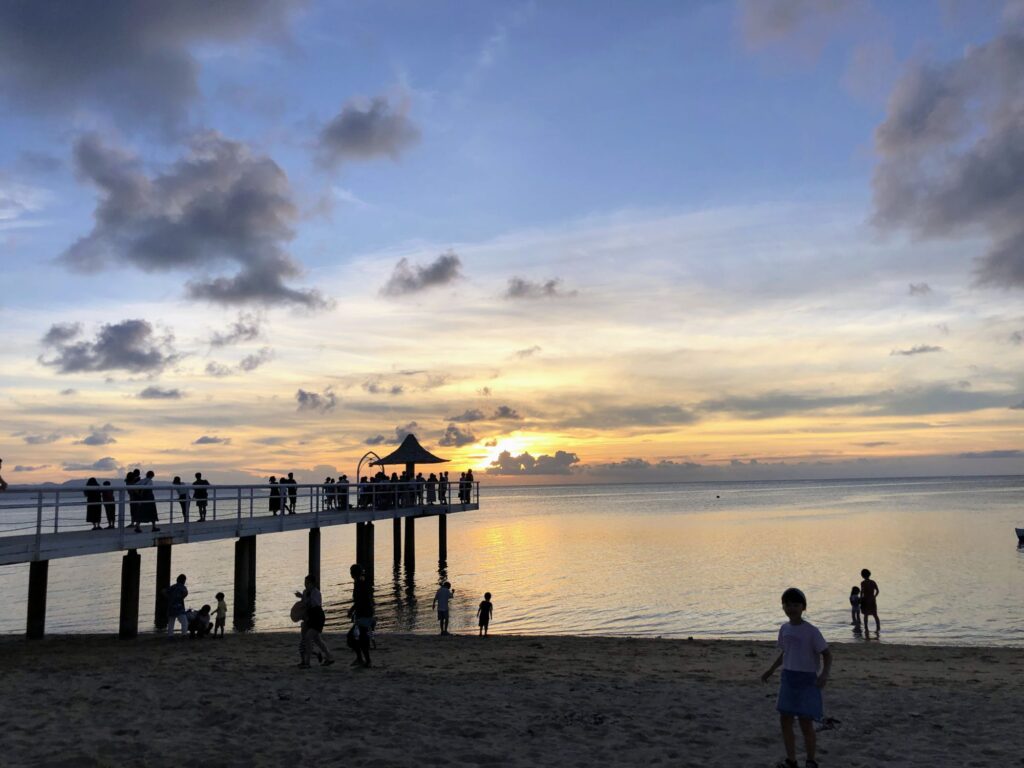
The Best Season Is Not Summer
This is the point I most want to stress.
July through September is peak season. But prices at resort hotels comfortably double or more — and it coincides exactly with typhoon season.
An Okinawa trip hit by a typhoon and one under clear skies are worlds apart. You can’t get in the water, can’t reach the islands, and end up watching a grey sky from your hotel room — after paying peak rates for the privilege.
I’ve been fortunate never to take a direct hit. That’s not luck; it’s because I’ve always shifted my timing.
What I recommend: March–April and October–November. The beaches are open, typhoon risk is low, and prices are calm. Early May through late June is Okinawa’s rainy season, so I avoid it. In March and April the water is still on the cool side, so it suits a trip built around scenery and comfortable weather rather than swimming.
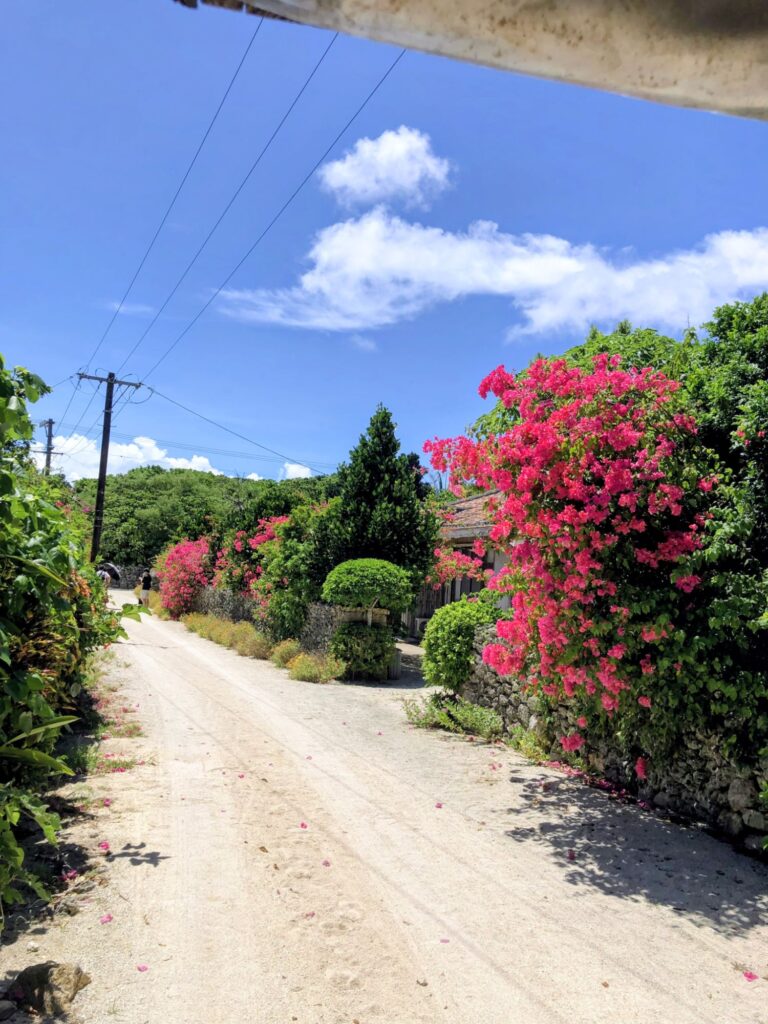
I know the harshness of summer firsthand. The time I cycled around Taketomi Island in July, I nearly collapsed, drenched in sweat. That island, that season, by bicycle — I truly can’t recommend it for anyone traveling with kids.
The Classic Route: Three Days, Two Nights Is Plenty
After all these trips, I have a set formula.
Night 1: Naha City sightseeing and shopping. Kokusai-dori, DFS, and Shuri Castle.
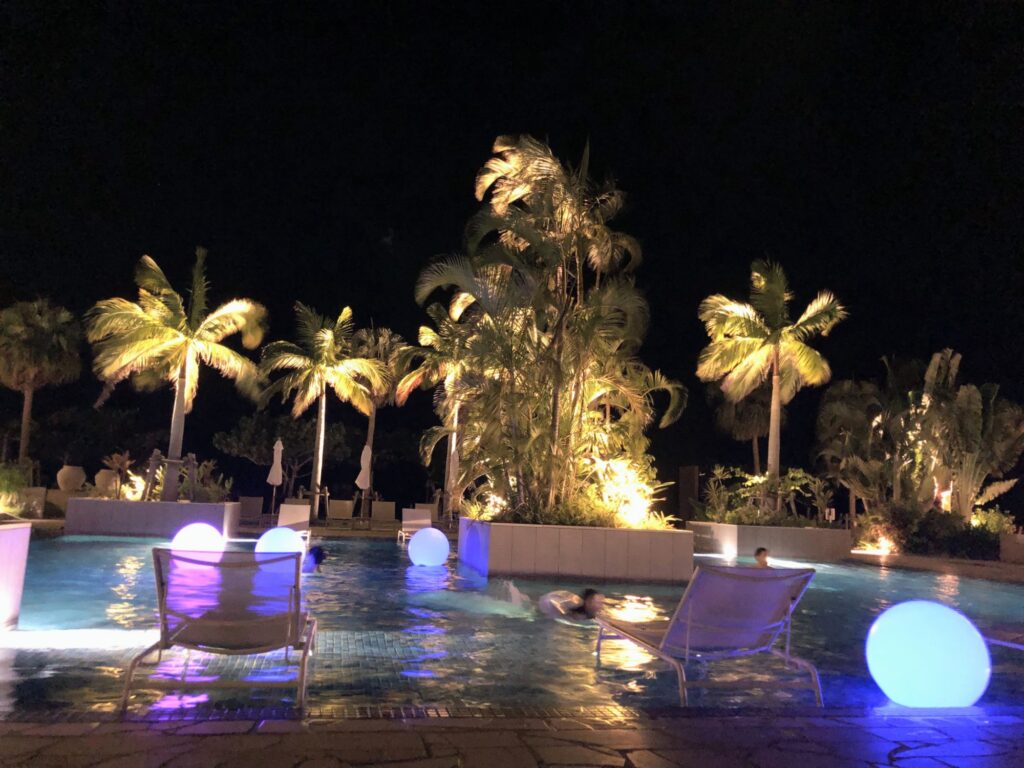
Night 2: A resort in the central or northern region This is where the trip finally shifts into “rest” mode.
That’s it. Try to cram Okinawa and you only add transit time. Three days, two nights — one in Naha, one at a resort. That balance delivers the most satisfaction.
If you’re adding an outer island, make it one night on the main island plus two on the island, giving the island the leading role.
On Shuri Castle in 2026 After the 2019 fire, restoration has progressed, and in October 2025 the scaffolding structure covering the work was removed. You can now see the vivid main hall (Seiden) exterior for the first time in about six years. Interior public access is scheduled for autumn 2026. In other words, right now is a window unique to this moment — a completed exterior with an interior you still can’t enter. Right beside the castle is Suri Soba, a spot famous for its Okinawa soba.
For the Water, Go to the Islands — and to Miyako
Let me be honest.
Okinawa’s main island has beautiful water compared to mainland Japan. But once you’ve seen the outer islands, the story changes.
The most beautiful water I’ve found is Miyako Island.
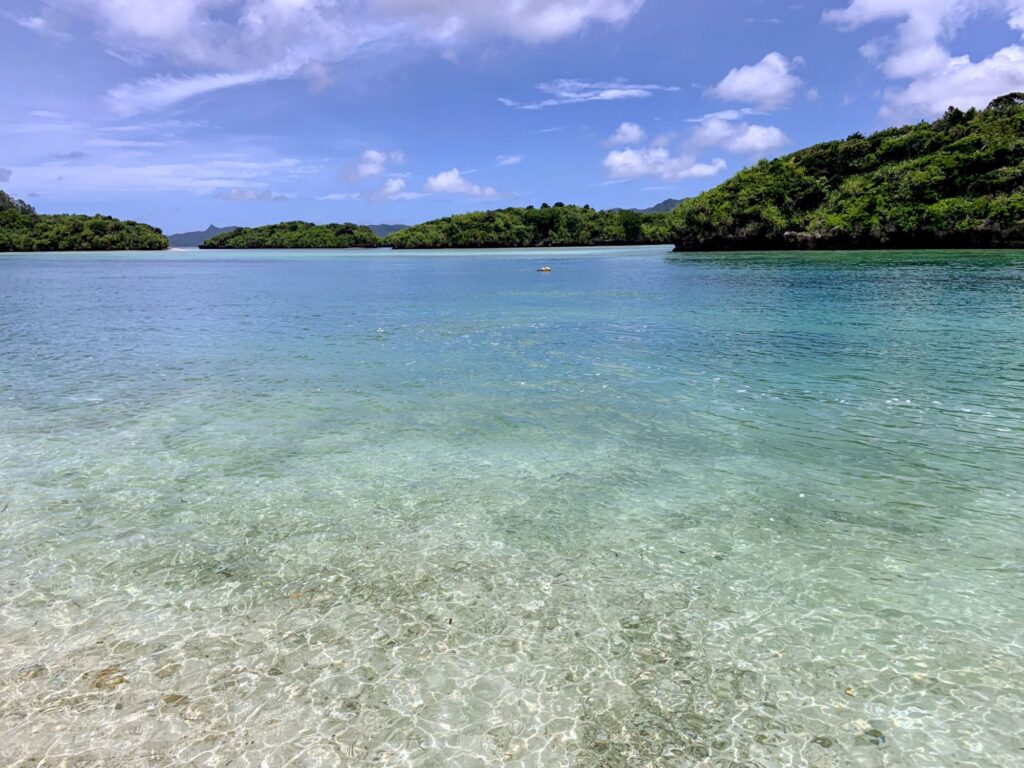
Ishigaki is the liveliest of the outer islands. But for transparency and depth of blue, Miyako wins by a wide margin. Ishigaki’s famous Kabira Bay is a genuine spectacle — but swimming is prohibited there. A sea you can only look at, versus a sea you can dive into. What healed me was the latter.
The whiteness of Maehama Beach. And the Irabu Bridge — driving across it, layers of blue spread out on both sides, so beautiful you almost don’t want to reach the other side. It’s the kind of thing you can’t understand until you go.
When I dove in, the water was so clear I felt like I’d jumped into an enormous swimming pool — the fish plainly visible. I hold an Advanced diving certification, but when it comes to Miyako, even without any license a trial dive is more than enough — the transparency itself is the main attraction. Weather matters a great deal, of course. Even if you don’t dive, snorkeling alone rewards the trip.
If you’re staying overnight on Miyako, choose a resort hotel. Compared to Ishigaki, Miyako has surprisingly few restaurants. I once stayed three nights in cottage-style lodging and found myself bored unless I drove out somewhere. Checking into an ocean-view resort from the start and simply staying put — that’s the right way to do Miyako, as I realized only afterward. Next time, that’s what I’ll do.
To see beautiful water on a day trip from the main island I recommend a day trip to the Kerama Islands. Minna Island is also a quick boat ride away.
There are other beautiful outer islands like Hateruma, but when it comes to islands with genuinely good resort hotels, the options narrow considerably.
📍 Miyako trial diving & snorkeling (Klook) 📍 Kerama Islands day trip (Klook)
The Resorts I’ve Stayed In — and the Ones I Still Want To
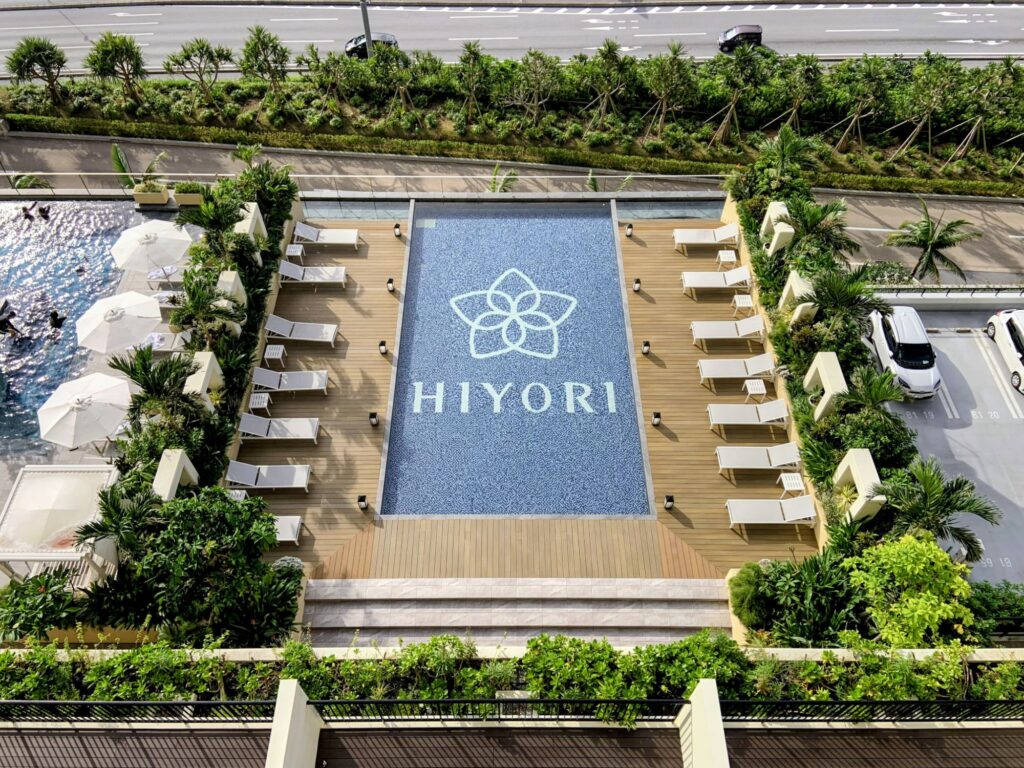
So far I’ve stayed at: two resorts in Chatan, HIYORI Ocean Resort Okinawa, ANA InterContinental Manza Beach Resort, The Busena Terrace, Oriental Hotel Okinawa Resort & Spa, Hyatt Regency Seragaki Island Okinawa, and on Ishigaki both Fusaki Beach Resort and ANA InterContinental Ishigaki Resort, plus Haimurubushi on Kohama Island.
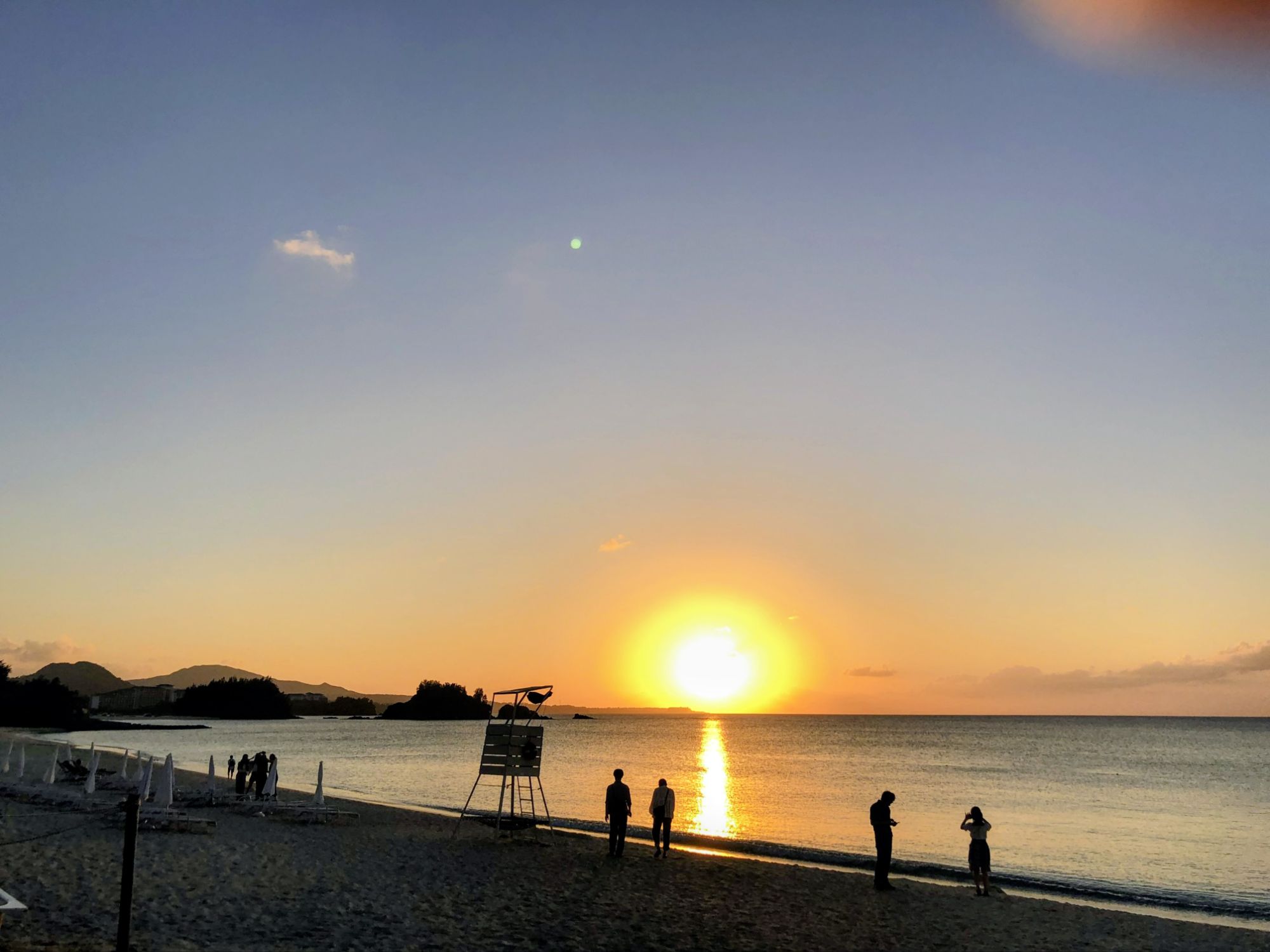
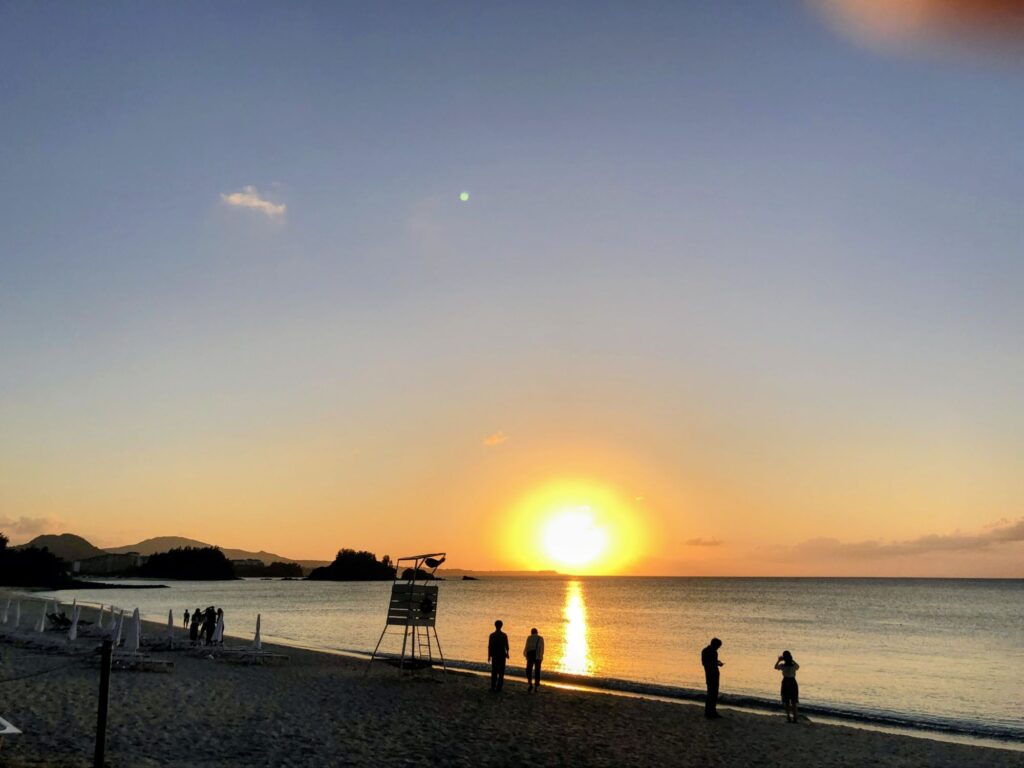
The one that stays with me most is the evening at Busena Beach.
From the adjacent Busena Terrace, live saxophone drifts across the sand every day. Standing on the beach in the light of the sunset, that sound is all you hear. If you’re there with someone, it becomes a moment that’s hard to beat.
Two I haven’t stayed at yet, but keep eyeing
Halekulani Okinawa consistently ranks at the top on Japanese booking sites. With the weak yen and rising prices making Hawaii harder to reach, Halekulani stands almost alone in its class. Even off-season, a night won’t dip below ¥50,000 — but set against the cost of a Hawaii trip, it starts to look reasonable.
(As an aside: Kahala, the other grand Hawaiian name, came not to Okinawa but to Yokohama. I’ve stayed at Kahala Yokohama too, and I still can’t quite figure out why it was Yokohama.)
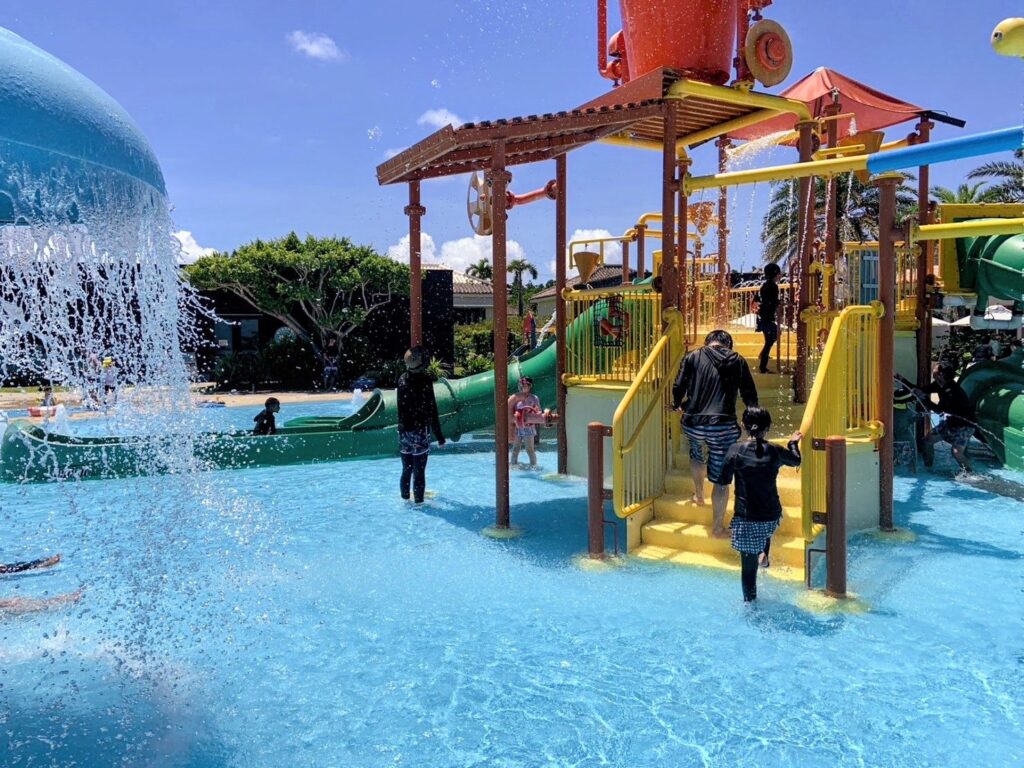
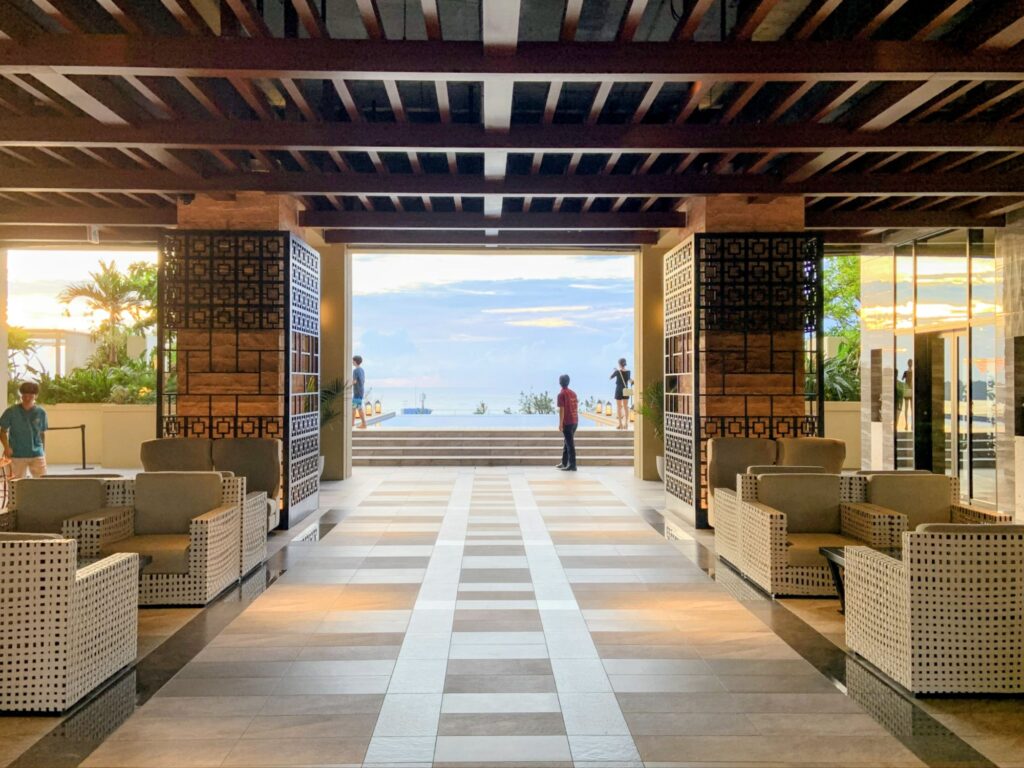
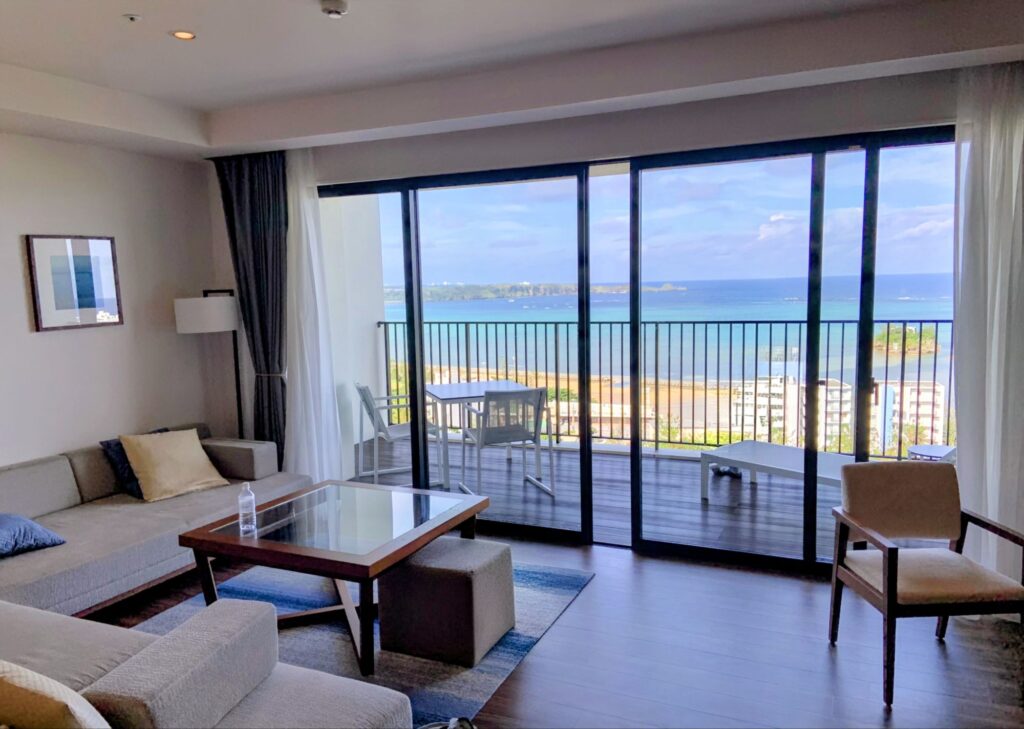
Ryukyu Hotel & Resort Nashiro Beach opened in July 2022 in Itoman and is the largest resort in the main island’s south. All 443 rooms are ocean-view, it has one of the prefecture’s largest lineups of six pool types, and a 1.8-kilometer stretch of natural white-sand beach lies right in front. It’s about 20 minutes by car from Naha Airport — a distance that matters, because you can sink into resort mode without the long drive north. It also runs a direct limousine bus from the airport, so you can reach it without a car.
📍 Compare and book Okinawa resorts
Food, Fun, and Honest Takes
Okinawa Soba Is Good Wherever You Eat It
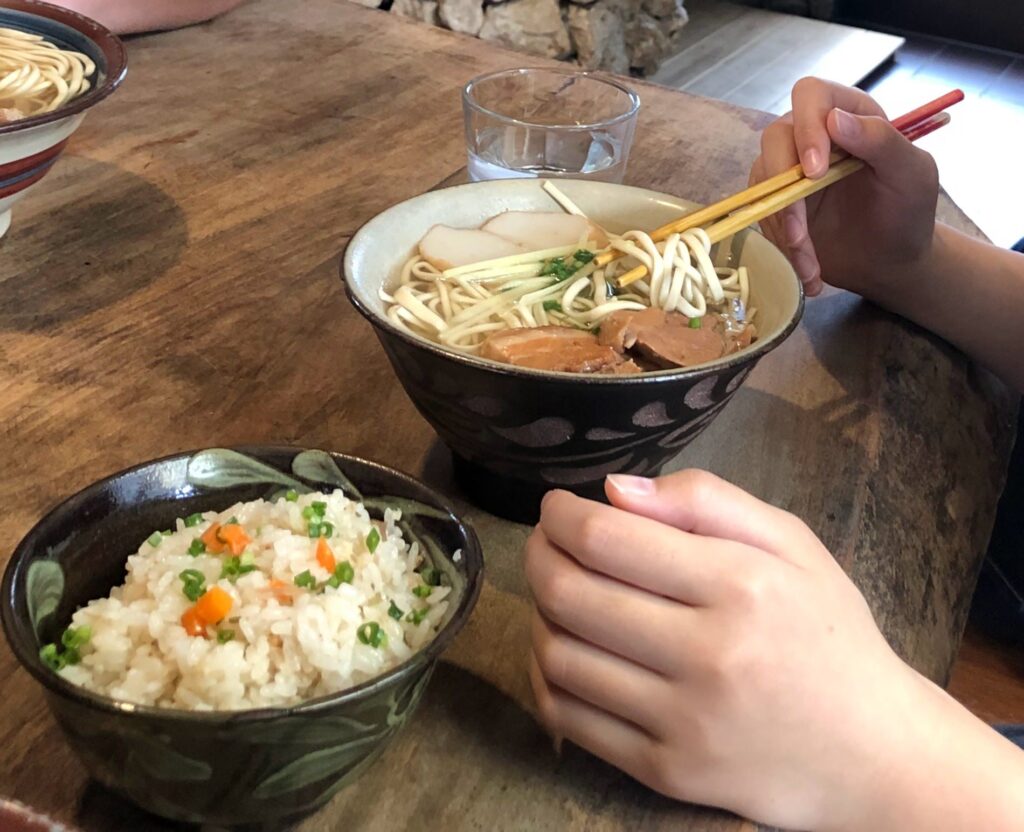
I have opinions about ramen, and I’ve worked my way through about ten well-known Okinawa soba shops on the main island. My conclusion: the base is essentially pork-and-bonito broth, topped with thick sanmai-niku (three-layer pork belly, braised soft like kakuni) and fish cake, accented with red pickled ginger and chopped scallion. That’s the template, and there’s no dramatic gap from shop to shop. It reminds me, oddly, of Sugakiya — the ramen chain that was the soul food of my Tokai-region childhood, and which I still visit often.
That’s not a criticism — it’s good news. No need to queue; walk into whatever place catches your eye and it’ll generally be good. Halfway through, I like adding kōrēgūsu (island chili peppers in awamori) to blow the whole flavor apart. That’s how I enjoy it.
A&W, and the Taste of Medicated Patches
Okinawa is the only place in Japan where you can eat at A&W. Whenever I go, I order a root beer without fail. If I had to describe the taste, it’s like Salonpas — a medicated pain-relief patch. And yet I order it anyway. That’s the strange magic of A&W.
Steak, burgers, tacos, taco rice. Okinawa’s American side lives on, vividly, in its food.
JUNGLIA — Once Is Enough
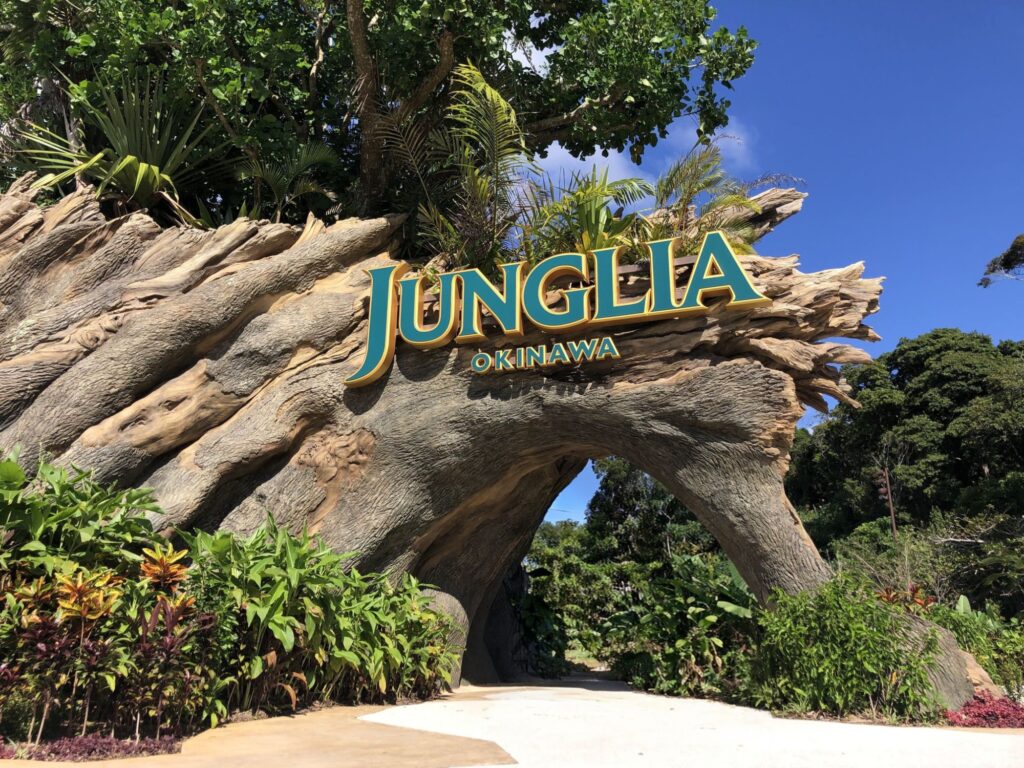
This is a theme park that opened in the north in 2025. My honest impression after going: once is enough. Even my kid said, “Once is fine.”
If you do go, avoid the hot months. And if a typhoon rolls in, there’s nothing to be done.
Miyako’s Summer Festival
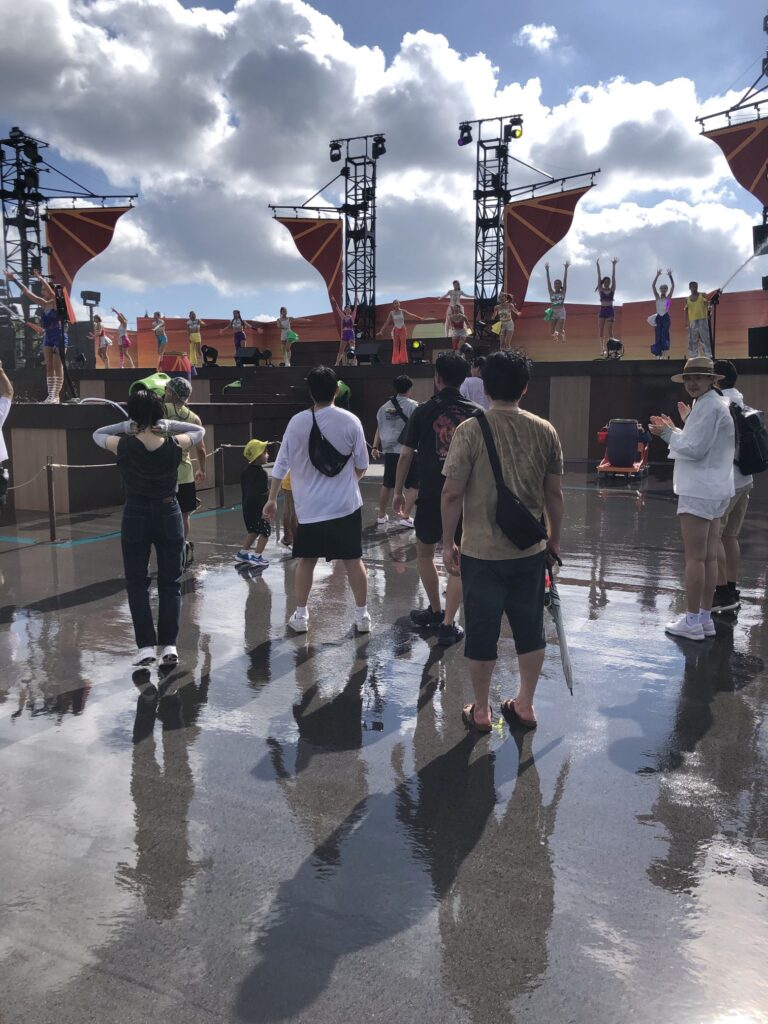
On Miyako, I went to the island’s rock festival, the MIYAKO ISLAND ROCK FESTIVAL (locals call it “Miya-Rock”). Ketsumeishi, MONGOL800, HY, ORANGE RANGE, BEGIN — in the height of summer, Okinawan artists sharing a stage with mainland acts, a scene that only holds together here. The stage is close enough that you can get swept up in it, beer in hand.
Practical Info: Driving, Payment, Typhoons
Getting to Okinawa: most international routes connect through Tokyo, Osaka, or Taipei, and the final leg into Naha is often on a different carrier than your international flight — sometimes a domestic airline like ANA or JAL, sometimes an LCC like Peach or Jetstar. Airline websites generally won’t search across carriers like that, which is where a flight search tool that combines multiple airlines comes in handy.
📍 Search multi-airline flight routes to Okinawa (Kiwi.com)
On getting around: on both the main island and the outer islands, having a car is generally more convenient. But there’s an exception — if you’re simply nesting in an outer-island resort, the airport limousine bus, hotel shuttles, and taxis are enough. Some hotels, like Nashiro Beach, run a direct limousine bus from Naha Airport, so a fully car-free stay works.
📍 Compare rental car rates (GetRentacar.com) 📍 Book a private airport transfer (GetTransfer.com)
International driving in Japan: if you plan to drive, check the rules for your own country’s license before you go. Japan recognizes the 1949 Geneva Convention International Driving Permit for many countries — but not all, and a few countries require an official Japanese translation of their license instead. Confirm which category yours falls into before you travel.
The essence of typhoon strategy is choosing a season that won’t get one. Before you think about insurance and refunds, pick March–April or October–November. That’s the most reliable move. If you’re going in summer anyway, always confirm the cancellation policies of your flights and hotel before booking — especially with low-cost carriers, where change and refund terms tend to be strict.
📍 Get a travel insurance quote (World Nomads)
Payment: resort hotels and major attractions take cards without issue, but local diners, markets, and some soba shops still run on cash. Keep some yen on hand.
Staying connected: rather than hunting for a local SIM at the airport, an eSIM lets you land with data already working — Airalo is the easiest way to set one up before you fly.
📍 Set up a Japan eSIM before you go
Closing: Practicing Subtraction in Okinawa
Okinawa is a place that gets simpler the more you go.
One night in Naha, one at a resort — that’s enough. Want the water? Go to Miyako. Short on time? Day-trip to Kerama. Avoid summer; choose spring or autumn.
Having seen so many resorts around the world, the reason I keep returning to Okinawa is that the island carries an air that permits you to do nothing — and it’s only two hours away by plane. The sunset falling on Busena Beach, and the saxophone drifting in from somewhere. Every time I remember those, I find myself booking again.
Next time: Halekulani, Nashiro Beach — or maybe, just maybe, doing nothing at all at a resort on Miyako.
Leave a Reply