This article contains affiliate links.
I’ve been to Kyoto more than twenty times — in autumn for the maples, in spring for the cherry blossoms, and plenty of times in between.
After that many visits, I have no interest in writing about Kiyomizu-dera or Kinkaku-ji again. Those places have been covered exhaustively, and as of 2026 they’re crowded enough that you can’t really look at them properly anyway.
So this guide is about a different Kyoto. Ramen and matcha.
I’ve eaten my way around Japan, and from where I sit, Kyoto is one of the country’s serious ramen battlegrounds. Almost no foreign visitor knows this. And then there’s Uji matcha — with global demand pushing prices to levels nobody expected, drinking the real thing at the source is worth more now than it was five years ago.
The only sightseeing spot I’ll cover is Ruriko-in. Plus one place that Japanese people, oddly, tend not to know about.
Kyoto is one of Japan’s great ramen cities
This surprises people. Kyoto’s reputation is kaiseki and tofu. But walk the streets and the density of ramen shops is genuinely striking.
Several national chains were born here
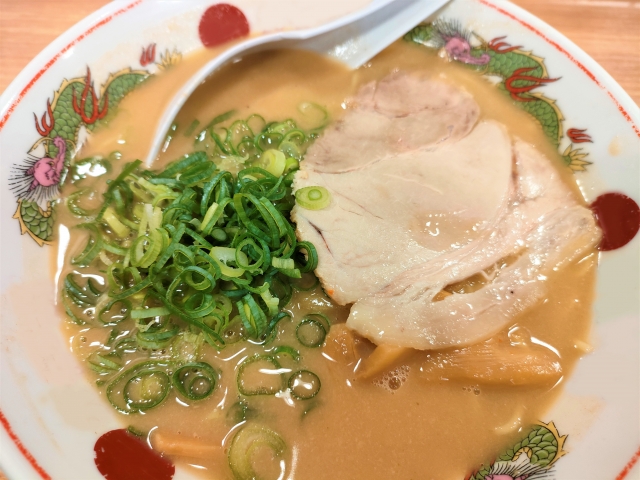
Tenkaippin started in 1971 as a food cart near Ginkaku-ji. That famously thick, almost gravy-like kotteri broth originated in Kyoto — and the flagship shop is in Ichijoji, which I’ll get to. Ramen Yokozuna is also from Kyoto. So is Kairikiya. The style of soy-sauce ramen with a layer of pork back fat floating on top is essentially Kyoto’s contribution to Japanese ramen.
Ichijoji Ramen Road
If you’re eating ramen in Kyoto, start with Ichijoji.
Along Higashioji Street, from the Takano intersection north to Kitayama, roughly 1.3 kilometres of road is lined with ramen shops. Locals call it Ichijoji Ramen Road, and it’s Kyoto’s most competitive stretch. Crucially, these aren’t branches — the flagship shops of famous names are here.
There’s a second cluster too, along Shidan Kaido in Fukakusa. By sheer shop count it may even beat Ichijoji.
My top pick: Menya Takei
If I could only eat one bowl in Kyoto, this would be it — and there’s a story behind why.
The owner of Menya Takei trained at Chuka Soba Tomita in Matsudo, Chiba. Tomita is regularly called Japan’s best tsukemen (dipping noodle) shop. To eat at the Matsudo original, you queue at dawn for a numbered ticket.
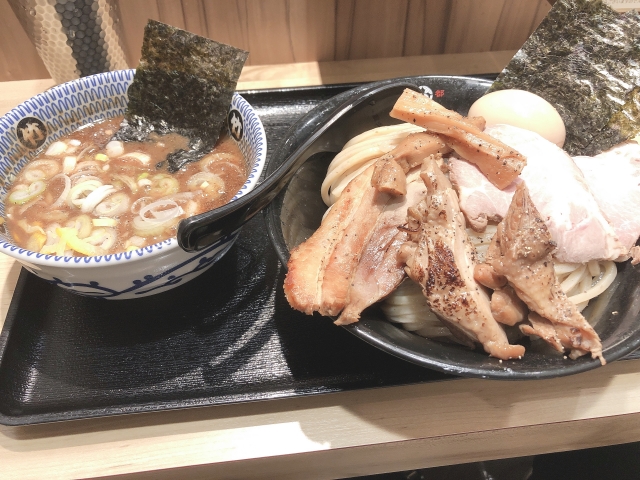
Takei’s tsukemen carries that lineage faithfully. To my palate, the noodles and the broth are almost identical to Tomita’s. I later found out why: the noodles come from Kokoro no Aji Shokuhin, the noodle maker Tomita runs. Same noodles, same result.
For a traveller, this matters. You can eat something extremely close to Tomita without going to Matsudo and queueing at 6am. There are several branches across Kyoto Prefecture, including one at Kyoto Station.
One honest caveat: the tsukemen at the main shop is very rich. Too rich for me, in fact. The pork-and-fish broth is on another level of concentration, and it starts to feel heavy partway through. I’ve seen other reviewers say the same, so it isn’t just me. If you love intensely thick tsukemen you’ll be delighted; otherwise a branch may suit you better.
That said, the main shop has a pork-and-seafood ramen you can’t get anywhere else — roughly the concentration of tsukemen broth after it’s been thinned, with thick noodles running through it. Personally, that’s the bowl I prefer.
The main shop is in Joyo City, far from any station, lunchtime only. It’s a commitment. Nearby is Ore no Ramen Appare-ya, also lunch-only and also popular, so serious ramen people sometimes do both in one trip.
Appare-ya had a long queue, and after eating I understood why. It reminded me of Sugakiya — a ramen chain from Japan’s Tokai region, the original wafu tonkotsu (Japanese-style pork broth) and the food I grew up on. Sugakiya occupies a permanent place in my personal hall of fame, partly for nostalgia and partly because it’s remarkably cheap. Appare-ya tasted like a refined version of that memory.
In Ichijoji
Menya Gokkei A chicken paitan broth so thick that people say a spoon will stand up in it. It’s closer to a solid than a soup — imagine Tenkaippin’s kotteri, then thicker still. Often called the most popular shop on Ichijoji Ramen Road right now.
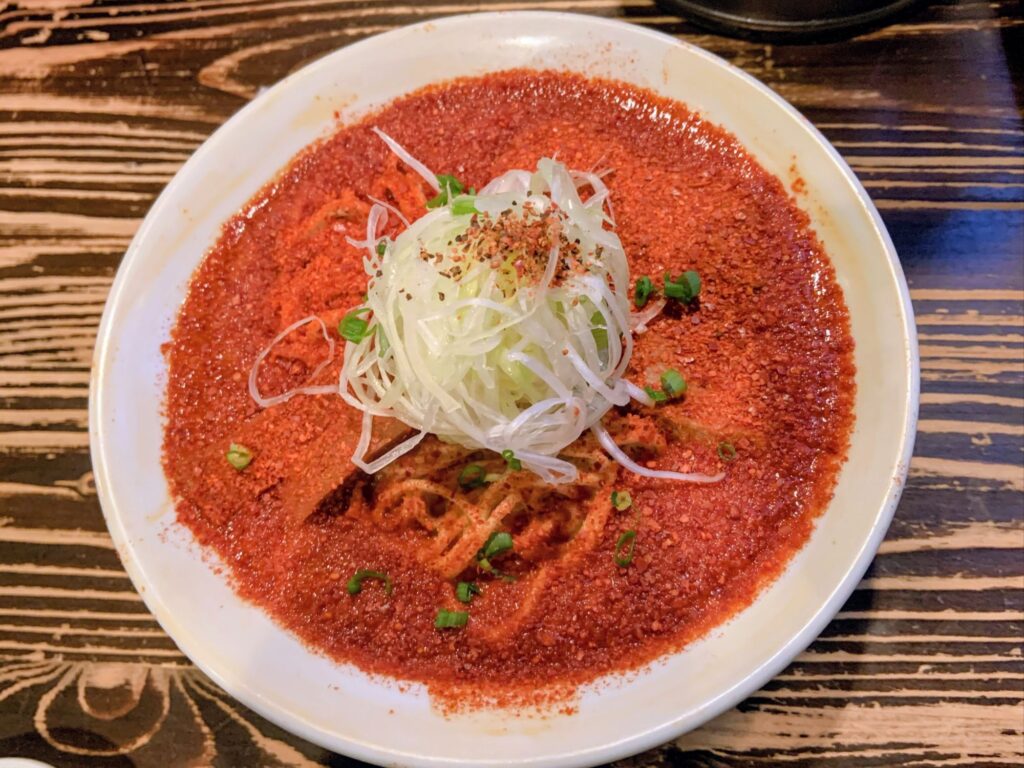
The broth clings so completely to the noodles that there’s essentially nothing left in the bowl at the end. There’s a chilli version too, though it’s far less spicy than it looks.
Chuka Soba Takayasu A cloudy pork broth simmered for 22 hours. The ramen is good, but the real signature here is the fried chicken — and it is enormous. Order it alongside a bowl and you will be full. Consider yourself warned.
Being honest about what didn’t move me
Shinpuku Saikan and Daiichi Asahi sit side by side near Kyoto Station, in the area called Takabashi. Both have permanent queues.
I ate at both, and honestly, neither impressed me much. They weren’t bad — I just wouldn’t queue for them again. If your goal is to taste the history of Kyoto ramen, there’s real value in going. As a use of one of your limited meals in Kyoto, I’d think twice.
Muteppou I’ve also eaten. The tonkotsu is so thick it lives up to the name, which roughly translates as “reckless.” A different direction of heaviness from Gokkei. If that’s your thing, it’ll land.
Prioritise carefully
If you’re in Kyoto for a few days, this is worth thinking about before you go.
The independent shops have one location each, so expect to queue. Gokkei, Takayasu, Takei’s main shop, Appare-ya — all of them. Many have short opening hours, and lunch-only is common.
Tenkaippin and Yokozuna, by contrast, are national chains. Eating at the birthplace has a certain value, and the Tenkaippin flagship in Ichijoji is a genuine pilgrimage if you care about that. But the taste itself is available in most Japanese cities. If your Kyoto meals are limited, weigh that.
An aside: I like Tenkaippin a great deal. Which is why, having dragged a friend all the way to the flagship shop, I was quietly devastated when he ordered the gomoku (mixed vegetable) ramen instead of the kotteri.
Two practical notes for foreign visitors. Most ramen shops use a ticket vending machine — you buy a meal ticket at the door, then hand it to the staff. Many machines are Japanese-only, though the buttons usually have photos. And bring cash. Plenty of ramen shops still don’t take cards or IC payment at all.
Real Uji matcha, in the middle of a global shortage
I used to travel to Uji for work, two or three times a year. Eating matcha desserts between meetings was the part I looked forward to.
The world is currently fighting over matcha
The situation has shifted dramatically in the past couple of years.
Japan’s export value of powdered tea — matcha included — reached ¥60.3 billion in 2025, more than double the ¥27.1 billion of the previous year. A tea merchant in Shizuoka described it as the whole world competing for the same supply, with prices rising three- to fourfold.
Uji is no exception. In 2026, hand-picked Uji tencha — the leaf matcha is ground from — traded at ¥52,086 per kilogram, up 20.2% year on year. And production actually increased. Prices rose anyway, which tells you how far demand has outrun supply. There are reports of Kyoto restaurants quietly dropping “Uji tea” from their menus because they can no longer source it.
Which makes drinking the real thing at the source more worthwhile, not less. What you get here is a different substance from the sweetened matcha latte at a café back home.
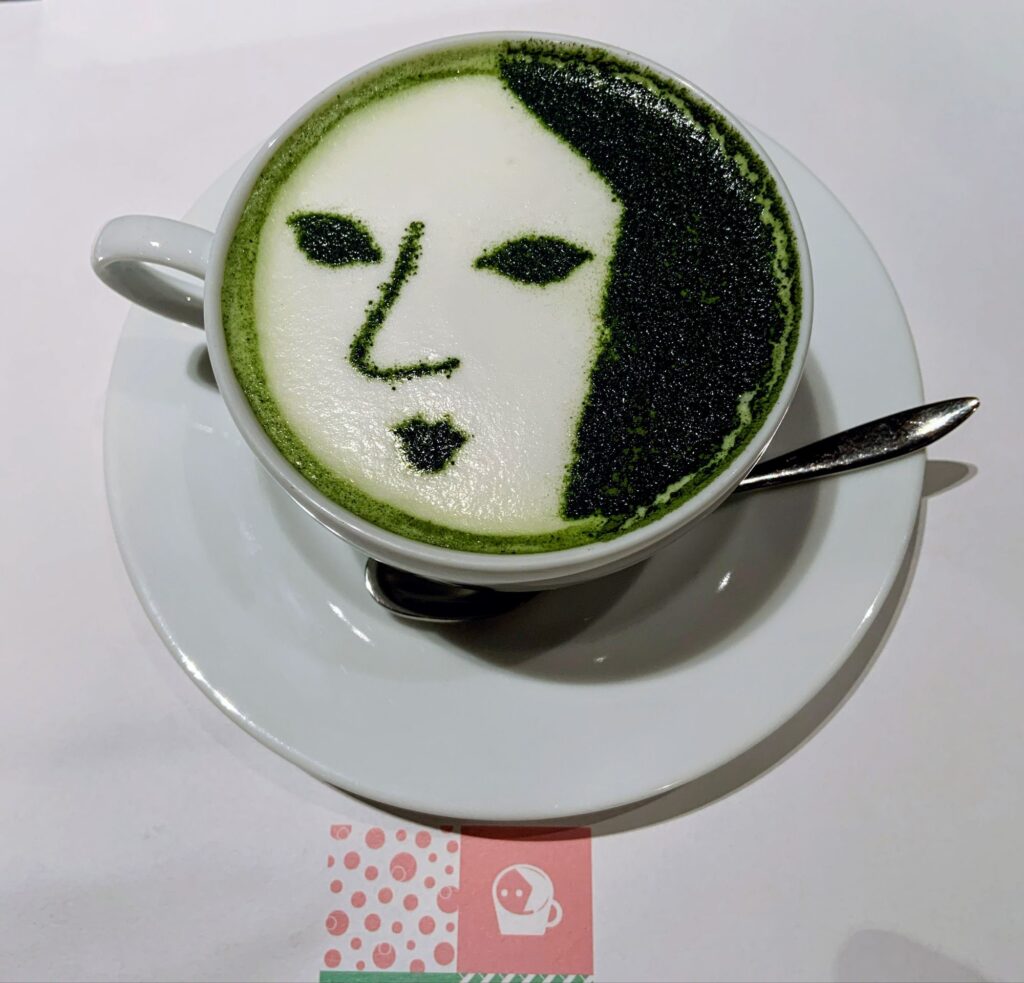
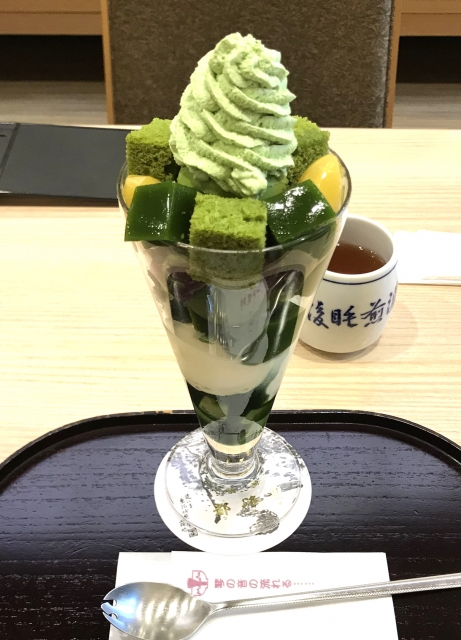
The matcha parfait at Tsujiri
In Uji I go to Tsujiri. Their matcha parfait is the thing I kept coming back for.
A lot of matcha dessert stops at matcha flavour. The real thing has bitterness that stands up on its own. Beneath the sweetness there’s astringency and depth, and even in a parfait — which is sweet by design — the tea never disappears. That’s the part you can’t understand until you eat it where it’s made.
Uji is about 20 minutes from Kyoto Station by JR. You can go and come back in half a day, which makes it a good escape when the crowds in central Kyoto get to you.
📍 Book a matcha or tea ceremony experience
What to take home: the matcha fondant chocolat from Kitayama
If you’re buying something to carry back, this is my recommendation: Nama Cha no Ka from Malebranche.
It’s a Western-style confectioner with its main shop in Kitayama, Kyoto. You may know their matcha langue de chat, “Cha no Ka,” which is a standard Kyoto souvenir. But the one I’d push is the “raw” version — a koicha (thick matcha) fondant chocolat.
Eat it cold. An hour in the refrigerator turns the texture into something like raw chocolate ganache. The bitterness of the thick matcha and the sweetness of the white chocolate dissolve together, and it’s genuinely rich. Small, but one is enough.
As a souvenir it’s well designed: individually wrapped, longer shelf life than you’d expect from something this soft, and boxes from three pieces up. There’s a shop at Kyoto Station, so you can pick it up on the way out.
What about yuba and tofu?
Kyoto is also known for yuba (tofu skin) and tofu cuisine. I’ve eaten at the formal, restaurant-style places around Gion and Nanzen-ji.
The atmosphere is genuinely wonderful. Sitting on tatami looking out at a garden while you eat is something you can only do here.
But honestly — I don’t think it lands for most foreign visitors. The flavours are so delicate that even Japanese diners sometimes come away thinking “refined, but not much there.” And it isn’t cheap.
If I’m deciding how to spend a limited budget and a limited appetite in Kyoto, I’d put the money into matcha desserts. Immediately delicious, reasonably priced, and — right now — genuinely scarce.
📍 Book a matcha or tea ceremony experience
The one temple worth the detour: Ruriko-in
If I name a single sightseeing spot, it’s Ruriko-in.
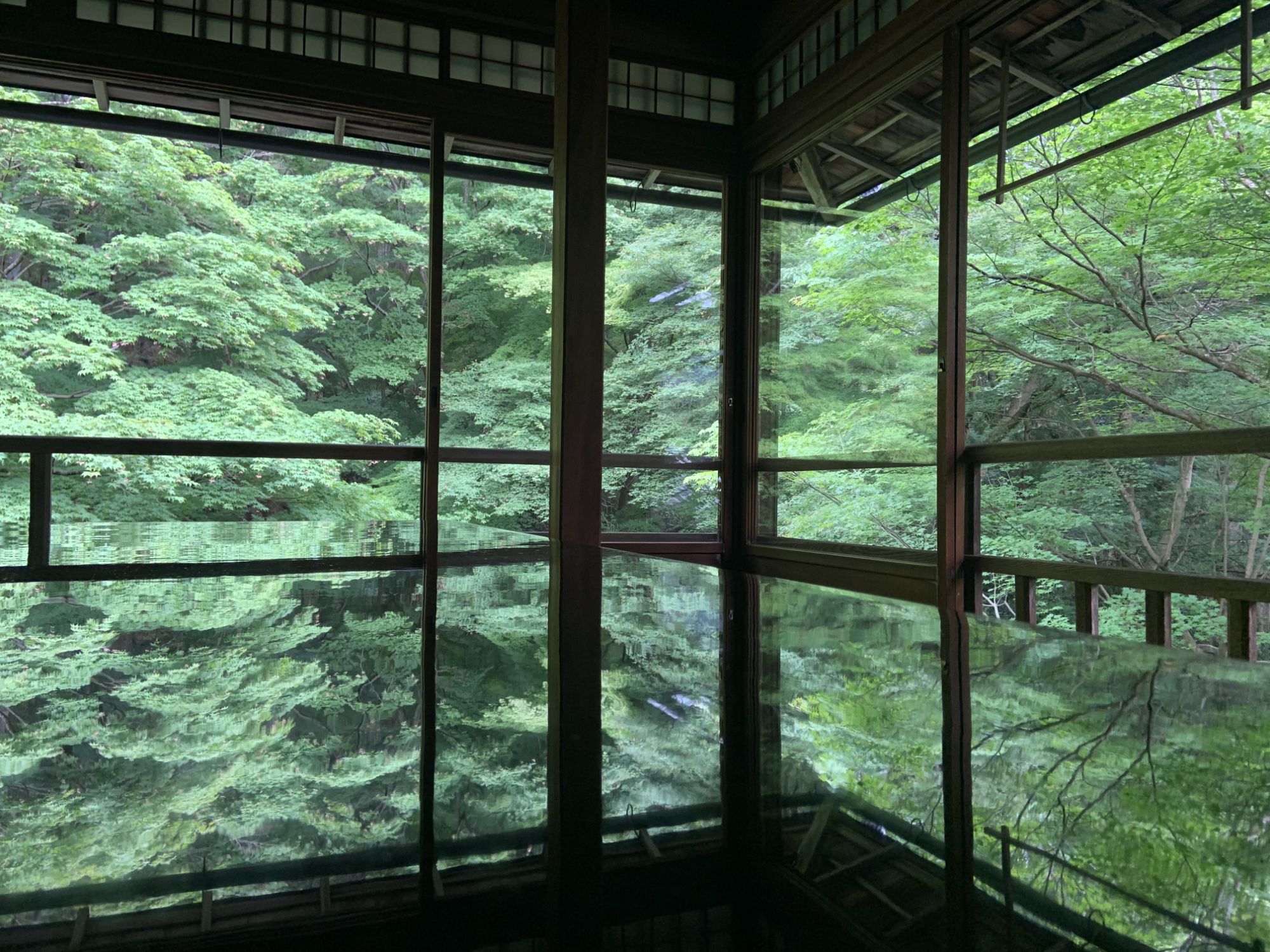
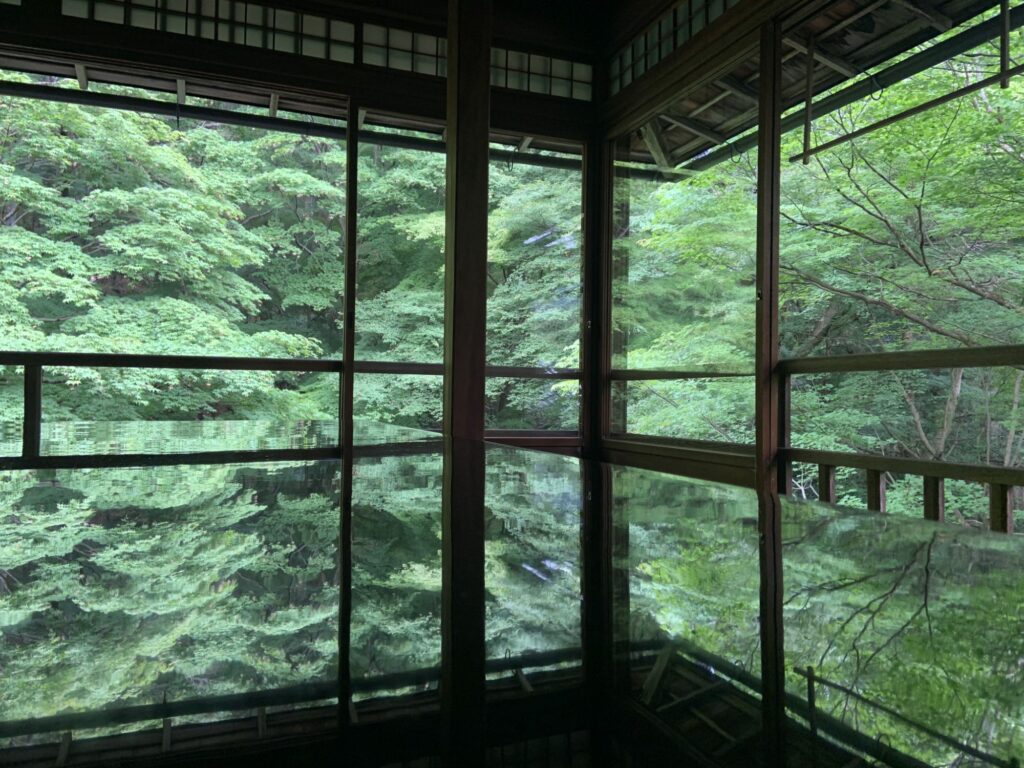
This is the place behind the famous image of maple leaves reflected in a black lacquered table. It sits in Yase, at the foot of Mount Hiei, a little removed from the city.
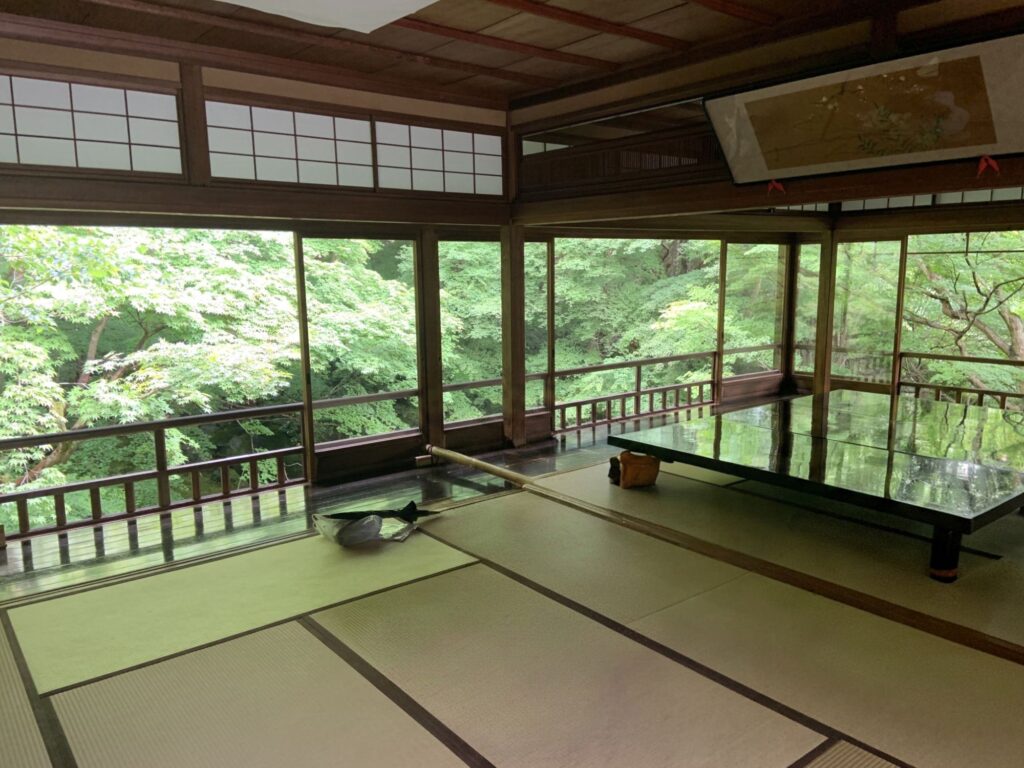
I went during the fresh-green season. Young maples reflected in the lacquer of the table and again in the polished floor, until you genuinely lose track of where the real leaves end and the reflection begins. I took photographs, but the depth of it in person doesn’t survive the transfer.
Autumn is spectacular, of course, and correspondingly insane. The green season is calmer and far less crowded, and I’d point you there instead. Sitting on the tatami with your legs stretched out, looking at the garden, the air feels almost charged — it was one of the more restorative hours I’ve spent in Japan.
One important caveat: Ruriko-in is not open year-round. It opens only for special viewing periods in spring, summer, and autumn. Check the official site for dates before you build a day around it.
Getting there: Eizan Railway from Demachiyanagi to Yase-Hieizanguchi, then about ten minutes on foot.
The Arashiyama monkeys: what nobody tells you first
You may already have this one on your list — it’s genuinely popular with international visitors. What’s less commonly explained is the practical side.
Arashiyama Monkey Park Iwatayama sits on a hill above the Togetsukyo Bridge. About 120 Japanese macaques live there, with no enclosure. They wander freely.
The detail people love: when you feed them, you go inside the wire hut and the monkeys stay outside. The cage contains the humans. It’s the reverse of a normal zoo, and it’s the reason the place is on so many itineraries.
Roughly 80% of visitors are foreign — there are no wild monkeys in Europe, North America, or Australia, which is exactly why it registers as remarkable. Japanese tourists, by contrast, mostly haven’t heard of it.
Three things worth knowing before you go:
The climb is harder than it sounds. It’s about 20 minutes of stone steps and mountain path. Heels and sandals are not viable. Wear proper shoes.
Don’t make eye contact with the monkeys. They can read it as a challenge. Aim your gaze at their chest instead.
Buy the food inside, not outside. You feed them through the wire from within the hut. Admission is ¥550 for adults, and the feeding area doubles as a viewpoint over the whole city — worth the climb on its own.
📍 Arashiyama tours, kimono rental and day trips
Practical notes for 2026
The lodging tax went up. From 1 March 2026, Kyoto City’s accommodation tax moved to a five-tier structure. Per person per night: ¥400 for rooms from ¥6,000 to under ¥20,000, ¥1,000 from ¥20,000 to under ¥50,000, ¥4,000 from ¥50,000 to under ¥100,000, and ¥10,000 above that. The top end rose sharply, so factor it in if you’re booking somewhere expensive.
📍 Compare hotels and rates in Kyoto
Crowds are real. Cherry blossom and autumn foliage seasons, and the main sightseeing districts generally, are more packed than you’re picturing. The places in this guide — Ichijoji, Uji — are considerably calmer than the postcard spots.
Getting in and around. From Kansai Airport, the JR Haruka express reaches Kyoto in about 75 minutes and is the least painful option. Within the city, buses cover the most ground but seize up in peak season — use the subway where you can. An IC card or a rail pass bought before arrival saves queuing at machines.
📍 Airport transfers, IC cards and rail passes
Carry cash. Ramen shops and small independent businesses frequently don’t accept anything else.
Data. Kyoto’s smaller streets and the routes to places like Ichijoji and Ruriko-in are much easier with a working map. Set up an eSIM before you fly rather than hunting for a SIM at the airport.
📍 Set up an eSIM before you go 📍 Get a travel insurance quote
Closing
Kyoto isn’t a city you finish by working through the standard list.
Its identity as a ramen battleground is almost entirely unknown to visitors from abroad. Walk Ichijoji and you’ll find the flagship shops of famous names packed into 1.3 kilometres. Go to Menya Takei and you can eat something close to Tomita without the dawn queue in Matsudo.
Take the train out to Uji and you can eat, casually and affordably, the matcha the rest of the world is currently bidding against itself to obtain.
Then the green maples at Ruriko-in, and a hill full of monkeys where you’re the one in the cage.
Kiyomizu-dera and Kinkaku-ji are wonderful. But after twenty-odd visits, I’ve come to think the interesting part of Kyoto is somewhere else entirely. I hope this helps you find it.
Leave a Reply